


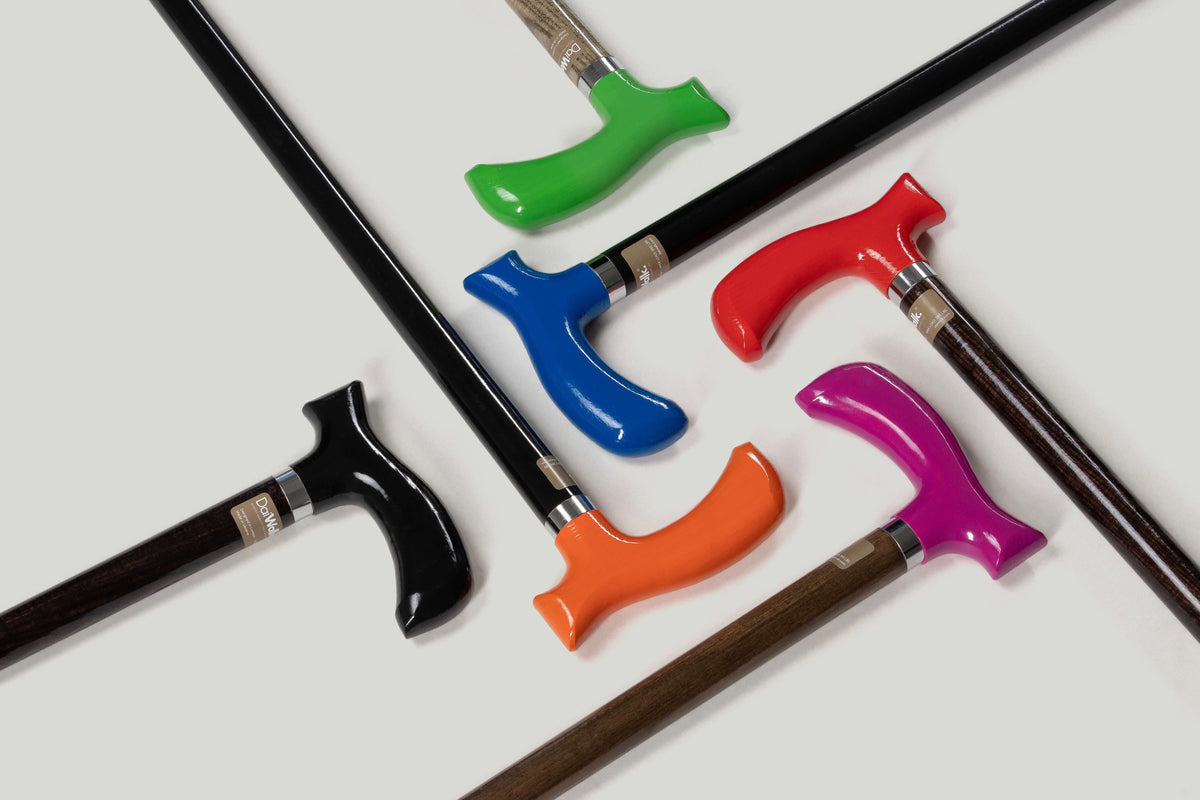
This milestone article marks the completion of 600 articles on walking canes, mobility aids, and the conditions, situations, and techniques relevant to cane users. Every article in the DaiWalk blog has been written with a single guiding principle: give the reader the specific, accurate, evidence-grounded answer they need -- not a generic overview, not a product advertisement, but real information that helps real people make better mobility decisions.
What This Knowledge Base Covers
The 600 articles span every major domain of walking cane use:
- Medical conditions: every major musculoskeletal, neurological, rheumatological, cardiovascular, pulmonary, metabolic, and rare condition that affects walking -- from osteoarthritis and stroke to PSP, MCTD, and osteogenesis imperfecta
- Surgical recovery: every common orthopaedic and spinal surgery with specific weight-bearing timelines, cane protocols, and recovery milestones
- Biomechanics: how the hip, knee, ankle, and foot work during walking; how a cane mechanically alters gait; the science behind contralateral placement and load transfer
- Equipment science: cane materials (oak vs wenge vs aluminium; COF data); tip types (Steady Tip dual-durometer vs generic ferrules; wet and cold performance); handle ergonomics; cane height measurement
- Practical skills: stair technique, wet weather, ice and winter, night walking, public transport, workplace use, travel, gift selection, maintenance
- Psychology and identity: why people resist canes; how appearance affects compliance; how to introduce a cane to a loved one
DaiWalk Technical Data Referenced Across the Blog
| Technical Fact | Value |
|---|---|
| Steady Tip lateral slip (wet, vs generic) | 3mm vs 14-18mm |
| Steady Tip contact patch | 28mm diameter (6.2 cm2) |
| Anatomic Grip peak pressure vs T-bar | 1.9 N/cm2 vs 4.2 N/cm2 |
| Collet shaft play vs button-hole | 0mm vs 1.5-2.6mm |
| Wood vibration damping vs aluminium | 25-60x better |
| Oak COF (dry / wet / cold) | 0.68 / 0.57 / 0.54 |
| Wenge COF (dry / wet / cold) | 0.71 / 0.59 / 0.56 |
| Cane weight range | 295-340g |
| Daily use compliance (high vs low appearance satisfaction) | 87% vs 26% |
| Customer follow-up base | n=112 over 18 months |
How to Navigate the DaiWalk Blog
The blog is organised for search -- every article is titled for the specific condition or situation you searched for. Use your browser search or Google to find your specific condition. If you need to understand which cane is right for you, start with:
- How to Choose a Walking Cane -- the starting point for new cane buyers
- Cane Length Calculator -- find your correct height in 30 seconds
- 3D Configurator -- visualise your cane combination
- Shop DaiWalk walking canes -- 84 possible configurations of the Original 1.0
A Note on Evidence and Professional Advice
Every article in this blog is written to the best of our knowledge and current evidence. Walking cane use for specific medical conditions should be guided by the clinical team managing that condition. This blog provides information; it does not replace professional advice. If your condition is serious or rapidly changing, please consult your physiotherapist, occupational therapist, or physician before making walking aid decisions.
Thank you for reading. We hope the DaiWalk blog has been useful -- and that every step you take is a safer, more comfortable one.


