


Knee ligament injuries span a spectrum from isolated sprains to complex multiligament knee injuries (MLKI) requiring reconstruction. The four major knee ligaments are: anterior cruciate ligament (ACL), posterior cruciate ligament (PCL), medial collateral ligament (MCL), and lateral collateral ligament (LCL). Walking cane need after ligament injury depends on the ligament injured, the grade of injury, whether surgery was performed, and where the patient is in the rehabilitation timeline.
Ligament Injury Grades and Weight-Bearing
- Grade I sprain: ligament fibres stretched but intact; walking without aid usually possible within days
- Grade II sprain: partial ligament tear; partial weight-bearing may need support for 1-2 weeks
- Grade III tear: complete ligament rupture; immediate instability; weight-bearing painful and potentially unsafe without support
Walking Cane for Specific Ligament Injuries
| Ligament | Acute Cane Need | Post-Surgical Cane Protocol |
|---|---|---|
| ACL (anterior cruciate) | Grade III: cane for 1-2 weeks acute; most can walk with cane within days | ACL reconstruction: typically full weight-bearing immediately; cane for 1-2 weeks for comfort and stability |
| PCL (posterior cruciate) | Grade III: cane for 2-4 weeks; PCL injuries more stable than ACL acutely | PCL reconstruction: partial weight-bearing 4-6 weeks; cane essential |
| MCL (medial collateral) | Grade III: cane for 2-4 weeks; medial instability makes lateral weight transfer painful | MCL rarely requires surgery; conservative management with cane 2-4 weeks |
| MLKI (multiligament) | Non-weight-bearing or minimal weight-bearing acutely; cane or crutches | Strict protocol per surgeon; typically non-weight-bearing 4-6 weeks; cane 6-12 weeks |
ACL Reconstruction and Cane Timeline
Current ACL reconstruction protocols are accelerated: most patients are full weight-bearing immediately post-operatively. A cane is used for comfort and stability in the first 1-2 weeks, then weaned. The emphasis is on early quadriceps activation and normalising gait pattern quickly to prevent long-term compensatory movement patterns. Some physiotherapists do not recommend a cane at all for isolated ACL reconstruction, preferring the patient to tolerate some discomfort to activate normal gait pattern earlier.
PCL and Multiligament Reconstruction
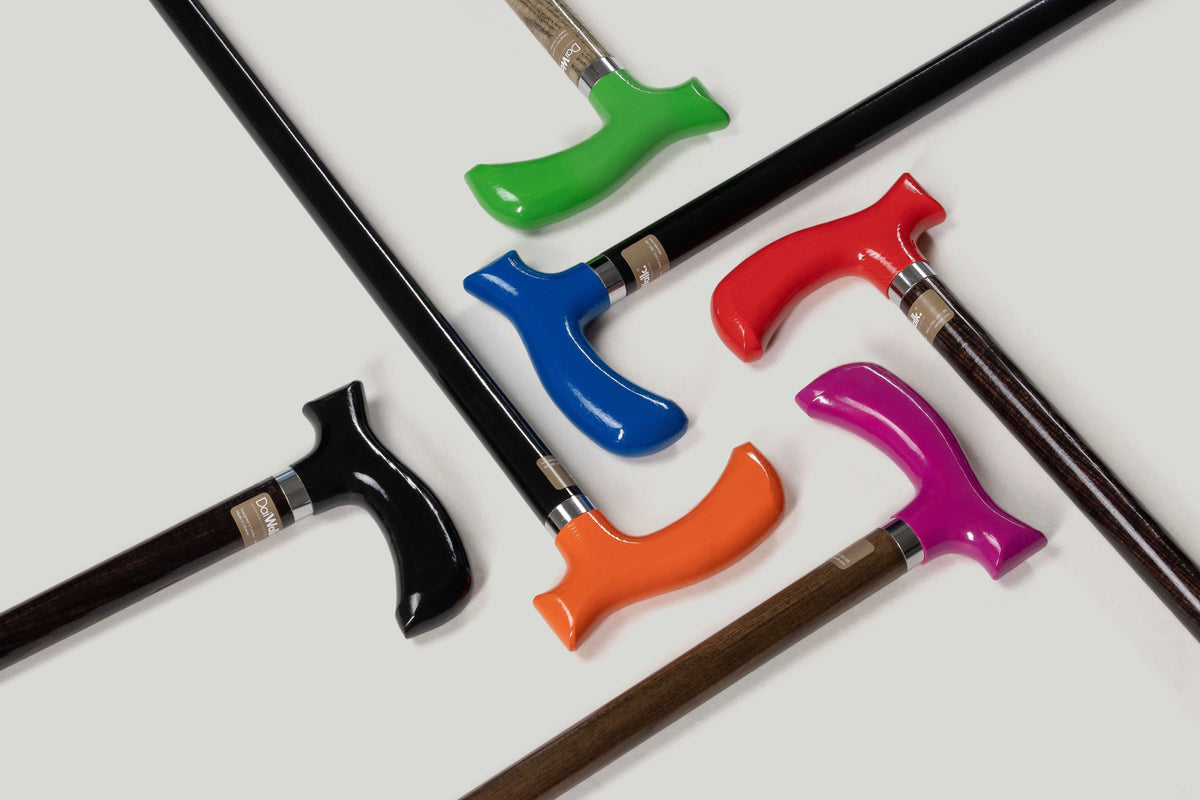
PCL reconstruction and MLKI surgery require longer protected weight-bearing than ACL reconstruction because the posterior capsule and PCL heal slower and have more complex stress patterns. A cane (and often crutches) is part of the protocol for 4-8 weeks. The DaiWalk Original 1.0 cane, lighter than aluminium standard issue canes, is more comfortable for extended post-surgical use.
Explore DaiWalk walking canes. Related: Walking Cane for ACL Reconstruction | Walking Cane After Total Knee Replacement.


