


Mixed connective tissue disease (MCTD) is an autoimmune overlap syndrome with features of systemic lupus erythematosus, systemic sclerosis, polymyositis, and/or rheumatoid arthritis -- in a single patient. It is defined by the presence of high-titre anti-U1 RNP antibodies. The heterogeneity is the defining clinical challenge: two MCTD patients may have almost entirely different symptom profiles depending on which overlap features dominate in each individual.
Mobility Impairment in MCTD: The Overlap Problem
Because MCTD combines features of multiple connective tissue diseases, a single patient may simultaneously experience:
- Inflammatory arthritis (from the lupus or RA component)
- Proximal myositis/myopathy (from the polymyositis component)
- Raynaud phenomenon and potential hand/finger involvement (from the scleroderma component)
- Pulmonary arterial hypertension (a serious MCTD complication, most prominent in the SSc component)
- Profound fatigue (common across all component diseases)
No single cane use strategy covers all possible MCTD presentations. The approach must be symptom-led rather than diagnosis-led.
Symptom-Led Cane Decision Framework
The most useful question is: which of my current dominant symptoms most limits my walking?
- If the answer is joint pain or arthritis: Contralateral cane for the most affected lower limb joint. See the lupus and RA cane guides for the detailed approach
- If the answer is proximal muscle weakness: Cane for sit-to-stand, stair, and distance support. The cane side rule becomes less relevant when bilateral proximal weakness is present
- If the answer is breathlessness (PAH or ILD): Cane for energy conservation per step. Lightweight shaft is important to reduce carry load
- If the answer is fatigue: Cane for energy conservation and safety margin during fatigued periods
- If the answer is hand grip limitation (Raynaud, finger involvement): Handle selection becomes critical -- see the Raynaud and hand conditions guides
Common MCTD Symptom Combinations and Cane Approach
| Dominant Symptom Combination | Cane Approach | Key Configuration |
|---|---|---|
| Arthritis + fatigue | Contralateral regular use | Standard height, Anatomic Grip |
| Myositis + arthritis | Both limbs may need support; consider bilateral | Bilateral assessment needed |
| PAH + fatigue | Energy conservation focus | Lightweight shaft, wrist lanyard |
| Raynaud + arthritis | Arthritis cane approach; cold-tolerant handle | Wood handle, glove compatibility |
| All major components | Prioritise dominant functional limiter; review regularly | Adjustable; reassess with flares |
The Variability Challenge
MCTD symptom dominance can change over months or years as the disease evolves. The cane that is correct for the arthritis-dominant phase may not be optimal during a myositis flare. Regular reassessment of which symptom is the primary walking limiter -- and adjustment of cane use strategy accordingly -- is more important in MCTD than in most single-diagnosis conditions.
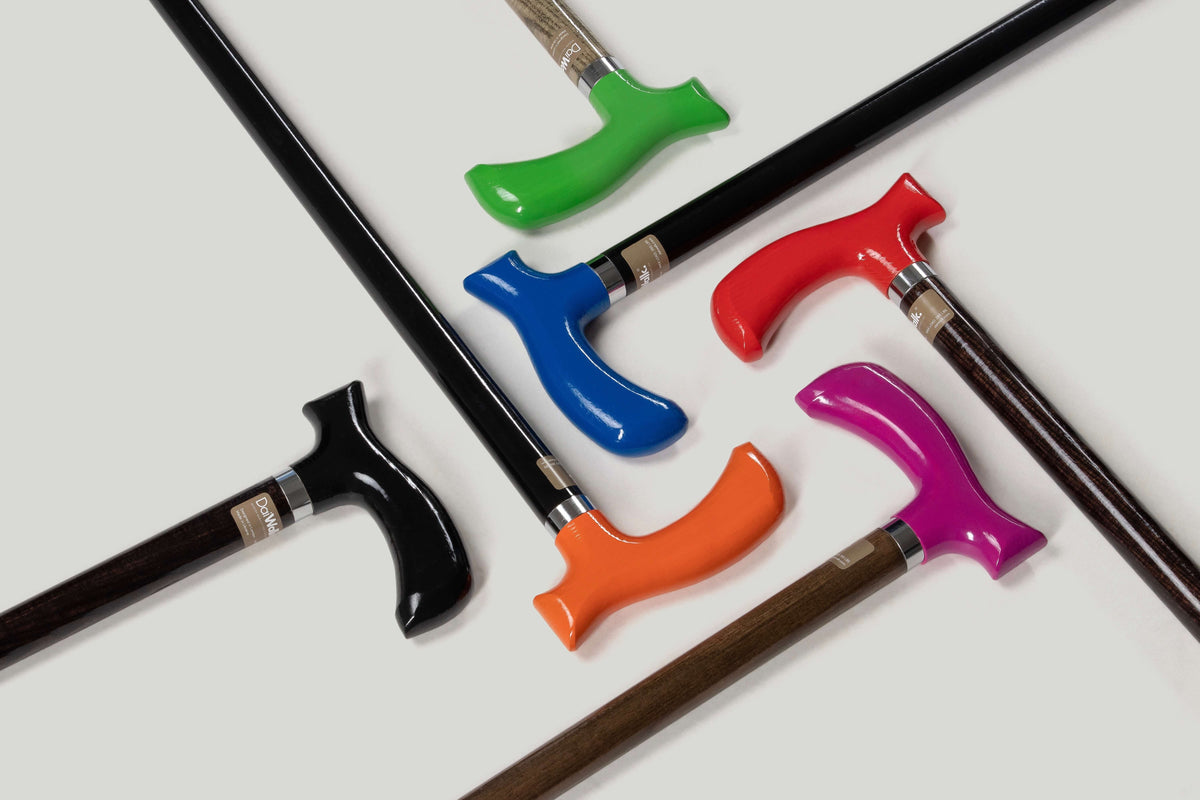
View the full DaiWalk range and use the 3D configurator to build a cane suited to variable MCTD symptoms.
Related reading: Walking Cane for Lupus | Walking Cane for Polymyositis


