


Lumbar spinal stenosis is one of the most common causes of walking limitation in adults over 60 -- yet it is frequently misdiagnosed as peripheral artery disease (PAD) because both conditions cause leg pain and fatigue that worsens with walking and improves with rest. The key distinguishing feature is posture: stenosis symptoms are specifically relieved by forward flexion of the spine (leaning forward), while PAD symptoms are not posturely dependent.
What Happens in Spinal Stenosis During Walking
The lumbar spinal canal narrows with age through a combination of disc bulging, facet joint hypertrophy, and ligamentum flavum thickening. In extension (upright standing), the canal narrows further -- compressing the cauda equina nerve roots that run through it. This compression reduces nerve blood supply and triggers neurogenic claudication: pain, heaviness, weakness, and numbness in the legs that develops progressively with walking and is relieved by sitting or forward bending.
The pattern is called the shopping trolley sign: many stenosis patients instinctively lean forward on a trolley handle when shopping, which opens the spinal canal through lumbar flexion and relieves symptoms. They can walk much further while leaning forward than they can when standing upright.
How a Walking Cane Functions in Spinal Stenosis
A correctly configured walking cane replicates the shopping trolley effect through partial forward lean. When the cane is planted in front of the user and weight is transferred forward through it, the natural tendency is slight lumbar flexion relative to the upright standing posture. This partial forward lean:
- Opens the lumbar canal slightly, reducing neural compression
- Reduces the extension component of the lumbar spine during walking
- Allows the user to walk further before neurogenic claudication onset
This is a specific mechanical benefit of the cane in stenosis that is different from its general load-transfer and stability functions. The cane is used not just for weight support but for posture facilitation.
Cane vs. Rollator in Spinal Stenosis
A rollator walker provides a more pronounced forward lean because the user grips handles at a lower relative height and pushes forward. For severe stenosis with very short walking distances before claudication, a rollator is often more effective than a single cane. However, for mild-moderate stenosis where the patient can walk 200-500m before symptoms, a cane may be sufficient and has the advantage of being far less bulky and more appropriate for varied daily environments.
Stenosis Symptom Pattern and Cane Need
| Walking Tolerance Before Symptoms | Symptom Character | Recommended Aid |
|---|---|---|
| Over 500m | Mild heaviness, occasional numbness | Single cane, posture focus |
| 200-500m | Moderate claudication | Single cane with rest strategy |
| Under 200m | Severe claudication, possible bilateral symptoms | Rollator or bilateral aids |
| Under 50m | Severe, affecting basic daily activities | Surgical consultation alongside aids |
Height Adjustment for Stenosis
In stenosis, cane height may be set slightly lower than standard (by 1-2cm) to facilitate the forward lean posture. This is a specific stenosis adjustment -- for most other conditions, standard wrist-crease height is correct. The collet adjustment mechanism allows fine-tuning without tools, enabling the user to experiment with height until the posture that most relieves symptoms is found.
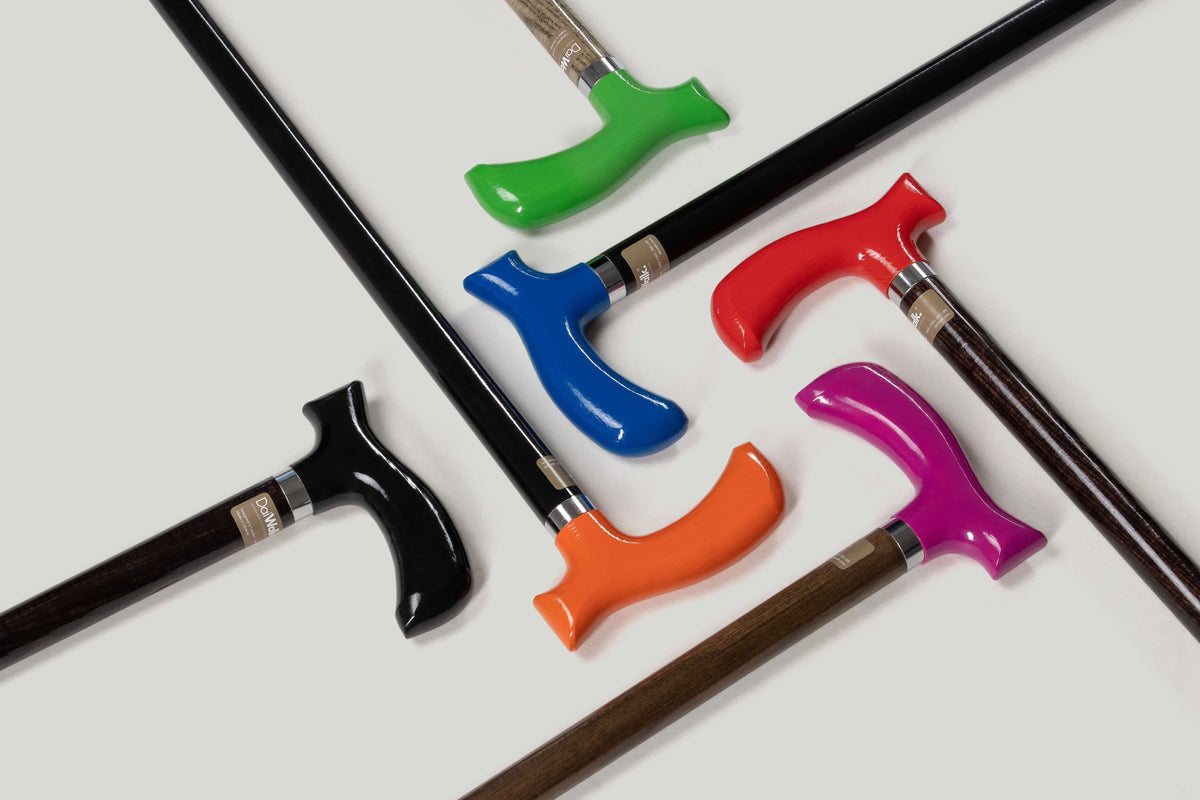
View the DaiWalk cane range and use the cane length calculator as a starting point (then adjust as needed for stenosis posture optimisation).
Related reading: Walking Cane for Lower Back Pain | Walking Cane vs. Rollator


