


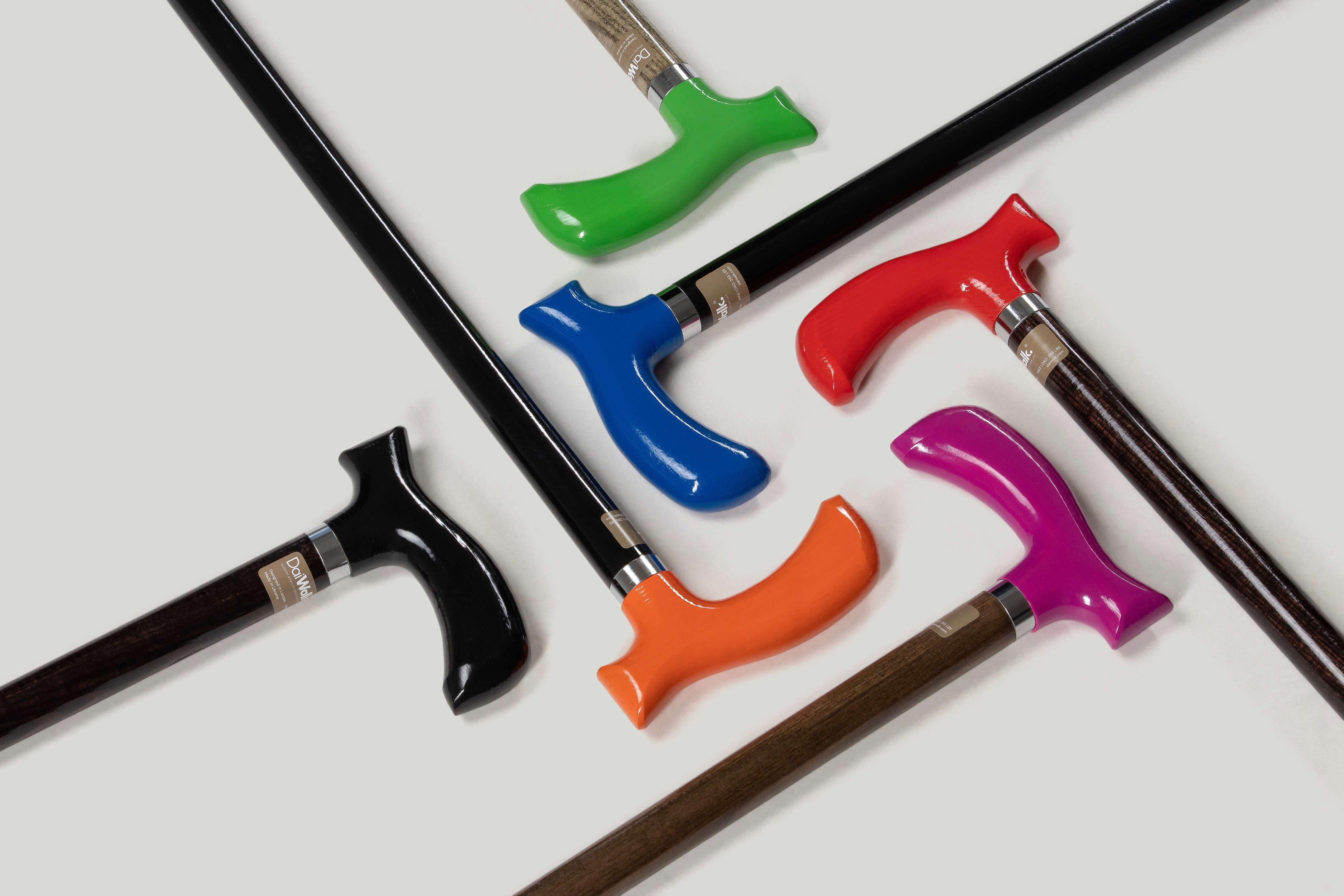
Walking canes are permitted on all commercial airlines as carry-on items — this is not a discretionary airline policy, it is mandated under the Air Carrier Access Act (US), EC Regulation 1107/2006 (EU), and equivalent regulations in most jurisdictions. The cane travels in the cabin with you. Airlines cannot require you to check it.
The travel-specific questions worth addressing are about portability, airport navigation, and what happens to the cane during security screening — not about whether it is permitted.
Airline Policy: What You Are Guaranteed
Under US ACAA and equivalent European regulations:
- Walking canes must be accepted as carry-on items regardless of size restrictions applied to other carry-ons
- The cane cannot be gate-checked without your consent
- If you are travelling in a wheelchair provided by the airline, your cane travels with you in the cabin
- Security screening must allow reasonable use of the cane for balance during the screening process
In practice: single-shaft walking canes are accepted without question at all major airports. Quad canes may attract more security attention. Canes with metal tips (ICE tips) may require tip removal at the security checkpoint — rubber tips pass without issue.
The Portability Question
Standard adjustable walking canes do not compress significantly. A collapsed adjustable shaft at minimum height is typically 700–850mm — not suitable for overhead bin storage lying flat. It leans against the seat or overhead bin wall.
Folding canes compress to 300–400mm and fit in a carry-on bag. The tradeoff: every folding joint is a structural weakness. Folding canes have higher lateral play than telescoping canes and significantly higher play than collet-telescoping canes. For heavy daily users, a folding cane as a travel item creates a regression in shaft performance.
The DaiWalk shaft in collet-telescoping configuration reaches a minimum length of approximately 690mm. It is not a folding cane. For users whose primary reason to collapse the cane is aircraft overhead storage, it fits vertically in the bin (overhead bin interior height: 550–650mm on most wide-body aircraft). It does not fit horizontally in a carry-on bag.
Security Screening Protocol
Walking cane through airport security:
- The cane does not need to go through the X-ray separately from your other items unless the screener requests it
- You may use the cane for balance while removing shoes or other items, and while passing through the screening area
- Metal-tipped canes (ICE tips) will require tip swap or tip removal — carry a rubber tip as a travel alternative
- Screeners may swab the cane handle for explosive trace detection — this is routine and requires no action from you
- If you require assistance for any part of the screening process, request it — airlines and airports are required to provide it
Travel Conditions That Change Tip Selection
| Travel Environment | Surface Challenge | Recommended Tip |
|---|---|---|
| Airport terminals | Polished stone, marble, often wet from foot traffic | Steady Tip™ (wet traction priority) |
| Hotel lobbies / cruise ships | Highly polished marble and tile | Steady Tip™ or wide-base ferrule |
| Nordic / alpine winter destinations | Ice, packed snow, wet stone | ICE tip (swap with rubber when entering buildings) |
| Cobblestone (European cities) | Uneven stone, gaps between stones | Wide-base or Steady Tip™ — large tip resists gap-catching |
| Wet outdoor markets / promenades | Wet tile and stone | Steady Tip™ |
Packing and Transport
For checked luggage scenarios (not recommended but sometimes necessary if the user cannot manage the cane during transit): wrap the handle in clothing or bubble wrap to protect finish. The DaiWalk wood handle is finished and resistant to normal handling but can be scratched by contact with metal luggage hardware.
If travelling without the cane at destination and renting or borrowing locally: this is rarely advisable for users with medical-grade dependence on cane specifications. Local rental canes are typically standard rubber ferrule, arbitrary height, and no collet adjustment. Plan to bring your own.
Interchangeable Tips for Travel
The most practical travel configuration: carry one Steady Tip™ installed (general use) and one rubber standard ferrule in your carry-on. If flying through security with metal ICE tips, swap to rubber before the checkpoint. Swap back if needed at destination. The DaiWalk tip system swaps in under 30 seconds without tools.
See the interchangeable tip collection for tip options and the main product page for shaft configuration details. Not sure which tip size fits your cane? The free rubber tip size finder confirms it, and the walking cane finder matches a full travel-ready setup to how and where you walk.


