


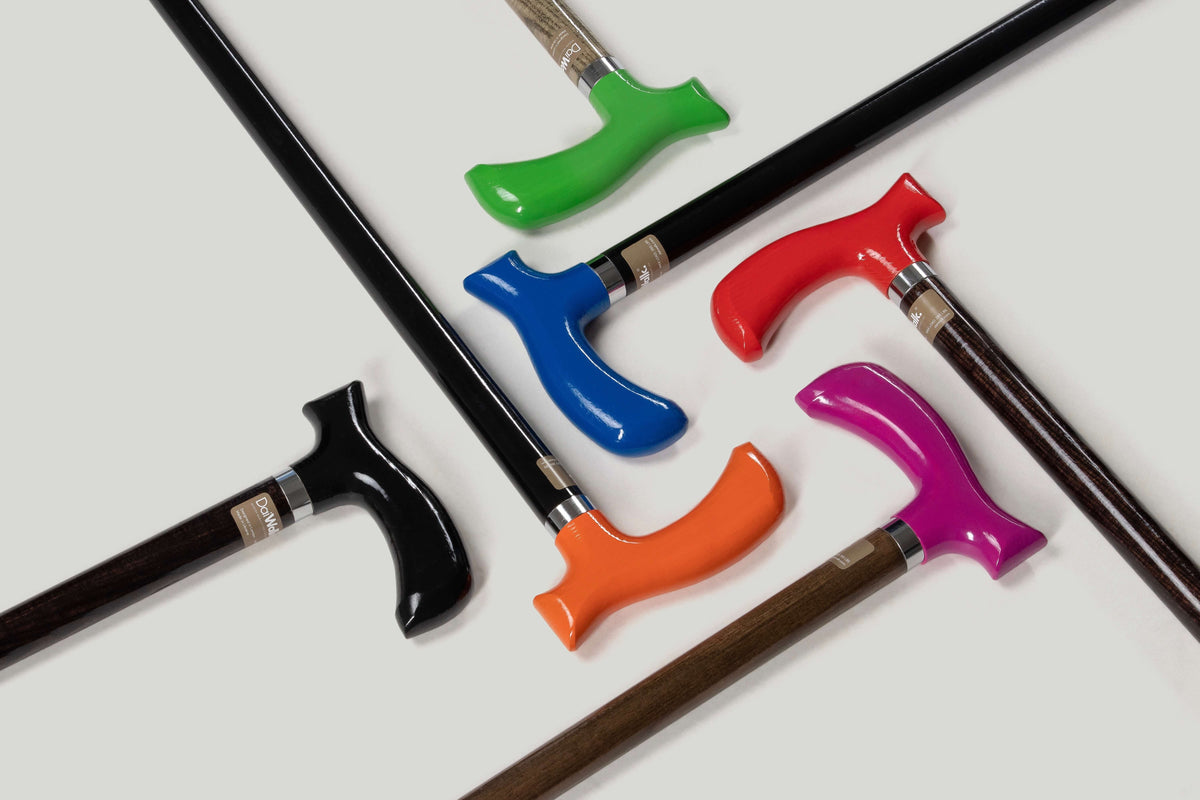
Walking cane use in professional and workplace environments is increasingly common as the workforce ages and as more people with chronic conditions remain in employment. The workplace presents specific challenges for cane users: navigating corridors, managing the cane during desk work, transitions between sitting and standing, emergency evacuations, and the social dynamics of cane use in a professional setting. This practical guide addresses workplace-specific cane management.
Workplace Mobility Challenges for Cane Users
- Long office corridors and multi-floor buildings (lifts are usually available, but timing and availability vary)
- Crowded meeting rooms where cane placement is difficult
- Cafeterias and canteens where carrying food and using a cane simultaneously is required
- Outdoor carpark-to-office transitions (often across tarmac, kerbs, and weather-exposed surfaces)
- Emergency evacuation procedures: cane users may need assistance; personal emergency evacuation plans (PEEPs) should include cane user needs
- Client-facing roles: professional appearance expectations may create pressure to minimise cane visibility
Cane Management During Desk Work
The cane must be stored safely when the user is seated at a desk. Unsafe cane placement (leaning against a desk) creates a fall hazard if it falls and a trip hazard for colleagues. Better options:
- Cane hanger (hook that attaches to the desk edge): keeps the cane vertical and out of the footwell
- Wall-mounted cane hook beside the desk (facilities management can install)
- Leaning the cane against the wall to the side (not across the footpath)
- The DaiWalk leather lanyard allows the cane to hang from the wrist when the user stands up from the desk -- eliminating the sit-to-stand cane retrieval problem
Standing Desks and Walking Canes
Standing desks are common in modern offices. For cane users at a standing desk:
- The cane provides support at the standing desk for the weight-bearing standing period
- Transition from sitting to standing requires cane retrieval -- the lanyard addresses this
- A sit-stand desk allows the cane user to switch between seated (cane stored) and standing (cane in use) more safely than fixed-height standing desks
Walking Cane in Professional Settings: Appearance Considerations
| Professional Context | Cane Approach |
|---|---|
| Client-facing roles (sales, consulting) | Premium/designer cane signals care and attention to detail; not a weakness signal |
| Clinical roles (healthcare workers) | DaiWalk cane distinguishable from patient canes; professional appearance maintained |
| Remote/hybrid workers (home office) | Cane on camera normalises use; no social barrier |
| Physical workplace roles (site visits, warehouses) | Steady Tip essential for uneven industrial surfaces; safety shoe compatibility |
Disability Disclosure and Reasonable Adjustments
In most countries, employees with conditions requiring a walking cane have a right to reasonable adjustments in the workplace (UK Equality Act 2010, ADA in the US, equivalent legislation in most EU countries). Relevant adjustments: parking space closer to entrance, accessible desk location, elevator priority, adjusted emergency evacuation plan. An occupational health assessment can formalise these adjustments.
Explore DaiWalk designer walking sticks for professional environments. Related: Walking Cane Psychology | Walking Cane as a Gift.


