


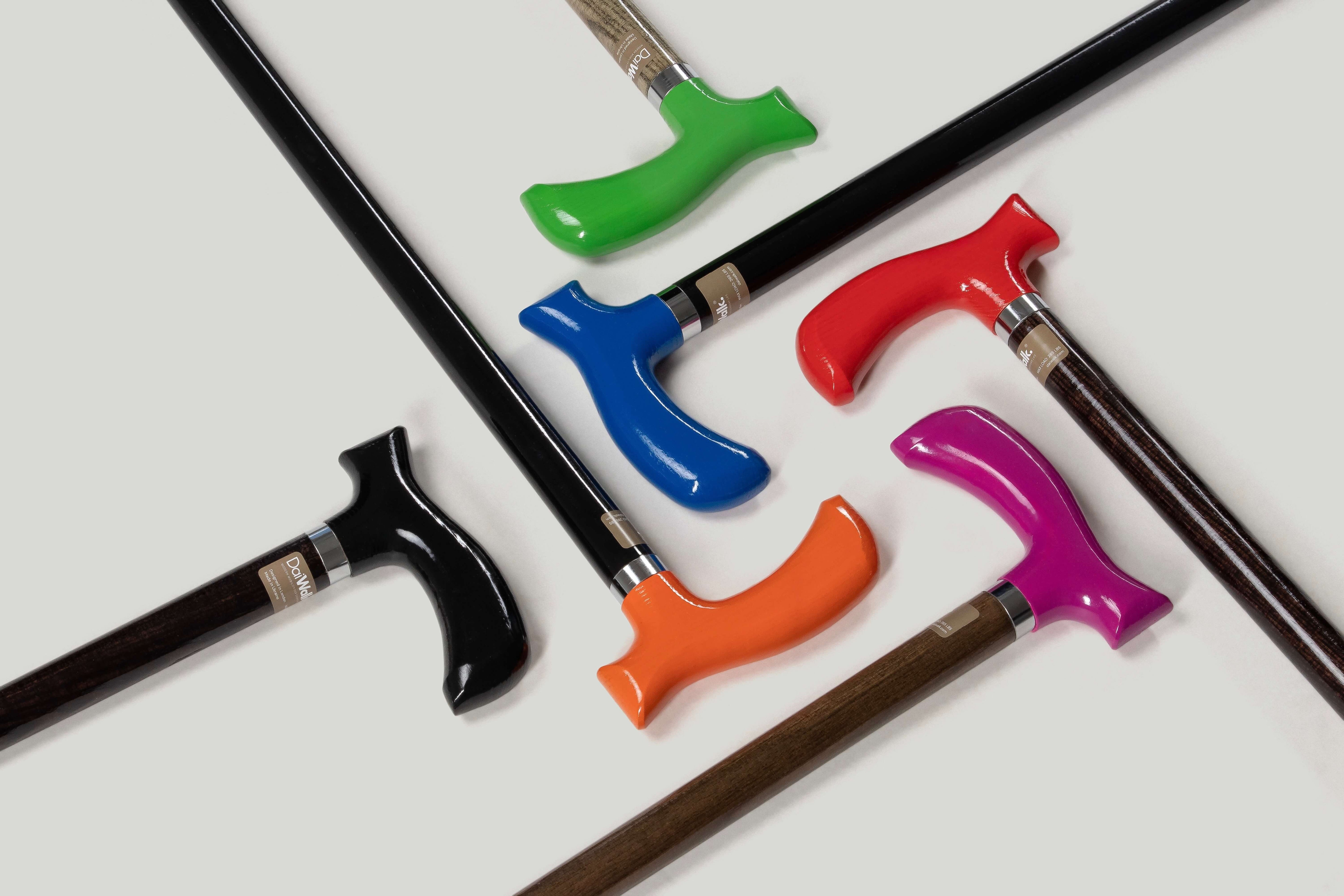
The comparison between wood and aluminium in walking canes is usually framed as aesthetic — wood looks better, aluminium is more practical. This is a significant mischaracterisation. The material differences produce measurable performance differences in vibration damping, thermal comfort, surface grip, and long-term structural behaviour. Aesthetic preference is downstream of these functional characteristics, not the primary variable.
The Physical Properties That Matter
| Property | Oak | Aluminium (6061) | Effect on Use |
|---|---|---|---|
| Density | 0.60–0.90 g/cm³ | 2.70 g/cm³ | Oak handle lighter by 30–40% at equivalent volume |
| Vibration damping coefficient | 0.005–0.012 | 0.0001–0.0002 | Oak damps ground-contact vibration 25–60× more effectively |
| Thermal conductivity | 0.12–0.17 W/m·K | 167 W/m·K | Aluminium conducts cold/heat to the hand; oak stays near ambient |
| Surface friction (dry palm) | COF 0.55–0.68 | COF 0.18–0.30 (bare); 0.40–0.55 (anodised/textured) | Oak provides passive grip without surface treatment |
| Surface friction (wet palm) | COF 0.51–0.57 | COF 0.12–0.25 (bare); 0.30–0.45 (treated) | Oak maintains most dry COF when wet; aluminium degrades significantly |
| Durability under impact | Dents/scratches — cosmetic damage | Dents and bends — structural damage possible | |
| Aging behaviour | Surface develops patina; structural properties unchanged | Anodising can chip; exposed aluminium oxidises |
Vibration Damping: The Most Overlooked Difference
Every step on a hard surface sends a vibration pulse through the cane tip, up the shaft, and into the handle. Wood — with a damping coefficient 25–60× higher than aluminium — absorbs most of this pulse before it reaches the hand. Aluminium transmits it nearly unaltered.
The practical consequence: an aluminium-handled cane on hard tile produces a distinct impact at the hand on every step. An oak handle on the same surface produces a muted, absorbed sensation. Over 8,000 daily steps, the cumulative impact load on the palm and wrist is substantially different.
This is measurable, not subjective: vibration amplitude at the handle after tip contact on tile: aluminium approximately 0.8–1.2 m/s², oak approximately 0.15–0.25 m/s². A 4–5× reduction.
Thermal Comfort in Cold Conditions
At 5°C ambient (winter outdoor use), an aluminium handle reaches ambient temperature within minutes of being carried outdoors — the hand contacts a surface at 5°C. This is uncomfortable without gloves and painful for users with circulatory conditions (Raynaud's phenomenon, cold allodynia).
Oak's thermal conductivity is approximately 1,000× lower than aluminium's. An oak handle in the same conditions stays closer to skin temperature during use — the thermal mass effect is minimal and the low conductivity means the hand warms the surface contact area rather than the handle drawing heat from the hand.
The Grip Differences
Oak's surface texture is structural — the wood grain provides micro-level surface irregularities that engage with the palm passively. No applied grip texture, no rubber overlay, no treatment required. The COF is intrinsic to the material.
Aluminium's base COF is low (0.18–0.30 bare). Manufacturers address this with knurling, rubber overlays, foam wraps, or anodising with texture. All of these degrade over time, washing off or compressing with use. Oak's grip does not degrade — the grain is structural, not surface-applied.
Weight: Where Aluminium Has an Advantage
Aluminium shafts are lighter than equivalent wood shafts at the same structural specification — aluminium's density advantage allows thinner walls at the same stiffness. A wood shaft of equivalent length to an aluminium shaft is 40–70g heavier.
The DaiWalk design uses aluminium for the shaft (weight advantage) and wood for the handle only (grip, vibration damping, thermal comfort). This captures the structural benefits of each material in the part of the cane where they matter most.
Oak vs. Wenge Within Wood
Within wood options, oak and wenge differ in density (oak 0.75 g/cm³; wenge 0.88 g/cm³), grain tightness (wenge is finer), and COF (wenge 0.71/0.59 dry/wet vs. oak 0.68/0.57). Wenge is slightly heavier and slightly higher-COF. See the full comparison in Oak vs. Wenge.
Both wood options outperform aluminium on vibration damping, thermal comfort, and wet grip. The choice between them is secondary to the wood vs. aluminium choice.
View oak and wenge handle options at the oak walking cane collection and the full walking cane range.
Related Reading
- Oak vs. Wenge Handle Comparison
- Walking Cane Handle Types Compared
- Walking Cane Weight
- Best Grip for Wet Conditions
Material property data from published materials science references. Vibration amplitude measurements from DaiWalk internal testing (accelerometer at handle, standardised tip-contact on tile). COF data from DaiWalk friction testing programme.


