


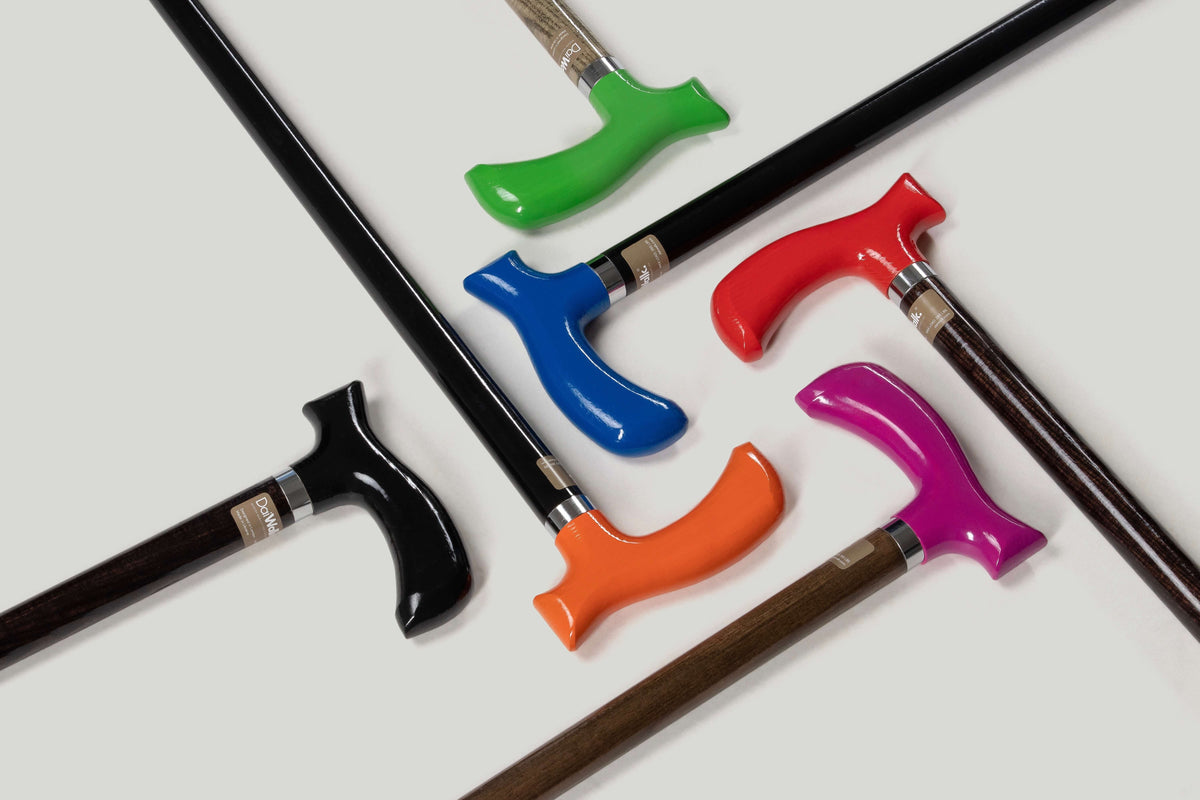
One of the most practical barriers to consistent cane use is shopping, bag carrying, and any task requiring both hands. A user who sets down a cane to carry shopping bags frequently leaves it behind or parks it somewhere inconvenient. The cane must fit into real life -- and real life involves carrying things.
The Hands-Free Problem
When a cane is held in one hand, the other hand is available for tasks. But many real-world activities require both hands: grocery shopping with multiple bags, carrying a child, managing luggage, opening a gate while carrying something. The standard cane user strategy -- tuck the cane under an arm -- works briefly but not well during walking.
The alternative approaches, in order of practicality:
1. Wrist Lanyard Carry
A wrist lanyard allows the cane to hang from the wrist when not in contact with the ground. The user can briefly use both hands (to pay, to open a bag, to pick something up) while the cane remains attached to the body. For tasks lasting under 30 seconds, this is the most practical solution.
The DaiWalk leather lanyard attaches to the handle and wraps around the wrist. It keeps the cane immediately accessible for the next step without having to retrieve it from a surface or another hand. Particularly useful during:
- Checkout payment (tap-to-pay or wallet retrieval)
- Key and lock management
- Brief bag management at doorways
- Receiving items handed over by another person
2. Bag-to-Cane Attachment
Several clip systems allow shopping bags, tote bags, or handbags to attach to the cane shaft, freeing the non-cane hand. The most effective implementations hang the bag from the upper shaft rather than the handle (which would shift the balance point and affect grip).
Considerations for shaft attachment:
- Weight limits: do not hang more than 2-3kg from a cane shaft. Heavier loads create lateral forces that can destabilise the cane and damage the shaft material at the attachment point
- Natural wood shafts: clip systems must not use metal attachment that contacts the wood without protection -- bare metal clips can indent or damage varnished wood
- Walking rhythm: a swinging bag attached to the shaft disrupts the regular cane rhythm. Fixed or non-swinging attachment (a clip with a short, firm loop) is preferable to a long hanging bag
3. Rollator and Walker as Alternative
For users who regularly need to carry significant loads (grocery shopping, transport of work materials), a rollator with a basket or bag provision may be more appropriate than a single cane. The cane excels at balance support with low load; the rollator provides load-carrying capacity but is more bulky and less portable. Many users maintain both: a cane for most daily use and a rollator for specifically load-carrying tasks.
4. Backpack Strategy
A backpack eliminates the bag-carrying problem entirely by moving the load onto the trunk. For cane users, a backpack distributes weight symmetrically and does not interfere with either hand or the cane. Caveats: backpacks increase total body mass carried and shift the centre of mass rearward -- relevant for users with balance conditions. Crossbody bags have a partial version of this advantage without the rearward weight shift.
Bag Carry Comparison
| Carry Method | Both Hands Free | Disrupts Cane Use | Weight Limit | Best For |
|---|---|---|---|---|
| Wrist lanyard | Briefly (under 30s) | No | Cane only | Brief tasks, payment, doors |
| Shaft clip (bag) | Yes | Minor (rhythm) | 2-3kg | Light shopping, handbag |
| Backpack | Yes | No | 10-15kg | Regular load-carrying |
| Crossbody bag | Yes | No | 3-5kg | Everyday carry items |
| Rollator | Yes | Yes (different aid) | 15kg+ | Heavy shopping, grocery trips |
View the DaiWalk leather lanyard and the full DaiWalk cane range.
Related reading: Walking Cane Accessories | Walking Cane vs. Rollator


