


Cervical spondylotic myelopathy (CSM) is spinal cord compression in the neck from degenerative changes -- disc protrusion, osteophyte formation, and ligamentum flavum hypertrophy narrowing the cervical canal. It is the most common cause of spinal cord dysfunction in adults over 50. The result is a progressive myelopathy: weakness and spasticity in the legs, impaired hand function, and balance difficulties that collectively produce a highly specific and distinctive gait impairment.
Cervical Myelopathy Gait: The Specific Pattern
The gait of cervical myelopathy is characterised by:
- Spastic scissor gait: Lower limb spasticity from upper motor neuron dysfunction causes stiffened knee and hip extension with adduction -- a characteristic stiff, slightly scissoring pattern
- Wide base: Despite the stiffness, the person widens the base of support to compensate for impaired balance
- Reduced arm swing: Spasticity affects the arms as well, and the natural arm swing that counterbalances walking is reduced or absent
- Tandem gait failure: Inability to walk heel-to-toe in a straight line is one of the earliest signs of cervical myelopathy and a useful screening test
The Hand Function Problem in Cervical Myelopathy
Cervical myelopathy causes hand dysfunction (weakness, clumsiness, loss of dexterity) in addition to the gait disturbance. This creates a direct cane-use problem: the hands needed to hold the cane may be the most affected body part:
- Grip weakness limits the force that can be applied through the cane
- Finger dexterity loss makes precise cane tip placement difficult
- Hand spasticity may make maintaining a consistent grip uncomfortable
Cane Selection in Cervical Myelopathy
Given these constraints, cane selection for cervical myelopathy should prioritise:
- Ergonomic handle that does not require strong grip force -- a handle where the palm bears the load rather than the fingers
- Lighter shaft (less arm effort to swing forward)
- Wide stable tip (compensates for imprecise tip placement from hand dysfunction)
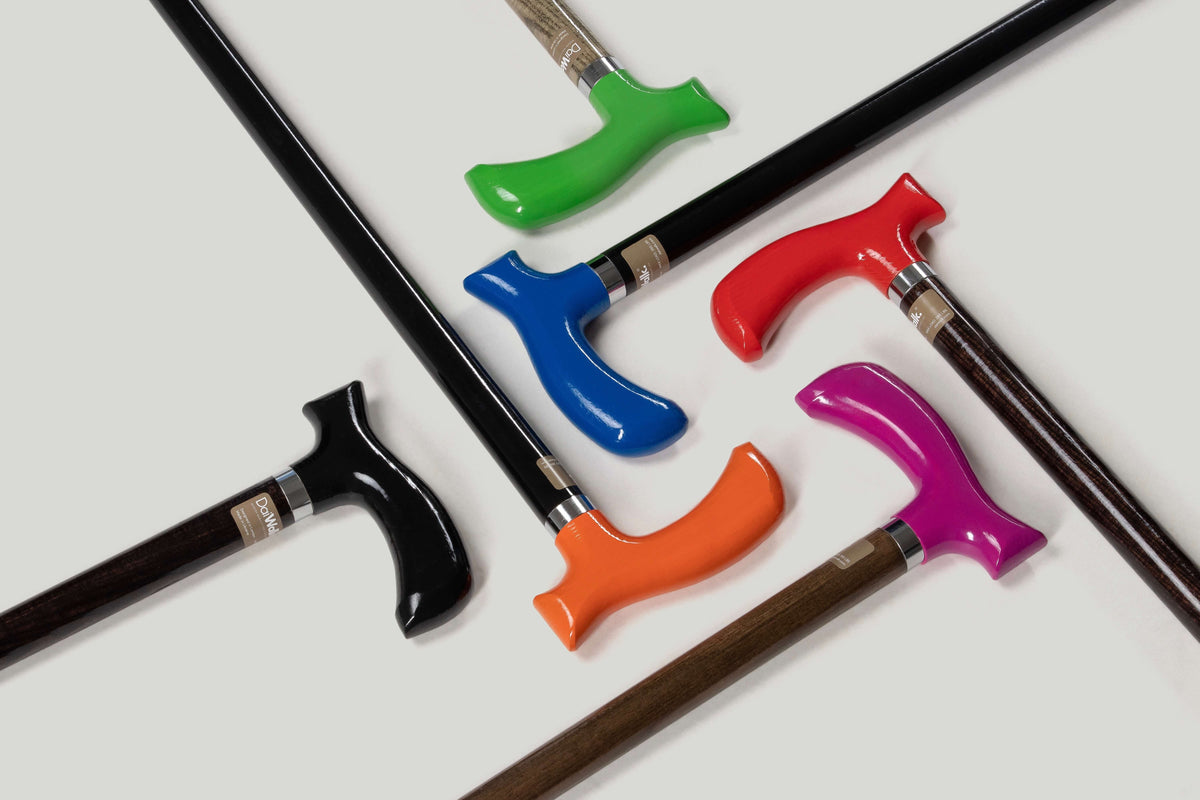
The DaiWalk Anatomic Grip reduces peak hand pressure to 1.9 N/cm² (vs 4.2 N/cm² for T-bar) by distributing load across the palm rather than concentrating it at the fingers -- directly relevant in myelopathic hand weakness.
CSM Progression and Walking Aid Escalation
| CSM Severity (mJOA) | Gait Pattern | Appropriate Aid |
|---|---|---|
| Mild (15-17) | Subtle tandem gait failure; otherwise functional | Cane for balance and outdoor safety |
| Moderate (12-14) | Spastic gait, balance impaired, falls possible | Cane; ergonomic grip; surgical referral appropriate |
| Severe (<12) | Significant spasticity; wheelchair may be required | Cane limited; forearm crutches or frame; urgent surgical review |
Note: cervical myelopathy is potentially progressive and surgical decompression can halt or partially reverse the progression. A cane addresses symptoms but does not treat the underlying cord compression. Surgical consultation is important when myelopathy is confirmed.
Explore DaiWalk walking canes. Related: Walking Cane for Neck and Cervical Spine Pain


