


Chronic kidney disease (CKD) is strongly associated with reduced physical function -- but the mechanisms are multiple and interact. Patients often attribute their mobility problems to a single cause (fatigue, or leg weakness) when in practice three or four concurrent physiological changes are affecting their gait simultaneously. Understanding the mechanisms leads to more targeted cane use decisions.
Mechanisms Affecting Mobility in CKD
Uraemic neuropathy: As kidney function declines (typically becoming symptomatic at GFR below 30), uraemic toxin accumulation causes peripheral neuropathy. This preferentially affects sensory fibres -- the same nerve pathways that provide proprioceptive information about foot position during walking. Loss of proprioception is a significant balance impairment: the user loses the continuous sensory feedback that normally regulates step-by-step gait adjustments.
Renal anaemia: Erythropoietin deficiency in CKD causes anaemia in most patients with GFR below 45. Anaemia reduces oxygen delivery to muscles and brain. The functional consequences include exercise intolerance, earlier onset of fatigue during walking, and cognitive effects (concentration, reaction time) that impair balance management.
Mineral and bone disorder: CKD-mineral bone disorder causes secondary hyperparathyroidism and altered bone metabolism. This increases fracture risk if a fall occurs -- making fall prevention more clinically important in CKD than in patients with equivalent mobility impairment but normal bone metabolism.
Muscle wasting (uraemic myopathy): Protein catabolism and reduced muscle protein synthesis in CKD cause progressive sarcopenia independent of age. Proximal muscle weakness (thighs, hips) is common at advanced stages.
Dialysis-specific factors: Patients on haemodialysis experience significant fluid shifts around each session. The post-dialysis period (2-4 hours after session) is associated with increased fatigue and orthostatic hypotension -- peak fall risk time.
GFR Stage and Mobility Impact
| CKD Stage | GFR (mL/min/1.73m2) | Dominant Mobility Impact | Cane Indication |
|---|---|---|---|
| G1-G2 | Over 60 | Minimal direct kidney-related impact | Comorbidities only |
| G3a-G3b | 30-59 | Fatigue, early anaemia | On exertion, extended distances |
| G4 | 15-29 | Neuropathy onset, moderate anaemia | Regular daily use |
| G5 (pre-dialysis) | Under 15 | Significant neuropathy, anaemia, myopathy | Essential for safety |
| G5D (dialysis) | Dialysis dependent | Post-dialysis hypotension peaks | Essential, especially post-session |
Cane Selection for CKD Patients
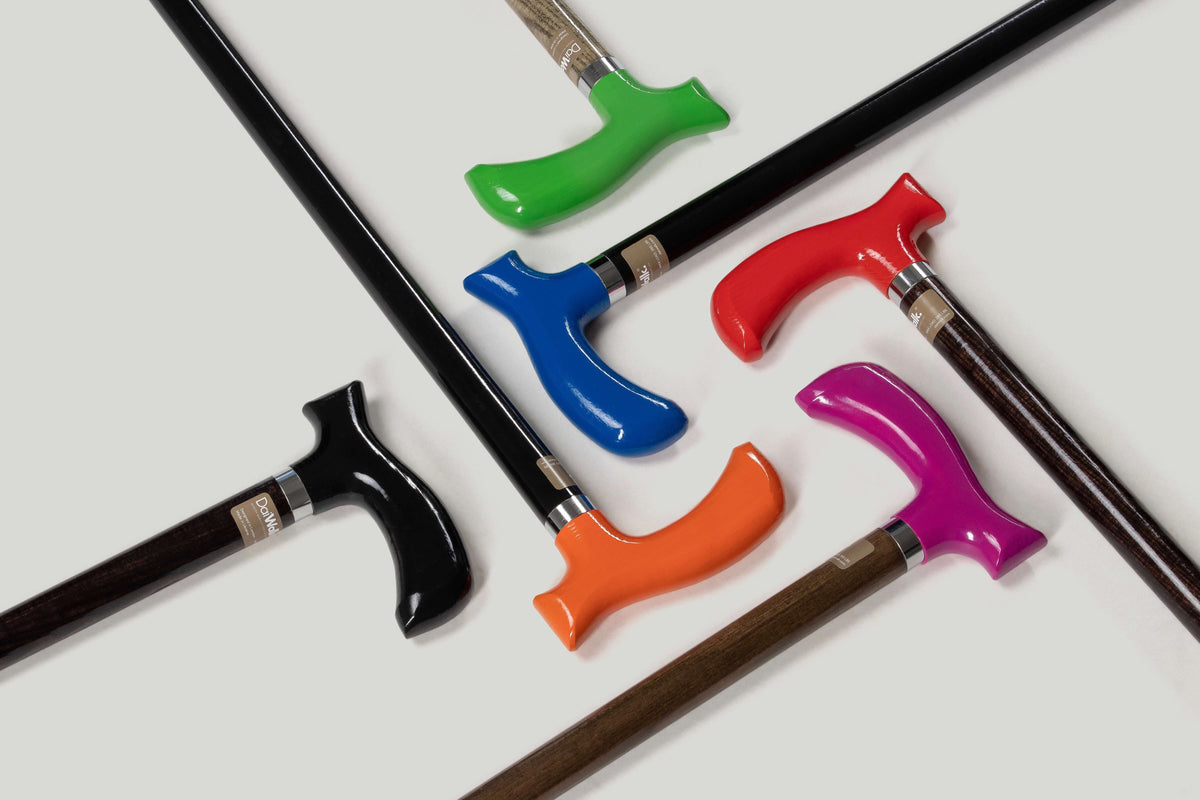
- Neuropathy: The cane provides proprioceptive substitution -- the ground contact through the shaft gives the brain position information that peripheral nerves are failing to provide. Handle type matters: the Anatomic Grip provides more surface contact information through the palm than a thin round handle
- Fatigue: Lightweight shaft (DaiWalk canes: 295-340g) reduces carry fatigue. A heavier cane adds to the energy cost of walking when energy reserves are already reduced by anaemia
- Post-dialysis hypotension: A cane is particularly important during the 2-4 hour post-session window. The wrist lanyard allows rapid deployment if sudden dizziness occurs
- Fracture risk: CKD-mineral bone disorder makes fall prevention highly important. Tip performance is critical -- the Steady Tip (3mm lateral slip vs. 14-18mm for standard ferrule) on wet surfaces materially reduces fall risk
View the DaiWalk cane range and use the cane length calculator to determine correct sizing.
Related reading: Walking Cane for Peripheral Neuropathy | Walking Cane for Anaemia


