


Haemophilia -- particularly severe and moderate haemophilia A and B -- causes recurrent joint bleeds (haemarthroses) that progressively damage the joint over years. The knee, ankle, and elbow are the most commonly affected joints. Haemophilic arthropathy (joint damage from repeated bleeds) creates a clinical picture similar to severe osteoarthritis in affected joints, often in patients who are young adults or middle-aged.
A walking cane for haemophilia serves two functions: reducing load on damaged joints during walking, and potentially reducing the incidence of joint bleeds by reducing the peak forces that can trigger a bleed in a compromised joint capsule.
Joint Load and Bleed Risk
Joint bleeds in haemophilia can be spontaneous or triggered by minor trauma and repetitive loading. In a joint with haemophilic arthropathy, the joint capsule and synovium are fragile -- normal walking loads (3-5x body weight through the knee during stance phase) repeatedly stress a compromised joint lining. A walking cane on the contralateral side reduces this peak load by approximately 15-25% per step.
While there is no direct evidence that cane use reduces bleed incidence (the relevant studies have not been done), the biomechanical logic is compelling: lower peak force per step reduces the mechanical stress on the fragile joint lining that would otherwise be a triggering factor for bleeding.
Which Joints and Which Side
For knee haemophilic arthropathy: cane on the contralateral side (standard contralateral placement for knee conditions).
For ankle haemophilic arthropathy: more complex. The ankle is the most commonly affected joint. Walking with a stiff, damaged ankle is itself gait-disrupting -- the cane provides balance support and reduces the compensatory stress the knee takes when the ankle cannot absorb shock normally.
For bilateral joint involvement (very common in severe haemophilia): two canes or forearm crutches provide bilateral support. Bilateral involvement assessment should be by a physiotherapist familiar with haemophilia.
Factor Prophylaxis and Cane Use
Modern haemophilia care involves prophylactic factor replacement (or emicizumab for haemophilia A) to prevent bleeds. During prophylaxis, joint protection through load reduction is still valuable -- the factor reduces bleed risk, but reducing the mechanical trigger through a cane provides an additional margin. During an active bleed or immediately post-bleed, weight-bearing restriction applies until the bleed resolves -- cane use during this period reduces but does not eliminate lower limb loading, and the physiotherapist should specify the appropriate weight-bearing level.
Handle Considerations for Haemophilia
Some haemophilia patients have elbow involvement, which affects grip and cane-bearing capacity. For elbow involvement, the forearm platform crutch (which distributes load through the forearm rather than the hand/wrist/elbow) may be more appropriate than a standard cane. For patients with hand or wrist involvement only: the Anatomic Grip with wrist lanyard minimises grip force and elbow stress relative to a standard T-bar handle.
Exercise and Haemophilia
Low-impact exercise (swimming, cycling) is strongly encouraged in haemophilic arthropathy to maintain muscle strength around damaged joints. Walking is also encouraged -- with appropriate load management. A cane enables more walking with less joint stress, supporting the activity goals of haemophilia management without exposing the joint to the unmanaged loading that walking without support would entail.
| Joint Affected | Cane Placement | Additional Consideration |
|---|---|---|
| Knee haemophilic arthropathy | Contralateral hand | Standard contralateral protocol |
| Ankle haemophilic arthropathy | Contralateral or bilateral | Assess shock absorption deficit from stiff ankle |
| Bilateral lower limb | Two canes or forearm crutches | Physiotherapy assessment required |
| Elbow involvement | Forearm platform crutch preferred | Standard cane loads elbow in affected arm |
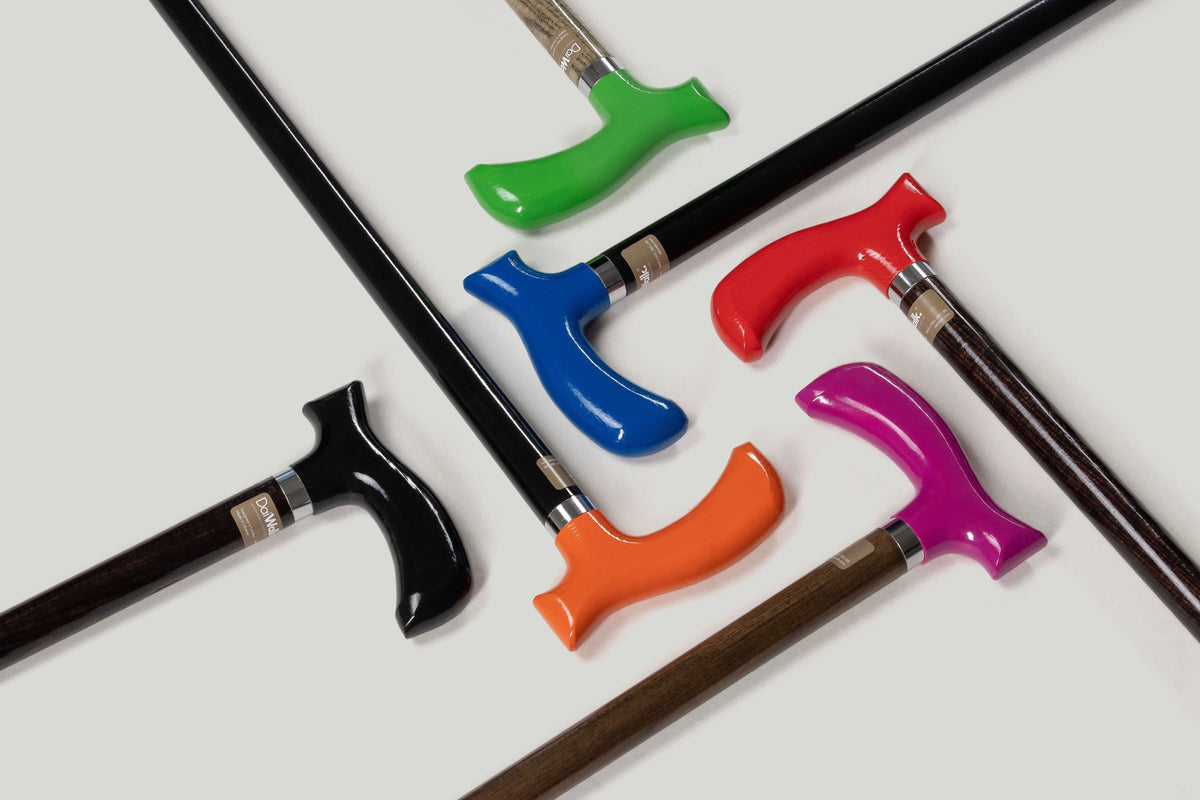
View the DaiWalk range with Anatomic Grip and Steady Tip for haemophilic arthropathy joint protection applications.


