


Iliotibial band (ITB) syndrome is the most common cause of lateral knee pain in runners and cyclists, producing a characteristic sharp pain at the lateral femoral epicondyle that is worst between 20 and 30 degrees of knee flexion -- exactly the angle the knee is at during the foot-strike phase of running, and a significant portion of normal walking gait.
Cane use is not standard first-line treatment for ITB syndrome, which typically responds to rest, activity modification, physiotherapy, and hip strengthening. However, for active adults whose walking is significantly limited by ITB pain, or for those who have developed ITB syndrome secondary to compensatory gait patterns from another condition, a walking cane during the recovery period has a role.
Why ITB Syndrome Produces Lateral Knee Pain
The iliotibial band is a thick fascial band running from the iliac crest to the lateral tibia. During knee flexion and extension cycles (as in walking and running), the ITB repeatedly slides over the lateral femoral epicondyle. When inflamed or tight, this repeated contact produces friction syndrome (the older explanation) or compression of a fat pad beneath the ITB (the more current understanding). The result is lateral knee pain at a specific knee flexion angle.
Does a Cane Help ITB Syndrome?
A cane can help in specific ways:
- Reducing overall lower limb load per step, which reduces the force of each ITB-epicondyle contact cycle
- Providing a stability point that allows a shorter, more controlled stride -- shorter stride reduces the knee flexion velocity at foot-strike, which is the primary pain-producing moment
- For users with ITB syndrome from compensatory gait (one-sided limp from another condition), the cane on the symptomatic side normalises gait and reduces the compensatory ITB overload
What a cane does not do: correct the underlying hip weakness and altered biomechanics that cause most ITB syndrome. Physiotherapy is required for this.
Gait Modification With a Cane for ITB Syndrome
The cane is held in the hand opposite the affected lateral knee. The key gait adjustment: take shorter steps with the cane to reduce the knee flexion velocity and peak flexion angle at foot-strike. This is counter to the instinct to take longer, more normal-feeling steps, but shorter step length with controlled foot placement is more protective of the ITB.
Recovery Timeline
Most ITB syndrome resolves within 4-8 weeks of appropriate conservative management (relative rest, hip strengthening, gait modification). Cane use during this period is typically short-term and is weaned as pain reduces and normal gait returns. For chronic or recurrent ITB syndrome (common in runners), cane use is not typically part of the long-term management -- the long-term answer is biomechanical correction.
| Phase | Cane Role | Primary Treatment |
|---|---|---|
| Acute (pain at rest or minor activity) | Possible -- short-term load reduction | Relative rest, ice, NSAID |
| Subacute (pain only during walking) | For painful walking sessions | Hip strengthening, gait re-education |
| Recovery | Wean as pain reduces | Return to running programme |
| Chronic / recurrent | Not appropriate -- biomechanical fix needed | Running gait analysis, hip strengthening |
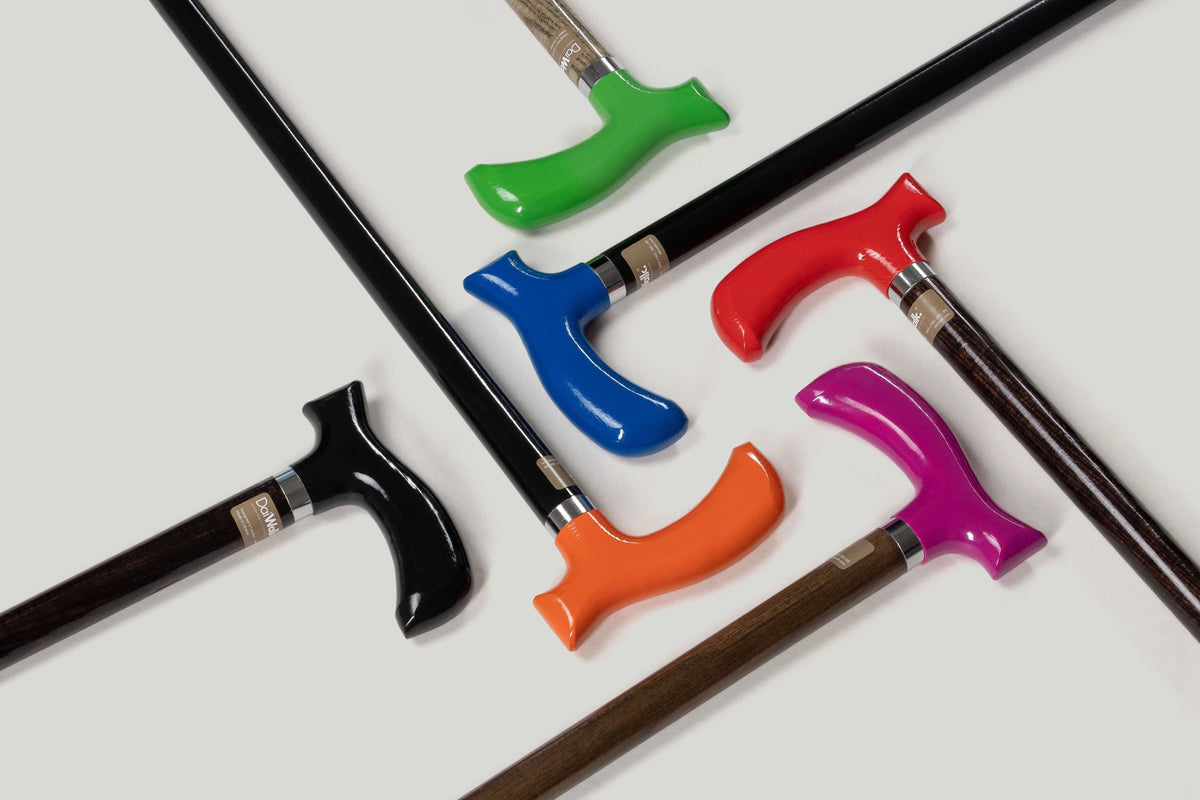
View the DaiWalk range for short-term recovery cane options with adjustable collet mechanism for the recovery period.


