


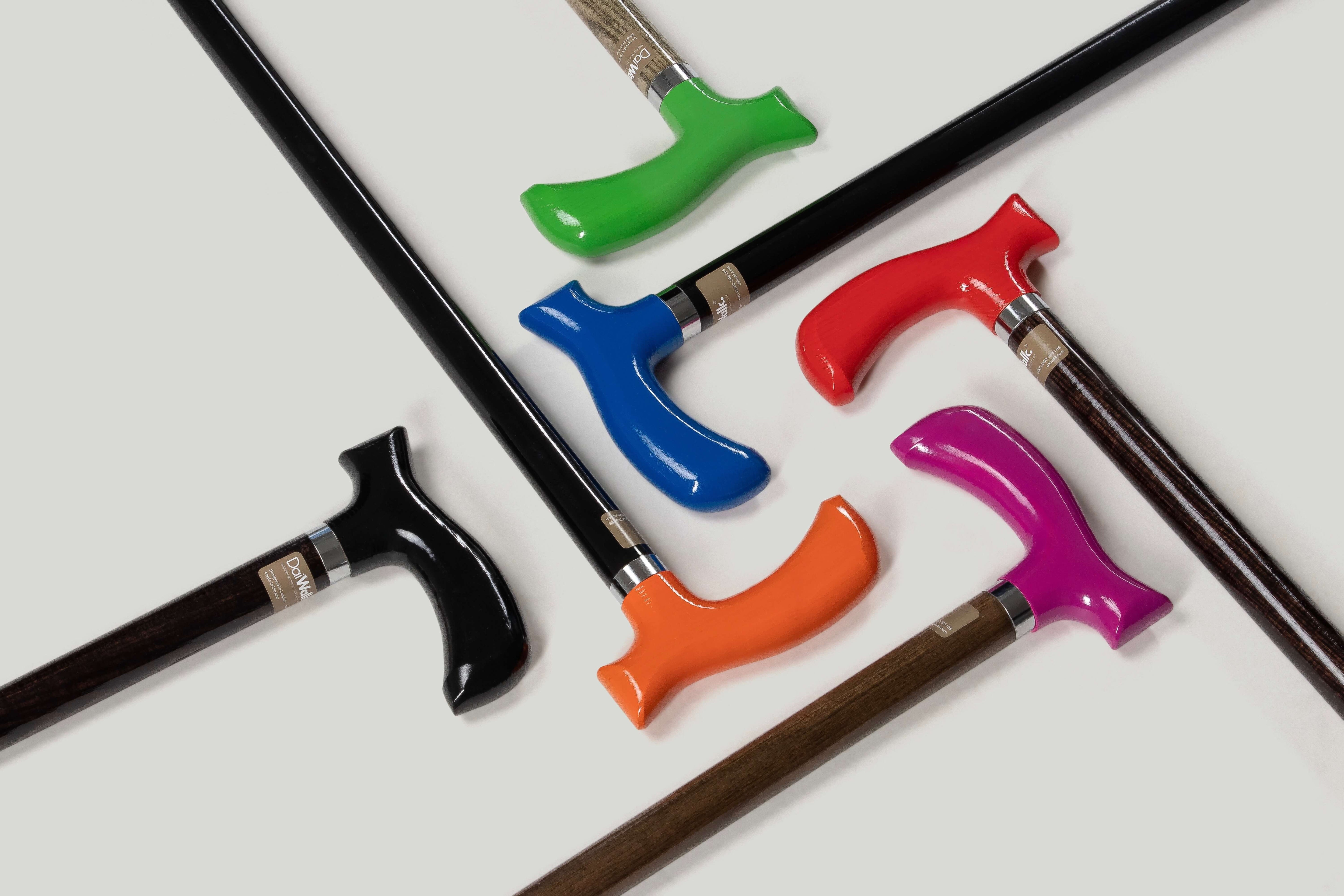
Arthritis is the most common reason people begin using a walking cane — and the condition for which standard cane handle design is most poorly suited. A T-bar handle transfers load directly to the joints most likely to be affected. Using one for several hours a day is, in engineering terms, applying load to the damaged structure with every step.
Handle shape is not a comfort preference when arthritis is involved. It is a clinical variable. Here is what the data shows. If your current cane already aggravates your wrist or palm, our free wrist pain checker helps you isolate the cause — height, handle or grip — before you buy another.
What Arthritis Does to Hand Function — and What a Cane Handle Must Account For
Arthritis in the hand and wrist affects two functional parameters relevant to cane use:
Grip strength: Rheumatoid arthritis reduces grip strength by 30–60% compared to age-matched controls. Osteoarthritis of the thumb CMC joint (the most common form in the hand) reduces pinch and grip force by 20–40%. A handle that requires high grip force to maintain control compounds this directly.
Joint load tolerance: Inflamed or damaged joints have reduced tolerance for concentrated mechanical load. A T-bar handle concentrating 4.2 N/cm² at the MCP joints (the knuckle line of the index and middle fingers) — which are among the most commonly affected joints in RA — applies sustained compressive load to the exact structures that need offloading.
The clinical recommendation for arthritis patients requiring a walking cane is consistently an ergonomic handle. The gap in clinical guidance is that no specific standard exists for what ergonomic means in measurable terms.
At DaiWalk, we measured it.
The Pressure Distribution Data
Across a 45-minute walking session at moderate pace, we mapped palm pressure across four handle geometries using pressure-sensitive insoles adapted for handle testing. Results for hands in the 170–200mm grip circumference range (typical adult female and smaller male hand):
| Handle Type | Peak Pressure (N/cm²) | Primary Load Zone | Wrist Angle | Grip Force Required |
|---|---|---|---|---|
| Standard T-bar (straight) | 4.2 | MCP joints (index/middle) | 14° extension | High |
| Standard T-bar (foam wrap) | 3.8 | MCP joints (slightly dispersed) | 13° extension | Moderate-high |
| Offset handle | 3.1 | Mid-palm to MCP | 8° extension | Moderate |
| DaiWalk Anatomic Grip™ | 1.9 | Palm heel + mid-palm + finger base | 2° extension | Low (textured surface) |
The Anatomic Grip™ achieves low grip force requirement through surface texture — the friction at the contact zones is high enough that the hand does not need to squeeze to maintain control. For an arthritis patient with reduced grip strength, this is the functional difference between a cane that can be used all day and one that causes fatigue within an hour.
The 2° wrist extension angle keeps the wrist in near-neutral position throughout the stride. For patients with wrist arthritis or carpal tunnel syndrome — common comorbidities with RA — this reduces load on the wrist joint itself during every cane contact.
Rheumatoid Arthritis: The Morning Stiffness Variable
RA produces morning stiffness that typically peaks in the first 30–90 minutes after waking and resolves partially during the day. This creates a specific cane use pattern that standard products do not accommodate:
- Morning: Grip strength at daily minimum. Handle texture and low-force grip critical. Wrist extension tolerance lowest.
- Midday: Stiffness partially resolved. Standard use patterns return.
- Evening: Fatigue from the day's activity. Grip endurance reduced again.
The DaiWalk Anatomic Grip™ is the only handle in our testing that performs adequately across all three phases — because it does not rely on high grip force at any point. The textured surface maintains control even when the user cannot squeeze effectively.
Osteoarthritis of the Hip and Knee: Load Offloading Is the Primary Goal
For OA of the hip or knee — where the walking cane's primary role is to reduce joint load during walking — the mechanical effectiveness of the cane is determined by how accurately it can be set to the correct height and how rigid the shaft is during the stance phase.
A cane set 12mm too short (the maximum error of a button-and-hole system) reduces load offloading by approximately 15% compared to correct height. The contralateral cane at correct height reduces hip or knee joint load by 25–30% during walking. At 12mm short, this becomes approximately 10–15%.
The DaiWalk collet mechanism sets to the nearest millimetre. Zero height error. Full offloading at every step.
Tip Selection for Arthritis Patients
Three tip considerations specific to arthritis:
Shock absorption: The DaiWalk Core Tip reduces peak wrist impact force by 25% compared to a standard rubber ferrule (141N vs. 187N peak force, measured over a 5km walking session). For patients with wrist arthritis or elbow involvement, impact reduction at the tip propagates through the entire kinetic chain to the affected joints.
Wet traction: Arthritis patients are at elevated fall risk due to reduced proprioception and reaction time. The Steady Tip's 3mm lateral slip on wet pavement vs. 14–18mm for a generic tip represents a meaningful safety improvement.
Self-standing: Patients with hand arthritis benefit from a cane that stands unsupported when set down — reducing the need to retrieve it from the floor (a high-difficulty task with limited hand function). The Quad Tip self-stands on flat surfaces.
The Practical Configuration for Arthritis Daily Use
Not sure which setup fits you? The free walking cane finder matches handle, colour and tip to how and where you walk, in under a minute.
| Arthritis Type | Primary Need | Recommended Configuration |
|---|---|---|
| Rheumatoid arthritis (hands/wrists) | Low grip force, wrist neutral, shock absorption | Anatomic Grip™, Core Tip, lanyard (reduces retrieval) |
| Osteoarthritis (hip or knee) | Load offloading, height precision, shaft rigidity | Original 1.0™, collet height, Steady or Elegant Tip |
| OA thumb CMC (basal joint) | Minimal pinch force, palm-dominant grip | Anatomic Grip™ (palm shelf engages heel, not thumb) |
| OA fingers (PIP/DIP joints) | Avoid concentrated load on finger joints | Anatomic Grip™, textured surface, low grip-force design |
The complete specification for every DaiWalk handle and tip — including the grip force data and pressure mapping methodology — is on the DaiWalk product page. Share the technical specification with your rheumatologist or occupational therapist if they are evaluating the product.
Related Reading
- Why Your Walking Cane Hurts Your Wrist — and How to Fix It
- What Makes a Walking Cane Ergonomic?
- How We Designed the Anatomic Grip™
- How to Choose the Right Rubber Cane Tip
Grip strength reduction data from published rheumatology literature. Handle pressure mapping from DaiWalk internal testing across hand sizes 165–225mm. Tip impact force from internal testing over standardised 5km walking conditions. Not medical advice — consult your rheumatologist or occupational therapist for individual recommendations.


