


Glenohumeral (shoulder) osteoarthritis affects the ball-and-socket joint of the shoulder, causing pain, stiffness, and weakness. Unlike hip and knee osteoarthritis, shoulder OA does not directly impair walking mechanics. However, it creates a specific and underappreciated problem for walking cane users: the shoulder is the proximal joint through which force transfers from the cane handle through the arm to the body. Shoulder OA can make cane use itself painful -- and the standard recommendation (use a cane contralateral to the affected lower limb) may involve using the shoulder that has OA.
Shoulder OA and the Cane-Carrying Arm
During cane use, the arm holding the cane is in approximately 10-20 degrees of shoulder flexion (arm slightly forward), with the elbow at 15-20 degrees of flexion. The shoulder muscles (particularly the rotator cuff and deltoid) provide stability for this position. In glenohumeral OA, this position and the dynamic stabilisation during walking may produce shoulder pain, fatigue, and weakness. The cane becomes a device that addresses one problem (lower limb) while creating another (shoulder pain).
Shoulder OA Severity and Cane Modification
| Shoulder OA Severity | Cane-Carrying Impact | Solution |
|---|---|---|
| Mild shoulder OA | Mild discomfort at end of long cane-use sessions | Ergonomic handle reduces grip force demand; limit continuous cane use time; rest periods |
| Moderate shoulder OA | Significant shoulder pain with walking; limits cane use duration | Consider using the cane in the shoulder-affected arm anyway (less mechanical benefit but pain is in the cane-carrying limb, not the weight-bearing limb); forearm crutch (bypasses shoulder); physiotherapist assessment |
| Severe bilateral shoulder OA | Both shoulders painful; any upper limb weight-bearing painful | Rollator (transfers load to wrists/forearms rather than shoulders); wheelchair for longer distances |
| Post-shoulder replacement with cane need | Arthroplasty recovery; cane needed for lower limb condition | Cane use with post-arthroplasty restrictions; check with shoulder surgeon for loading allowance |
Forearm Crutch as the Solution for Shoulder OA + Lower Limb Condition
When a patient needs lower limb support (hip or knee OA, post-fracture recovery) but has significant ipsilateral shoulder OA on the contralateral side (where the cane should be held), a forearm crutch is the most appropriate recommendation. The forearm crutch transfers load to the forearm (proximal to the wrist) rather than the shoulder (proximal to the elbow). The shoulder bears some load but significantly less than with a hand cane.
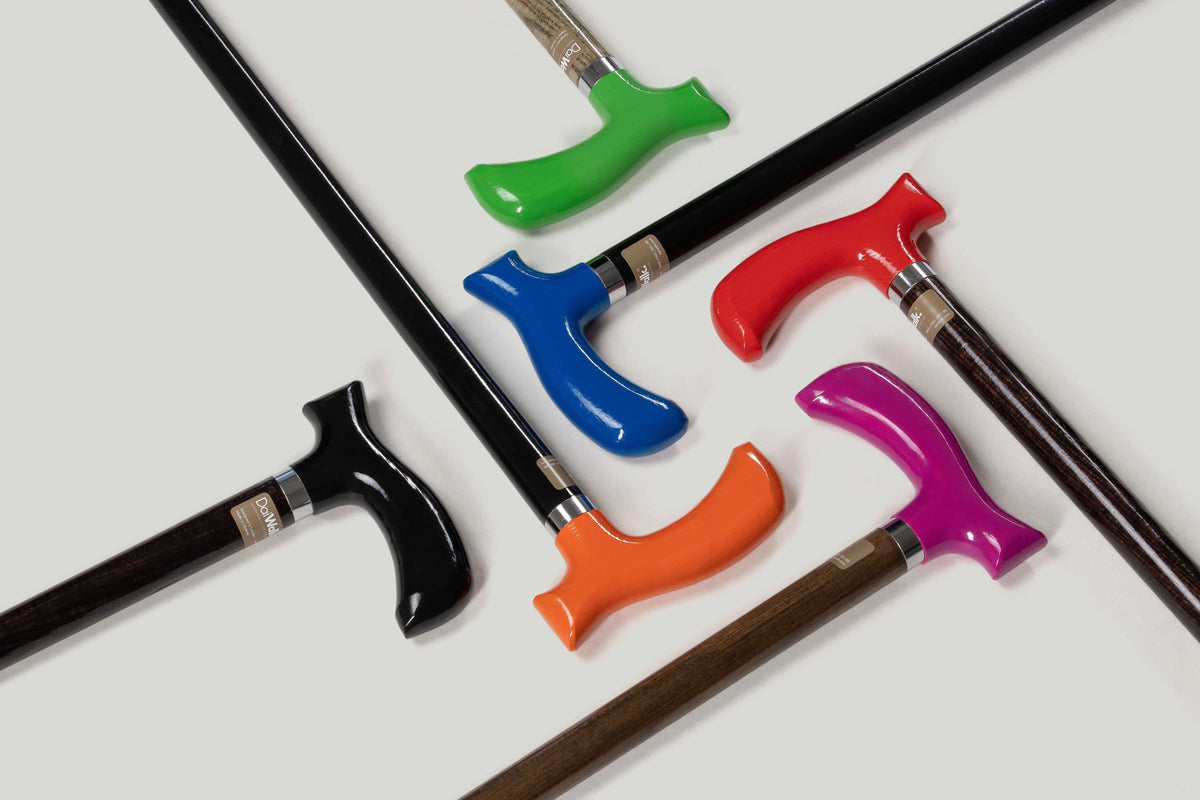
Explore DaiWalk walking canes. Related: Walking Cane for Shoulder Replacement | Walking Cane for Wrist Arthritis.


