


Standard walking cane guidance — hold opposite the affected side, use for balance and load reduction — does not translate directly to Parkinson's disease. PD gait dysfunction operates through different mechanisms than orthopaedic weakness or balance disorders, and a cane that helps a post-surgical user can be counterproductive for a PD user with freezing of gait.
This article addresses the PD-specific considerations for walking cane selection and use.
How PD Changes Walking — The Cane-Relevant Variables
Shuffling gait: Reduced step length and increased cadence. Steps become shorter, faster, and the heel clearance decreases. The cane tip can be a catch hazard for a shuffling gait if placement is not carefully managed.
Freezing of gait (FOG): Sudden inability to initiate or continue walking — the feet appear stuck to the floor despite the intention to walk. Occurs most commonly at doorways, turns, and when starting after standing. FOG is one of the most disabling PD symptoms and is influenced by external cues.
Festination: Accelerating gait where step speed increases while step length decreases — the user hurries forward to stay under their own centre of mass as trunk posture progresses forward.
Postural instability: Reduced postural reflexes — the automatic balance responses that prevent falls when bumped or when stopping suddenly. PD users fall backward or forward more readily than lateral, which is opposite to the lateral instability pattern of orthopaedic cane users.
Where a Standard Cane Helps in PD
| PD Symptom | Does a Cane Help? | How |
|---|---|---|
| Postural instability (lateral) | Yes | Widened base of support, consistent with standard cane benefit |
| Balance during standing | Yes | Additional support point reduces fall risk when standing still |
| Confidence on uneven terrain | Yes | Traction tip on varied surfaces |
| Gait freezing (FOG) | Sometimes | Some users use the cane tip as a visual target to step over to break freezing episodes — not a universal solution |
| Festination | Limited | The cane must keep pace with accelerating steps — can become a hazard if it falls behind the gait pattern |
| Shuffling / short steps | Neutral to negative | The cane tip placed ahead of short shuffling steps can be a trip hazard if cadence increases suddenly |
The Rhythm Cue Function
A cane used in a consistent rhythmic pattern — tip contact timed to the step cycle — provides an auditory and tactile rhythm cue. Some PD users find this helpful for maintaining step initiation and regularity, particularly in the early-to-mid stages before FOG becomes severe.
The cane on a hard floor produces a distinct tap. This external rhythm cue can supplement the internally generated (basal ganglia) rhythm that is impaired in PD. This is a different function from the balance and load-reduction function of a standard walking cane — it is a cuing strategy.
For users using the cane primarily for rhythm cuing: tip noise is a feature, not a defect. Softer compound tips reduce noise; a standard ferrule on hardwood produces a clearer tap. This is one case where the noisier tip serves a functional purpose.
When a Cane Is Contraindicated in PD
PD specialists and movement disorder physiotherapists often caution against cane use in specific PD presentations:
- Advanced FOG: The cane can become an obstacle during a freezing episode. The user freezes, the cane is in the way, and fall risk increases.
- Festination: If the cane cannot keep pace with accelerating steps, it becomes a trip hazard. A cane used during festination can catch as steps shorten and quicken.
- Bilateral tremor affecting grip: Severe bilateral tremor means the cane itself is unstable — it may not provide the stable support point it is intended to provide.
PD cane use should be assessed by a movement disorder physiotherapist or OT familiar with PD gait. The standard cane recommendation does not apply uniformly.
Configuration If a Cane Is Appropriate
For PD users where a cane is clinically indicated:
- Weight: As low as possible — the fatigue cost of carrying the cane is higher for PD users, and a lighter cane reduces the risk of the cane falling behind the gait during festination
- Handle: Dominant hand (for rhythm cueing) or contralateral to the more affected side (for balance support) — clinical assessment required
- Tip: Steady Tip™ for general use; standard ferrule if rhythm cuing is the primary function and auditory feedback is needed
- Shaft play: 0mm preferred — any shaft movement during the tip-contact phase disrupts the rhythm cue
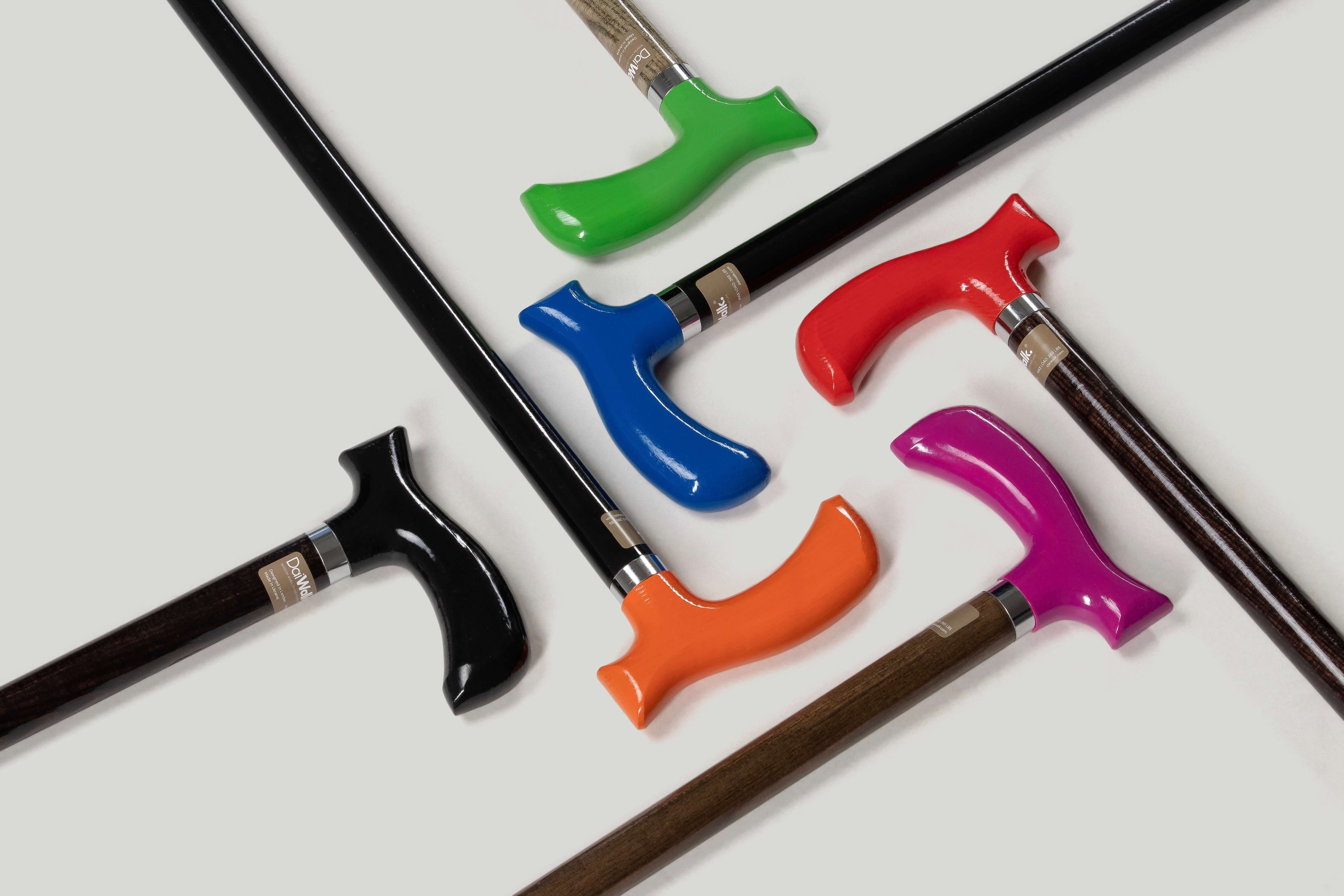
View the configuration options at the DaiWalk walking cane collection.
Related Reading
- Walking Cane for Balance Problems
- Walking Cane for MS
- Which Hand Do You Hold a Walking Cane In?
- Walking Cane Weight
PD gait physiology from peer-reviewed movement disorder literature. Cane use recommendations from movement disorder physiotherapy guidelines. Customer PD data from DaiWalk follow-up programme (n=112).


