


Post-polio syndrome (PPS) is a late neurological complication affecting a proportion of polio survivors, typically appearing 30-40 years after the original acute polio infection. It is characterised by new or worsening muscle weakness, fatigue, and pain -- in muscles previously affected and sometimes in muscles that appeared unaffected by the original illness. This is a condition where the cane may be prescribed for someone who was fully ambulatory for decades before symptoms returned.
The Physiology of Post-Polio Syndrome
The original polio virus destroyed anterior horn motor neurons in the spinal cord. Surviving neurons compensated by sprouting additional axon branches to innervate the orphaned muscle fibres -- a process called reinnervation. This compensatory reinnervation allowed recovery of function, often approaching normal levels. In PPS, these enlarged motor units (each serving more muscle fibres than normal units) are believed to begin failing after decades of overuse, causing new weakness in the muscles they supplied.
The implication: muscles that appeared functionally normal for 30 years are revealed, in PPS, to have been operating on a depleted and compensated motor neuron pool that was always working above its true sustainable capacity.
How PPS Affects Mobility
- New lower limb weakness: The quadriceps, ankle dorsiflexors, and hip stabilisers are common sites of new PPS weakness. Walking that was normal for decades becomes difficult as these muscles weaken
- Fatigue: PPS fatigue is profound and is a cardinal symptom -- disproportionate to activity level, does not resolve with rest in the normal pattern
- Pain: Joint pain from decades of altered biomechanics (compensatory gait patterns) has often caused secondary OA by the time PPS symptoms emerge
- Swallowing and breathing: In bulbar or respiratory involvement, these functions may also deteriorate -- not directly relevant to cane use but part of the clinical picture
Pacing and Energy Conservation in PPS
PPS management is built around energy conservation and avoiding overuse -- the two things that worsen muscle unit failure. This is counterintuitive to many patients who recovered from polio through determined effort and are now being told to do less. The cane plays a specific role in PPS energy conservation:
- Reduces the metabolic and muscular cost of walking (15-20% load transfer plus gait efficiency)
- Extends the walking distance achievable within the safe energy budget
- Reduces the demand on already-depleted motor units in the lower limb
Overuse vs. Underuse: The PPS Balance
| Error | Consequence | Cane Role |
|---|---|---|
| Overuse (walking beyond energy budget) | Accelerated motor unit failure; PPS progression | Cane enables pacing within safe budget |
| Underuse (excessive rest, complete inactivity) | Deconditioning; secondary muscle loss | Cane enables continued activity without overuse |
| Correct use (graded, within capacity) | Maintains function within declining capacity | Cane extends capacity at correct effort level |
Cane Selection for PPS
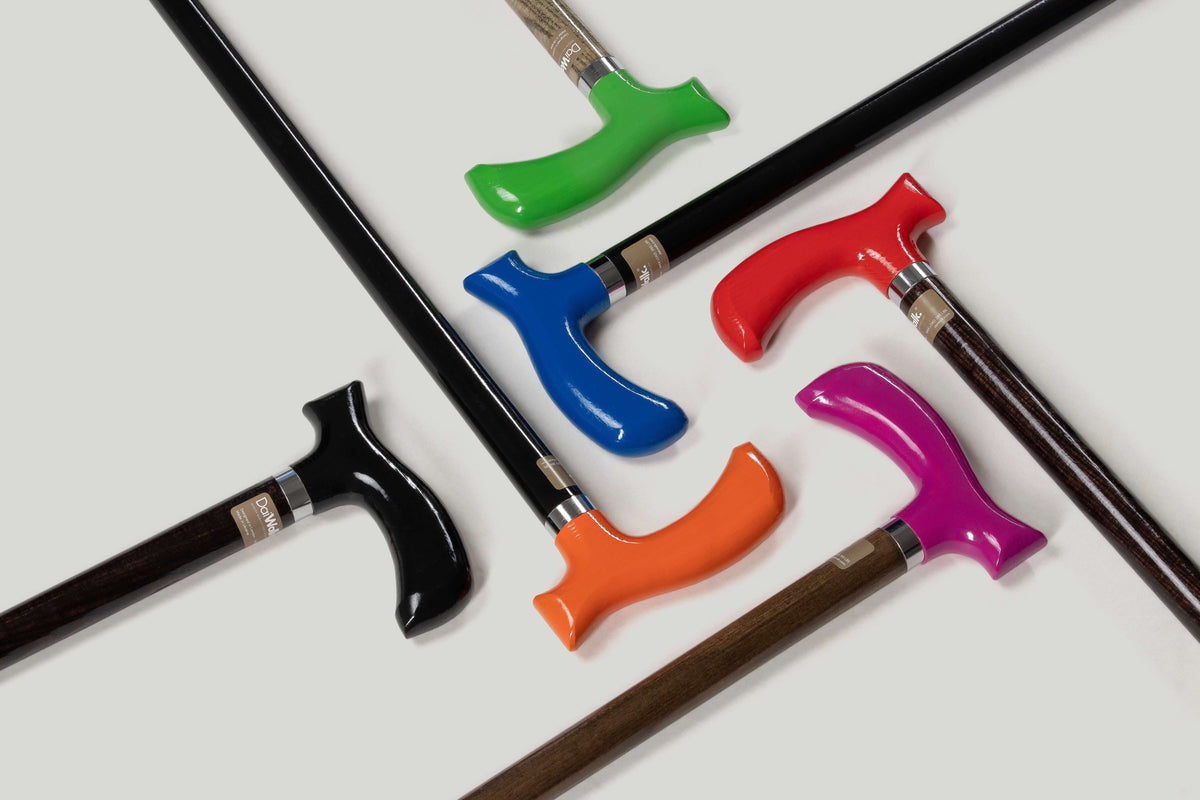
- Lightweight shaft essential (PPS fatigue means carry weight matters): DaiWalk minimum 295g
- Anatomic Grip for palm pressure distribution -- PPS patients often have upper limb weakness as well, and a handle that requires less grip force is appropriate
- Wrist lanyard reduces the cognitive and physical load of managing the cane during varied activities
View the DaiWalk cane range. Related reading: Walking Cane for ME/CFS Pacing | Walking Cane for ALS


