


Pregnancy-related pelvic girdle pain (PGP) affects approximately 20% of pregnant women, and is characterised by pain in the pelvic region -- anterior at the symphysis pubis (symphysis pubis dysfunction, SPD) or posterior at the sacroiliac joints. Relaxin-mediated joint laxity during pregnancy allows increased pelvic ring mobility, which can be painful and functionally limiting. PGP causes difficulty with walking, climbing stairs, turning in bed, and weight-bearing on one leg. Walking cane use during pregnancy and post-partum must account for the changing body mechanics and postural changes of pregnancy.
PGP Gait Characteristics
Pregnancy-related PGP creates a distinctive gait pattern:
- Waddling gait: increased hip external rotation and abduction during swing phase to reduce SI joint shear
- Reduced walking speed (approximately 20-30% slower in moderate PGP)
- Avoidance of single-leg stance (causes maximal SI joint and symphysis loading)
- Step climbing avoidance: asymmetric single-leg loading causes acute pain
- Antalgic gait: shortened stride on painful side
Walking Cane for Pregnancy-Related PGP
A walking cane during pregnancy provides:
- Reduction in single-leg stance loading (pelvic shear)
- Support during the waddling gait pattern
- Fall prevention (increased fall risk in late pregnancy from altered centre of gravity)
- Energy conservation during the metabolically demanding third trimester
PGP Severity and Walking Aid
| PGP Severity | Walking Aid | Notes |
|---|---|---|
| Mild PGP (pain on prolonged walking) | No aid for short distances; single cane for longer walks; pelvic belt | Pelvic belt (trochanteric belt) reduces pelvic ring laxity; often more effective than cane alone |
| Moderate PGP (pain on most walking; stair difficulty) | Single cane plus pelvic belt; avoid single-leg stance activities | Cane reduces loading during step-through; pelvic belt provides force closure |
| Severe PGP (non-ambulatory for longer distances; use of wheelchair) | Walking frame or wheelchair for distances; cane for household mobility | Referral to specialist pelvic girdle physiotherapist |
| Post-partum PGP (persistent after delivery) | Cane until pelvic stabilisation recovers; physio for transversus abdominis and pelvic floor | Most PGP resolves within 3-4 months post-partum; cane may be needed this period |
Cane Ergonomics During Pregnancy
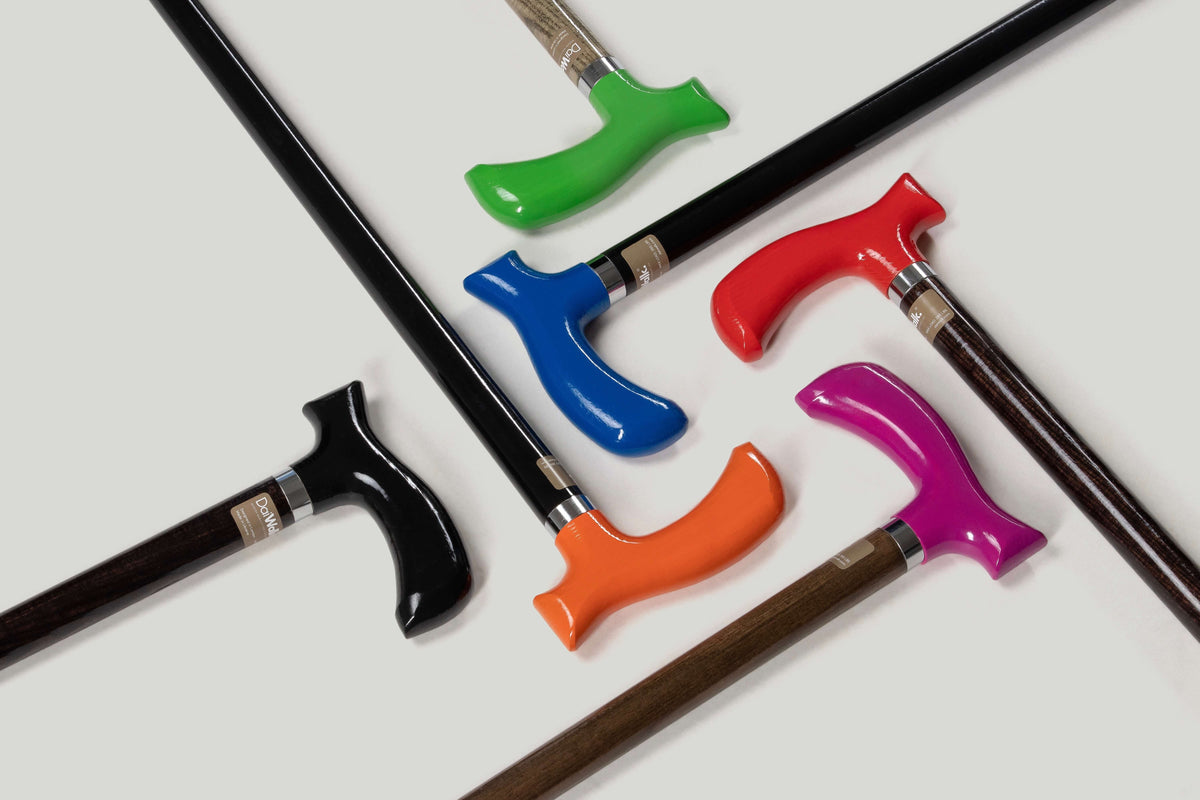
Cane height adjustment during pregnancy: the expanding abdomen shifts the centre of gravity anteriorly and changes the body dimensions. A standard cane height measurement (wrist crease with arm at side) needs to be re-measured as pregnancy advances. An adjustable-height cane is strongly recommended for pregnancy. The DaiWalk Original 1.0 with adjustable shaft provides this flexibility.
Explore DaiWalk walking canes. Related: Walking Cane for SI Joint Dysfunction | Cane Length Calculator.


