


Spina bifida in adults encompasses a wide range of functional levels, from individuals with myelomeningocele who have been ambulatory since childhood using orthoses and walking aids, to those with occult spina bifida who have only mild lower limb issues. The walking aid picture in adult spina bifida is therefore highly individual -- this article focuses on the adults who are community ambulators using a cane, often in conjunction with ankle-foot orthoses (AFOs) or other lower limb orthoses.
The Spina Bifida Ambulation Context
Adults with spina bifida who are walking typically have lesions at L4 level or below (lower thoracic lesions rarely produce community ambulators). The functional profile includes:
- Partial lower limb weakness (degree depends on lesion level)
- Reduced or absent sensation in affected areas (proprioception loss)
- Often using ankle-foot orthoses (AFOs) to compensate for ankle dorsiflexion weakness or instability
- Possible hip or knee involvement depending on lesion level
- Often have been walking with some form of aid since childhood -- experienced users who have adapted gait patterns over decades
Cane Use Alongside AFOs
AFOs alter the effective leg length and the foot contact pattern. A walking cane height assessment must be done with the AFO in the shoe, not without it -- the AFO heel cup and sole material typically add 8-15mm compared to a standard shoe. This changes the required cane height by approximately 6-12mm.
The AFO also changes the lateral stability of the ankle. A well-fitted AFO that controls ankle inversion/eversion reduces the reliance on the cane for lateral balance. When an AFO is functioning well, cane use may shift toward forward-backward balance support rather than lateral balance -- which changes the optimal cane placement slightly.
Proprioception Loss and Cane Function
Sensation loss is common in spina bifida. As with other conditions involving proprioceptive deficit (CMT, iSCI), the cane provides an additional sensory channel: ground feedback through the handle supplements the absent or reduced lower limb sensation. The Steady Tip (28mm contact patch) provides more distributed ground feedback than a narrow ferrule.
Shaft stability (0mm lateral play from collet mechanism) is particularly important when proprioception is the primary deficit -- the cane reference point must not shift under variable loading.
Long-Term Considerations: The Changing Mobility Picture
Adults with spina bifida often experience increasing mobility challenges through middle age as childhood compensatory mechanisms and spinal cord changes produce late-onset symptoms (tethered cord syndrome, syringomyelia). This means the cane use picture may change over time:
- A person who walked with one cane in their 20s may need two canes or a rollator by their 40s
- Proactive physiotherapy assessment at regular intervals (not just when function declines) allows for timely equipment changes
- The emotional dimension of changing from one aid to a more dependent one has similar dynamics to ALS -- plan the transition, frame it as capability expansion
Upper Limb Strength and Cane Use
Adults with spina bifida who have been using walking aids since childhood often have well-developed upper limb strength. This means the cane can typically be used for more active load-bearing than would be expected -- the hand and wrist can withstand significant cane load. However, decades of cane use also means upper limb overuse injuries (rotator cuff, carpal tunnel) are more common. Handle comfort (Anatomic Grip, 1.9 N/cm2 peak pressure) and wrist-protective techniques are important for long-term upper limb preservation.
| Spina Bifida Feature | Cane Implication | Solution |
|---|---|---|
| AFO use | Height assessment with AFO in shoe | Add 6-12mm to standard formula |
| Proprioceptive deficit | Cane as sensory supplement | Large-contact tip (Steady Tip) |
| Sensation loss | Stable shaft reference essential | Collet: 0mm lateral play |
| Long-term upper limb use | Overuse injury risk | Anatomic handle, wrist lanyard |
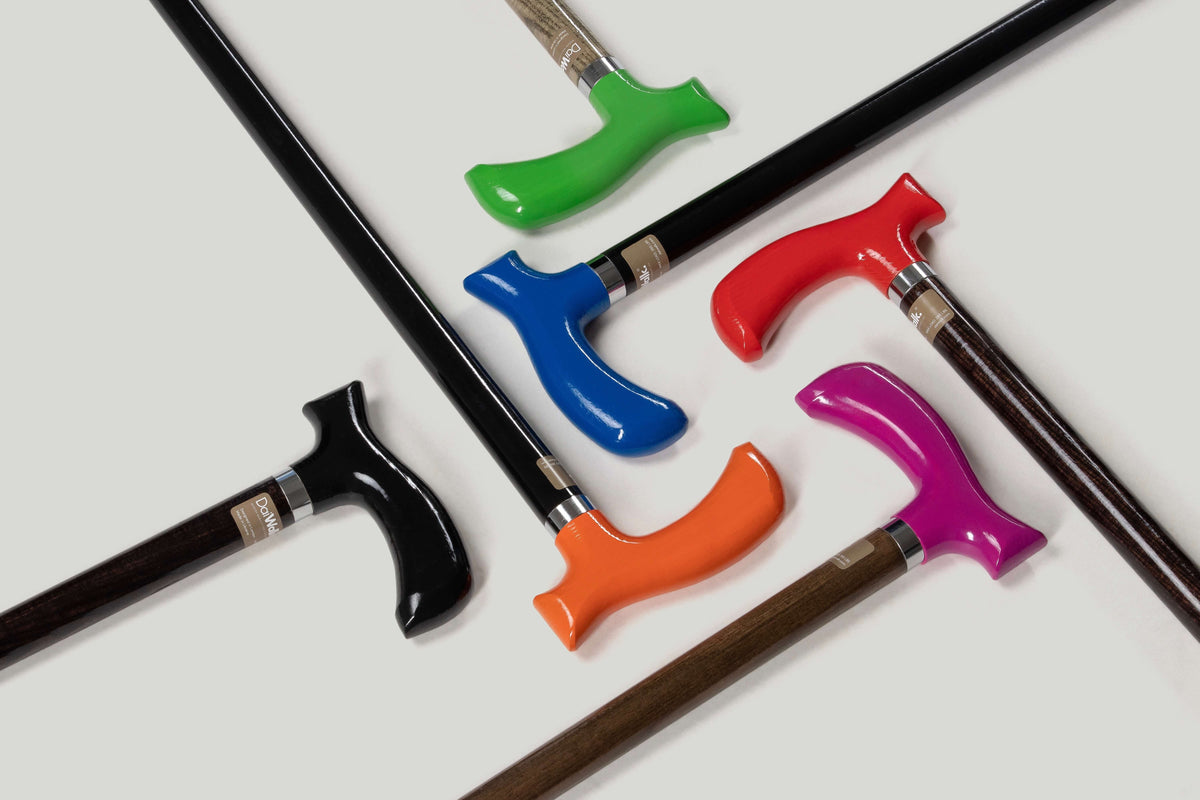
View the DaiWalk range for adults with spina bifida requiring daily long-term cane use with upper limb protection specifications.


