


Ankle fracture is one of the most common adult fractures, typically occurring from twisting injuries, falls, or high-energy trauma. The recovery trajectory involves a structured progression of weight-bearing that is medically supervised -- and the walking cane has a specific, time-limited role in this progression.
Common Ankle Fracture Types and Their Implications
- Weber A (fibula below ankle joint): Most stable fracture type; typically treated conservatively with early weight-bearing often permitted within 1-2 weeks
- Weber B (fibula at ankle joint level): Stability depends on whether the medial side (deltoid ligament or medial malleolus) is also injured. Some Weber B fractures are treated conservatively with early weight-bearing; others require surgical fixation
- Weber C (fibula above ankle joint): Higher instability; more commonly requires surgical fixation and protected weight-bearing for longer
- Bimalleolar and trimalleolar fractures: Both malleoli affected; typically require surgical fixation and longer non-weight-bearing or partial weight-bearing phase
Weight-Bearing Progression After Ankle Fracture
The treating surgeon and physiotherapist define the weight-bearing status post-fracture:
- Non-weight-bearing (NWB): No load through the fractured ankle. Crutches or wheelchair required. A single walking cane is NOT sufficient for non-weight-bearing -- crutches are the minimum
- Touch-down or toe-touch weight-bearing (TTWB): The foot touches the ground for balance only, with minimal load. Again, a single cane is typically insufficient at this stage
- Partial weight-bearing (PWB): A specified percentage of body weight is permitted. A single cane may be appropriate when the patient can bear 50-75% of body weight through the ankle
- Full weight-bearing (FWB): A walking cane provides supplementary stability and confidence while the patient progresses to unassisted walking
When a Single Walking Cane is Appropriate
A single walking cane becomes the appropriate walking aid when:
- The treating team has cleared partial to full weight-bearing
- The patient can bear substantial weight through the ankle without breakthrough pain
- The patient is transitioning from bilateral crutches to unilateral support
- The patient is cleared for full weight-bearing but still lacks confidence or balance
The cane is held in the hand opposite the fractured ankle, advancing with the recovering leg.
Ankle Fracture Recovery and Cane Use: Timeline
| Phase | Typical Timeline | Weight-Bearing Status | Walking Aid |
|---|---|---|---|
| Acute/surgical | Weeks 0-2 | NWB | Crutches or wheelchair |
| Early protected | Weeks 2-6 | TTWB to PWB | Crutches; single cane when PWB 50%+ |
| Progressive loading | Weeks 6-10 | PWB to FWB | Single cane (contralateral) |
| Full weight-bearing phase | Weeks 10-16 | FWB | Cane for confidence and terrain; weaning begins |
| Return to normal | Months 3-6 | Full | Cane as needed; typically discontinued |
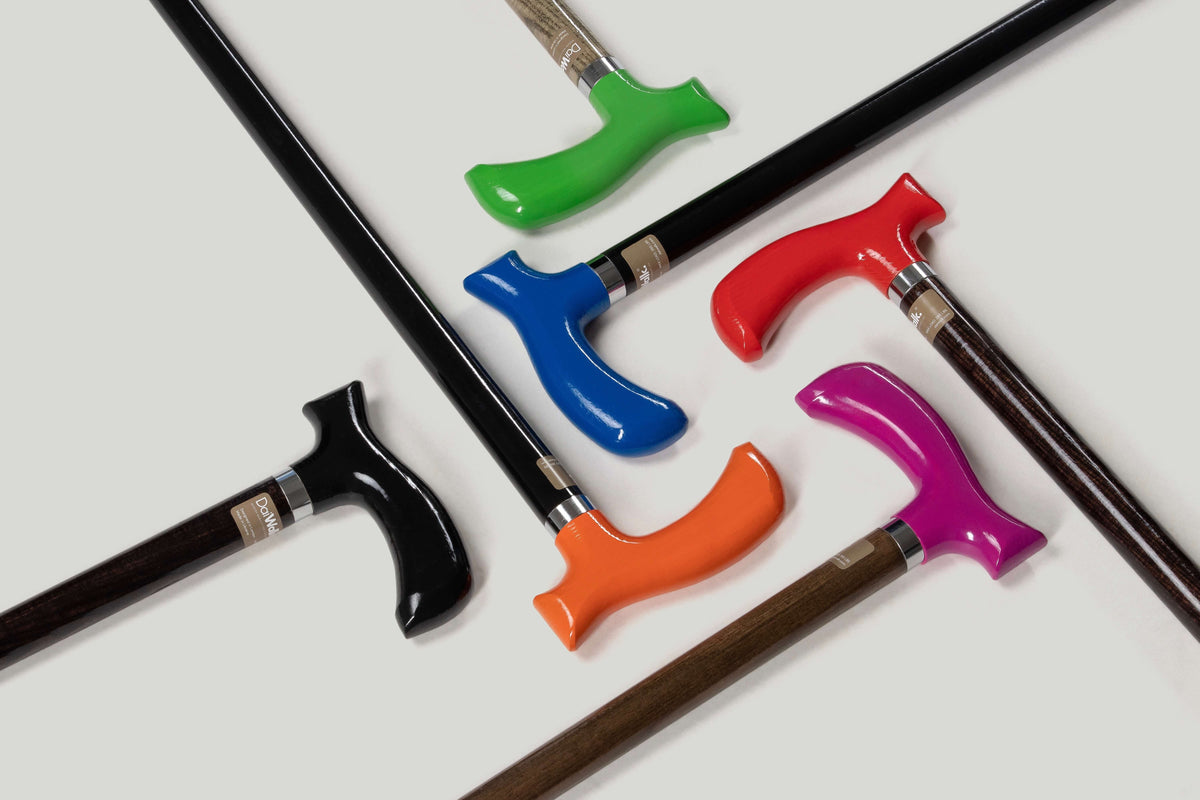
Explore the DaiWalk cane collection or use the cane length calculator. Related: Walking Cane Weaning | Walking Cane for Knee Replacement Recovery


