


Amyloidosis is a group of diseases characterised by the deposition of abnormally folded protein fibrils (amyloid) in organs and tissues. The two most common systemic forms causing walking limitation are AL amyloidosis (light chain; from plasma cell dyscrasia) and ATTR amyloidosis (transthyretin; hereditary or wild-type senile amyloidosis). Both can cause peripheral neuropathy (amyloid neuropathy), cardiomyopathy, and musculoskeletal involvement that profoundly limits mobility.
Amyloid Neuropathy: The Primary Walking Limitation
Amyloid neuropathy is a length-dependent, painful peripheral neuropathy (the longest nerves in the feet and lower legs are affected first). It causes loss of pain and temperature sensation in the feet (small-fibre neuropathy pattern), followed by proprioceptive loss (large-fibre) and eventually motor weakness. The combination of sensory loss, proprioceptive deficit, and motor weakness in the lower limbs creates a complex walking limitation:
- Sensory loss in feet: removes protective sensation and proprioceptive balance input
- Proprioceptive deficit: creates sensory ataxia (gait instability when vision is reduced)
- Motor weakness (late): foot drop, reduced push-off, quadriceps weakness
ATTR Amyloidosis: Wild-Type Senile Cardiac Amyloidosis
Wild-type ATTR amyloidosis (formerly senile cardiac amyloidosis) is increasingly recognised as a common cause of heart failure with preserved ejection fraction in older men. The cardiac involvement causes severe exercise intolerance and dyspnoea on minimal exertion. Peripheral neuropathy may be absent or mild. The primary walking limitation is cardiac -- inability to increase cardiac output with exercise demand. A cane reduces the cardiovascular demand of walking by reducing the muscular effort required per step.
Amyloidosis Type and Cane Role
| Amyloidosis Type | Primary Walking Problem | Cane Role |
|---|---|---|
| AL amyloidosis with neuropathy | Sensory ataxia; proprioceptive deficit; motor weakness | Cane compensates proprioceptive deficit; essential for balance; may need AFO for foot drop |
| Hereditary ATTR with neuropathy | Same as AL neuropathy pattern; may be more rapid | Same; early cane introduction recommended given progressive course |
| Wild-type ATTR (cardiac dominant) | Cardiac exercise intolerance; dyspnoea on walking | Cane reduces cardiovascular demand; forward-lean rest position |
| AL amyloidosis with cardiac + neuropathy | Both cardiac and neuropathic limitation | Cane for both -- essential; rollator if bilateral weakness severe |
Amyloid Neuropathy and DaiWalk Handle Selection
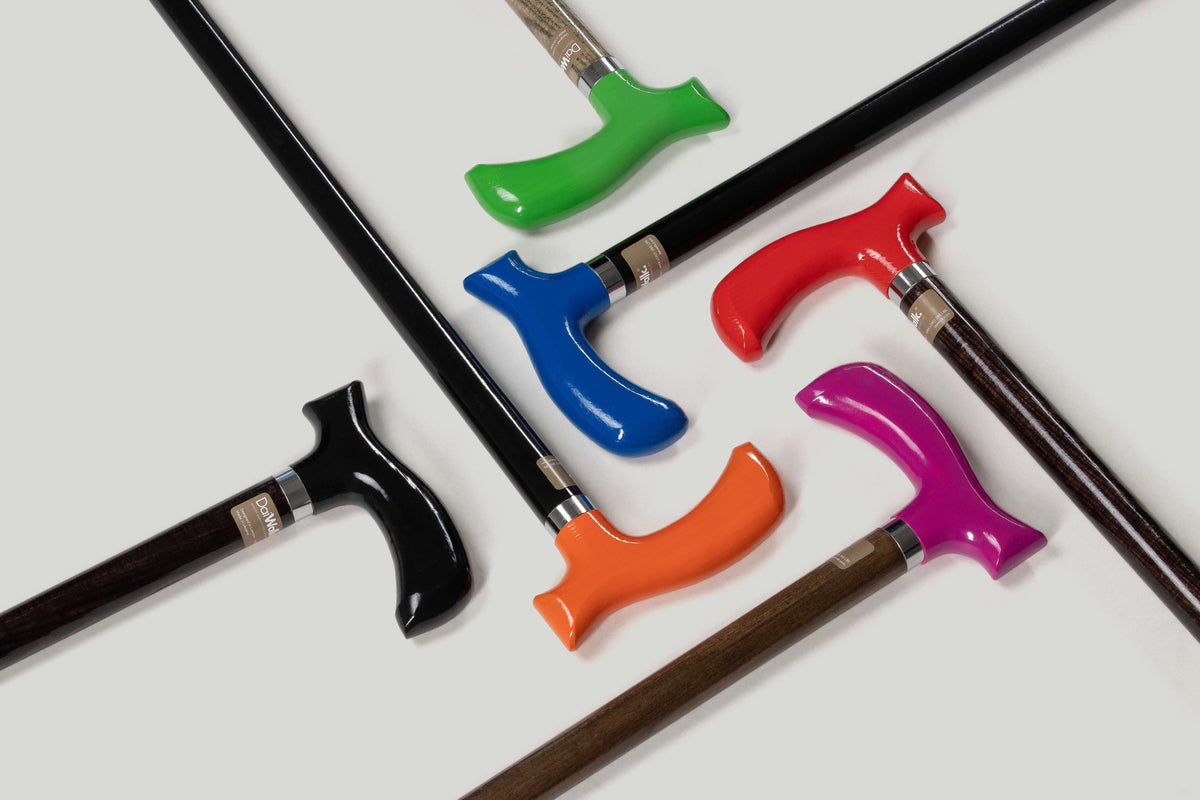
AL and ATTR amyloid neuropathy frequently involves the hands (carpal tunnel syndrome is a classic early feature of ATTR amyloidosis; median nerve compression precedes the systemic neuropathy by years). Hand sensory loss and weakness from carpal tunnel or intrinsic hand amyloid neuropathy affects cane grip. An anatomic grip with a broad, contoured surface distributes hand force more effectively than a narrow T-bar for patients with reduced grip strength or altered hand sensation.
Explore DaiWalk walking canes. Related: Walking Cane for Neuropathic Pain | Walking Cane for Cardiac Conditions.


