


Vascular Ehlers-Danlos syndrome (vEDS, formerly EDS Type IV) is the most severe and potentially life-threatening subtype of EDS. It results from mutations in COL3A1, producing defective type III collagen -- the structural protein critical in blood vessels, hollow organs (bowel, uterus), and skin. vEDS is characterised by spontaneous arterial dissection or rupture, bowel perforation, and uterine rupture in pregnancy, with a median survival of 48 years in historical cohorts (improving with surveillance and lifestyle modification).
How vEDS Differs from hEDS in Mobility Terms
Hypermobile EDS (hEDS) is by far the most common EDS subtype and is associated with chronic pain, joint instability, and fatigue -- all typical indications for a walking cane. vEDS has a different primary problem: not joint hypermobility causing instability, but fragile connective tissue that can rupture under relatively minor stress. Most vEDS patients do not have the widespread joint hypermobility typical of hEDS; their mobility limitation comes from fear of triggering a vascular event or from complications of previous arterial surgery.
Cane Use in vEDS: Relevant Scenarios
| Scenario | Cane Role | Specific Consideration |
|---|---|---|
| Post-arterial repair (e.g., aortic or iliac repair) | Cane during early recovery from surgical repair; reduces trunk and lower limb demand | Avoid tight cane grip -- isometric hand/arm exercise increases blood pressure acutely; use ergonomic low-grip-force handle |
| vEDS with co-existing joint hypermobility | Cane for joint instability as in hEDS | Same as hEDS cane guidance; vascular precautions for exercise intensity |
| Activity restriction and deconditioning | Cane during cautious return to walking after period of limited activity | Gradual increase in walking distance; cane provides safety during balance adaptation |
| Psychological fear of activity (kinesiophobia) | Cane as psychological support during gradual reactivation | Managed in conjunction with vEDS specialist; goal is progressive normalisation of activity |
Blood Pressure and Cane Grip Force in vEDS
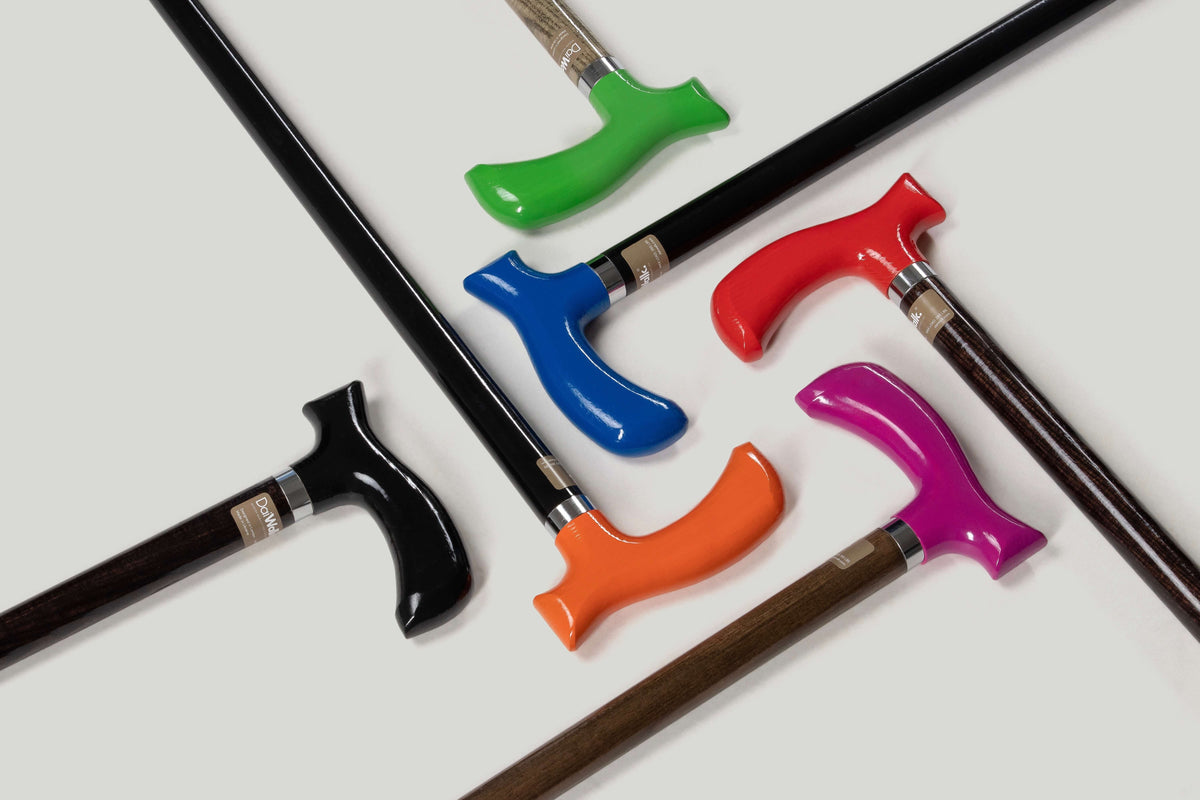
In vEDS, blood pressure control is critical: hypertensive episodes are a major trigger for arterial events. Isometric muscle contractions (sustained grip) transiently raise blood pressure. A cane handle requiring significant sustained grip force is theoretically undesirable. The DaiWalk Anatomic Grip reduces peak handle pressure to 1.9 N/cm² versus 4.2 N/cm² for a T-bar, reducing the sustained isometric hand contraction required during walking.
Physical Activity Guidance in vEDS
The Vascular EDS consensus guidelines (Byers et al., 2019) recommend avoiding contact sports, heavy lifting, and activities with Valsalva (breath-holding) components. Walking and swimming are generally considered appropriate, low-risk physical activities. A cane that supports comfortable, sustained walking is consistent with this guidance. The goal is to maintain physical activity within safe parameters rather than restrict mobility entirely.
Explore DaiWalk walking canes. Related: Walking Cane for Classical EDS | Walking Cane for hEDS.


