


Polymyositis (PM) and dermatomyositis (DM) are idiopathic inflammatory myopathies -- conditions in which the immune system attacks muscle tissue, causing progressive proximal muscle weakness. Unlike the peripheral arthropathies covered in many other articles in this series, the primary target in these conditions is the muscle itself, not the joint. This creates a specific pattern of mobility impairment with distinct implications for walking aid selection.
Pattern of Weakness in PM/DM
Inflammatory myopathies cause weakness preferentially in the proximal muscles -- those closest to the trunk:
- Hip flexors and hip extensors: Weakness here causes difficulty rising from chairs, climbing stairs, and maintaining pelvic stability during walking. The patient may rock from side to side (waddling gait) as the hip abductors fail to stabilise the pelvis
- Quadriceps: Weakness reduces knee stability in the stance phase and impairs the eccentric control required for stair descent
- Shoulder girdle: Proximal arm weakness (deltoid, rotator cuff) affects the ability to use a walking cane effectively, as upper limb force transfer is required
Distal muscles (hand, forearm, foot, lower leg) are relatively preserved in classic PM/DM -- distinguishing these conditions from peripheral neuropathies where distal muscles are affected first.
Functional Consequences for Walking
- Waddling gait (Trendelenburg pattern) due to bilateral hip abductor weakness
- Difficulty mounting kerbs, steps, and gradients
- Reduced walking speed and distance due to proximal fatigue
- Risk of fall when standing from sitting position (hip and quadriceps weakness)
- Difficulty on stairs (both ascent and descent)
How a Walking Cane Helps in PM/DM
In proximal muscle weakness, the cane provides:
- Pelvic stability assistance: The waddling gait of hip abductor weakness can be partially stabilised by cane use, as the lateral cane force provides a substitute for the medial stabilising moment normally generated by hip abductors
- Load reduction on weak quadriceps: Load transfer through the cane reduces the demand on weakened quadriceps during the stance phase of gait
- Sit-to-stand assistance: A cane can be used during rising from a chair to compensate for inadequate hip extensor and quadriceps force
The Shoulder Girdle Constraint
Upper limb weakness in PM/DM limits how effectively the cane can be used. If the shoulder and arm muscles are too weak to generate adequate force through the handle, the cane provides reduced offloading benefit. This is a threshold issue: if arm weakness prevents pushing down effectively on the cane, bilateral walking aids (two canes, or a rollator) may distribute the demand better than a single cane.
Treatment Response and Cane Weaning
| Treatment Phase | Muscle Function | Cane Need |
|---|---|---|
| Active disease (untreated) | Progressive weakness | Increasing cane dependence |
| Immunosuppression initiated | Stabilising | Maintained at current level |
| Treatment response (3-6 months) | Gradually recovering | Reducing use as strength returns |
| Remission | Near-normal or plateau | Reassess; wean if strength permits |
| Relapse | Declining again | Increase use |
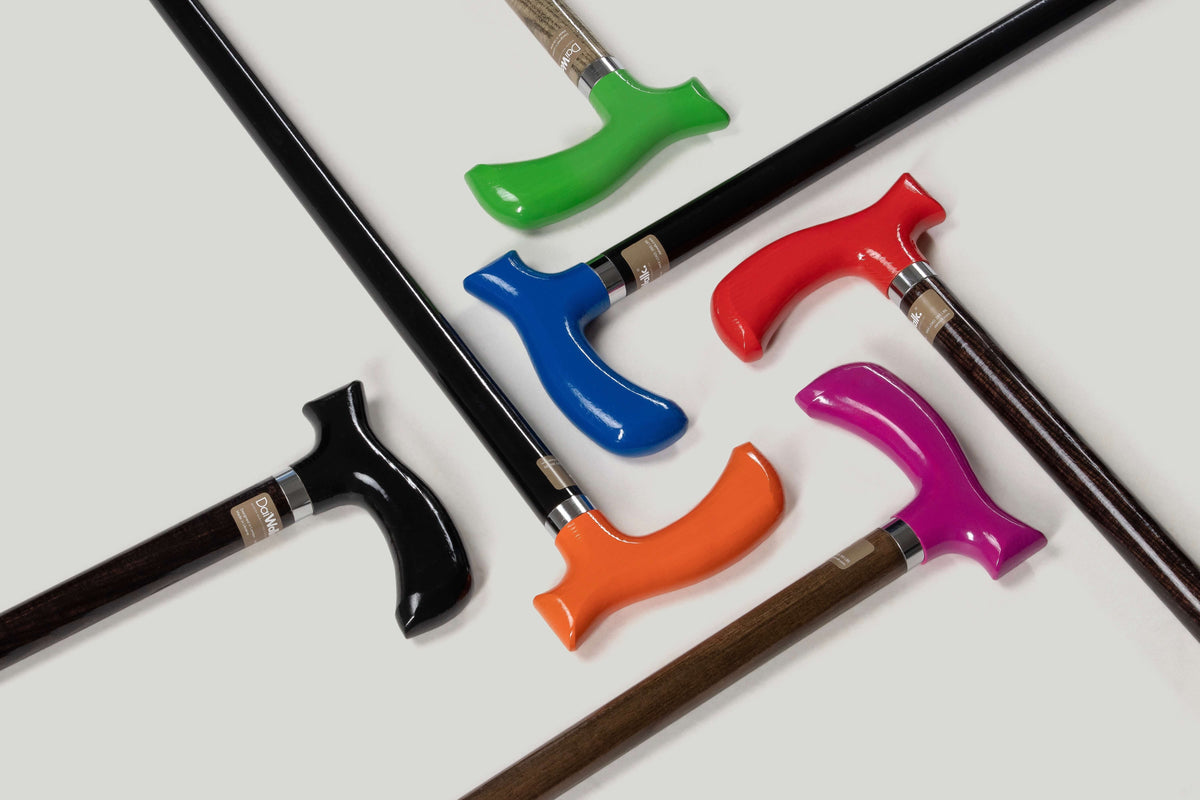
View the DaiWalk cane range and use the 3D configurator. Related reading: Walking Cane for Myasthenia Gravis | Walking Cane After Steroid Treatment


