


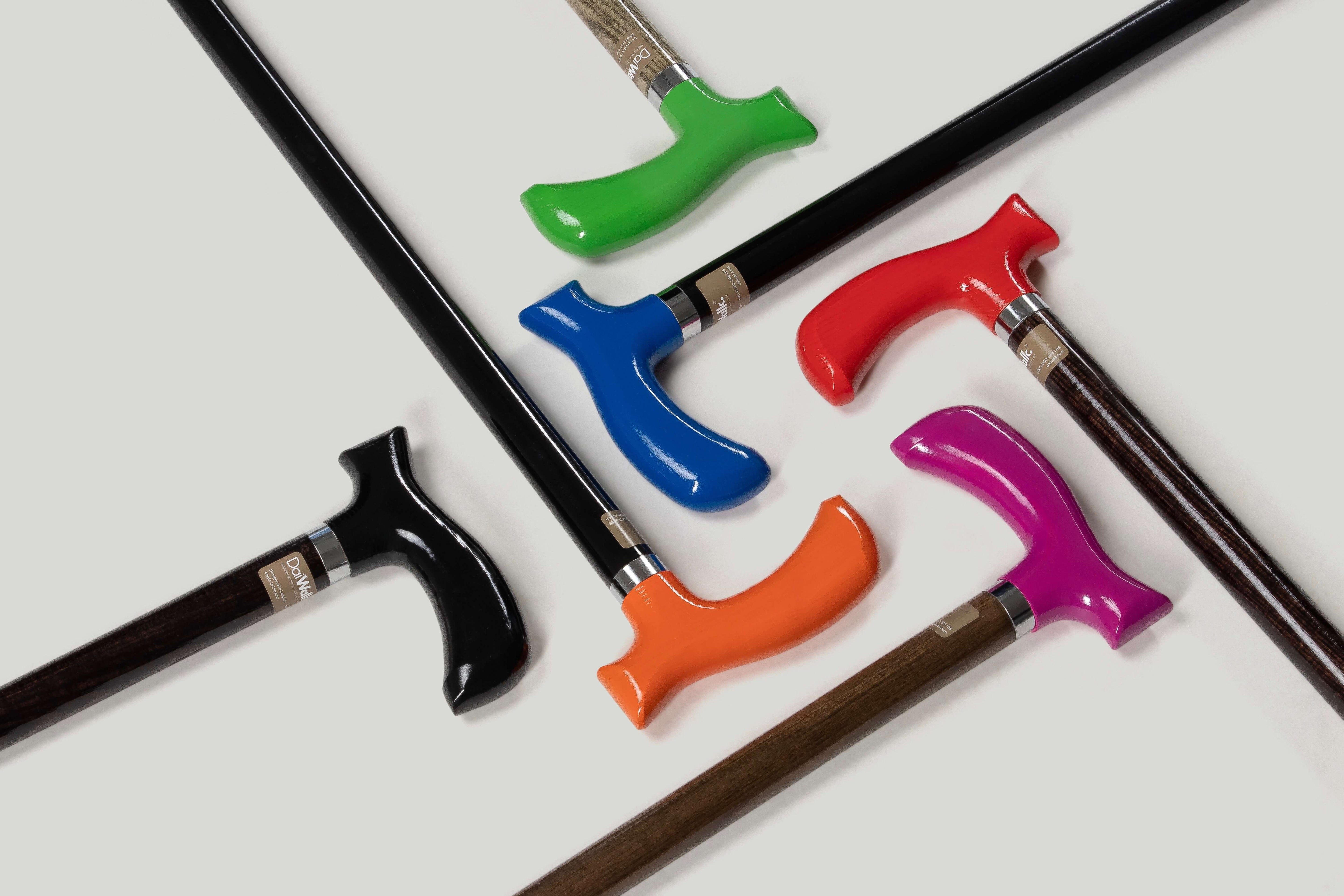
Weight and stability are in tension in walking cane design — but not in the way most buyers assume. The trade-off is not between light and stable. It is between light-through-material-compromise and light-through-engineering. The first produces a cane that flexes or wobbles. The second produces a cane that is genuinely rigid and genuinely light.
Here is what the difference looks like in measured terms.
Why Cane Weight Matters More Than Most Buying Guides Acknowledge
A walking cane is carried for hours at a time, not minutes. The energy cost of carrying an object continuously is determined not by its weight at a single moment but by the cumulative load over time — and by whether that weight requires active muscle engagement to manage.
A cane with shaft wobble requires active muscular stabilisation during every stride. The hand and forearm contract slightly to dampen the micro-movement. At low usage this is imperceptible. At 5+ hours per day, the cumulative muscle load from stabilising a wobbly shaft adds meaningful fatigue — independent of the cane's static weight.
This means a heavier cane with zero shaft play can feel lighter in use than a lighter cane with 2mm of shaft wobble. The weight you feel is not just the grams — it is the grams plus the stabilisation cost.
Weight vs. Stability: The Real Trade-Off
| Shaft Type | Typical Weight (full cane) | Shaft Rigidity | Lateral Play | Practical Notes |
|---|---|---|---|---|
| Standard aluminium, telescoping | 380–450g | Moderate | 1.5–2.6mm (button-hole) | Common in all price ranges. The mechanism adds the play, not the metal. |
| Carbon fibre, telescoping | 220–280g | High | 0.8–1.5mm (button-hole) | Lightest option available. The mechanism still introduces play. |
| Carbon fibre, fixed | 200–260g | Very high | None — no joint | Best weight-to-rigidity ratio on the market. Rare and expensive ($150+). |
| Solid wood, fixed (DaiWalk Steady Cane) | 310–340g | High | None — one-piece shaft | Heavier than carbon fibre, lighter than most telescoping aluminium. No mechanism to develop play. |
Let us be direct about where we sit in that table: the DaiWalk Steady Cane is not the lightest cane you can buy. A fixed carbon-fibre cane is lighter, and if raw grams are your single deciding factor you should buy one. What the Steady Cane offers instead is a solid one-piece wooden shaft — no telescoping section, no locking mechanism, and therefore no joint that can develop play or start to rattle after a few months. Total weight is 310–340g including handle, shaft and installed tip, depending on configuration.
The Handle Weight Distribution Question
Walking cane weight is not just total mass — it is mass distribution. A cane that is top-heavy (handle heavier than shaft) feels heavier in use than one where weight is distributed toward the tip end, because the hand must counteract the handle's tendency to tip forward.
On the Steady Cane the weight distribution stays shaft-dominant rather than handle-dominant, which is what keeps it from feeling front-heavy over a long walk. Shaft finish makes a marginal difference — wenge is slightly denser than natural oak — but not enough to drive the decision. Choose the finish you want to look at.
What Actually Reduces the Weight You Feel
Based on our testing across available materials, the practical levers are:
- Remove the mechanism. A one-piece shaft eliminates the inner shaft, spring, button and housing of a telescoping system — typically 45–80g, and with it the stabilisation cost of shaft play.
- Get the length right. A cane an inch too long makes you lift your shoulder on every step. That reads as "this cane is heavy" long before the grams do. Our free cane length calculator settles it in thirty seconds.
- Choose the lighter tip. Tip types differ by a few grams — the Elegant Tip is the lightest, the Quad and Hex bases the heaviest. See the tip range.
Who Should Prioritise Minimum Weight
| Condition | Why Weight Matters | What We Would Actually Suggest |
|---|---|---|
| Chronic fatigue syndrome / ME | Energy conservation — every gram over long sessions matters | Be honest with yourself about grams: a fixed carbon-fibre cane is lighter than anything we make. If you want the Steady Cane, pair it with the lightest tip. |
| Fibromyalgia | Muscle fatigue from holding and carrying accumulates | Steady Cane with the Elegant Tip, and a correct cut length — grip tension from a badly sized cane costs more than the tip weight saves. |
| Upper limb weakness | Carrying load directly loads the weakened structure | Steady Cane with the Core Tip — shock absorption reduces the impulse travelling up the arm. |
| Travel use | Portability through airports and overhead lockers | A folding or telescoping cane genuinely wins here. Ours does not collapse — that is the cost of a one-piece shaft. |
What to Ignore: Weight Claims Without Context
Walking cane listings frequently cite shaft weight rather than total cane weight. A carbon fibre shaft at 180g becomes a 260g cane when the handle and tip are added. Compare total cane weights, not shaft weights.
Also: weight ratings (the maximum user weight a cane supports) are not the same as cane weight. A cane rated to 130kg can still weigh 200g. These are unrelated specifications.
Our full pricing and what is included is published openly on the pricing page, and the measured figures we cite across the blog are collected on the walking cane statistics page.
Related Reading
- Fixed vs. Adjustable Walking Cane: Which Is the Better Buy?
- What Makes a Walking Cane Ergonomic?
- Walking Cane Buying Guide 2026
- Is a $75 Walking Cane Worth It?
Weight data from DaiWalk internal product testing across configurations. Shaft comparison from testing of purchased competitive products. Total weights include handle, shaft and installed tip. Last reviewed August 2026.


