


If you've used a standard adjustable walking cane — the kind from a pharmacy or medical supply store — and you're considering DaiWalk, here's a direct comparison. Not marketing language. Just the six things that are actually different.
1. The handle shape
Standard cane: T-bar. A horizontal cylinder. Concentrates load under the index and middle finger joints. Works, but causes pressure buildup on long walks.
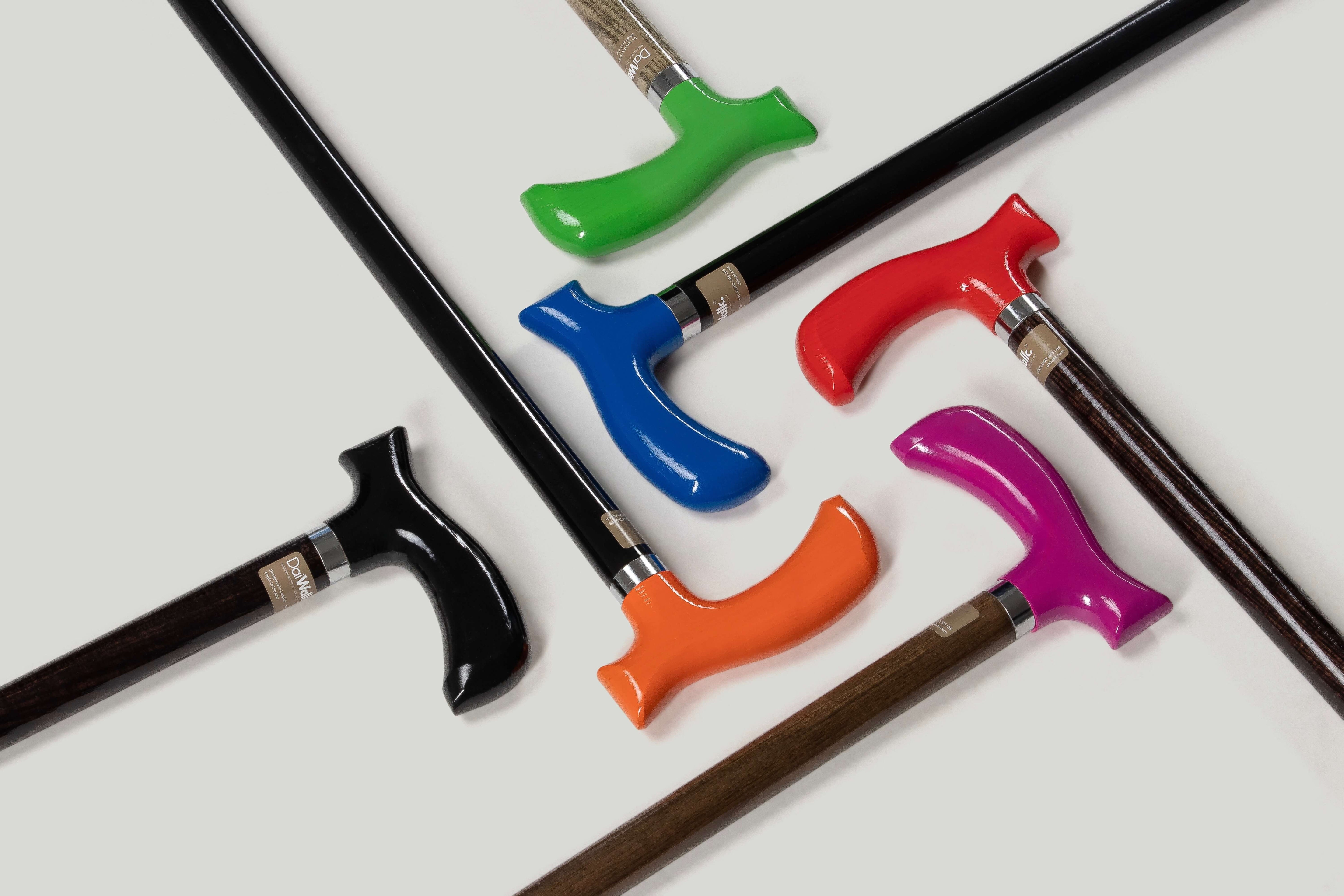
DaiWalk: Anatomic Grip™. The palm face is angled, the base has a shelf that supports the heel of the hand, and the contact surface is textured to reduce the grip force needed to maintain control. Load distributes across the palm instead of one pressure point.
After 70+ prototypes, this is what we settled on. Read the full design story in How we designed the Anatomic Grip™. If your current cane hurts your wrist, the free wrist pain checker shows whether it's the handle, height or grip.
2. The telescoping mechanism
Standard cane: Button-and-hole adjustment. You press a spring-loaded button into a hole in the shaft. Works, but there's typically 1-3mm of play in the joint — enough to produce a subtle rattle or wobble during walking.
DaiWalk: Precision-fit collet mechanism. The adjustment ring tightens around the shaft rather than relying on a button. Zero play. Zero rattle. The cane feels like a single unit, not two pieces that happen to be connected.
3. The materials
Standard cane: Powder-coated aluminium shaft, injection-moulded plastic handle, rubber tip. Durable and functional. Cold to the touch in winter. Grip deteriorates if the coating wears.
DaiWalk: Ultralight alloy shaft, natural oak or wenge wood handle (or black alloy if you prefer), rubber tip system with 6 interchangeable options. The wood handles grip better in wet conditions than coated metal and don't conduct cold the same way.
4. Adjustability
Standard cane: Adjusts in 1-inch increments. You pick the closest hole, which may be 12mm from your ideal height.
DaiWalk: Continuous adjustment to the millimetre. Your wrist crease height is your cane height — no compromise. Not sure your current cane is set right? The free cane height check tells you in three questions.
5. The tip system
Standard cane: One rubber tip, usually a generic ferrule. When it wears out, you buy a replacement (often not from the same manufacturer).
DaiWalk: Six purpose-designed tips — Elegant (low-profile), Steady (high-traction), Core (shock-absorbing), Quad (four-point self-standing), Hex (six-point), and Neon (high-visibility). All designed for the same shaft diameter and all interchangeable without tools. See the full guide: How to choose the right rubber cane tip.
6. How it looks
Standard cane: Designed to look unobtrusive. The goal is usually for the cane to disappear — to signal 'medical aid' as quietly as possible.
DaiWalk: Designed to look deliberate. Seven handle colours, two wood finishes, a choice of tip colours. The goal is for the cane to look like something you chose, not something you were given.
This is the design philosophy the brand was founded on. If you've been avoiding using a cane because the options felt stigmatising, the handle colour isn't the point — but it's part of it. More on this in Walking canes and style: how to carry yours with intention.
Which is right for you?
A pharmacy cane is fine for occasional use or post-surgery recovery. For daily use — where the cane is a fixture of your life rather than a temporary solution — the differences above accumulate into a noticeably different experience. Not sure which setup suits you? The free walking cane finder matches a configuration to how and where you walk in under a minute.
See the DaiWalk collection — from $75, free worldwide shipping, next business day dispatch.


