


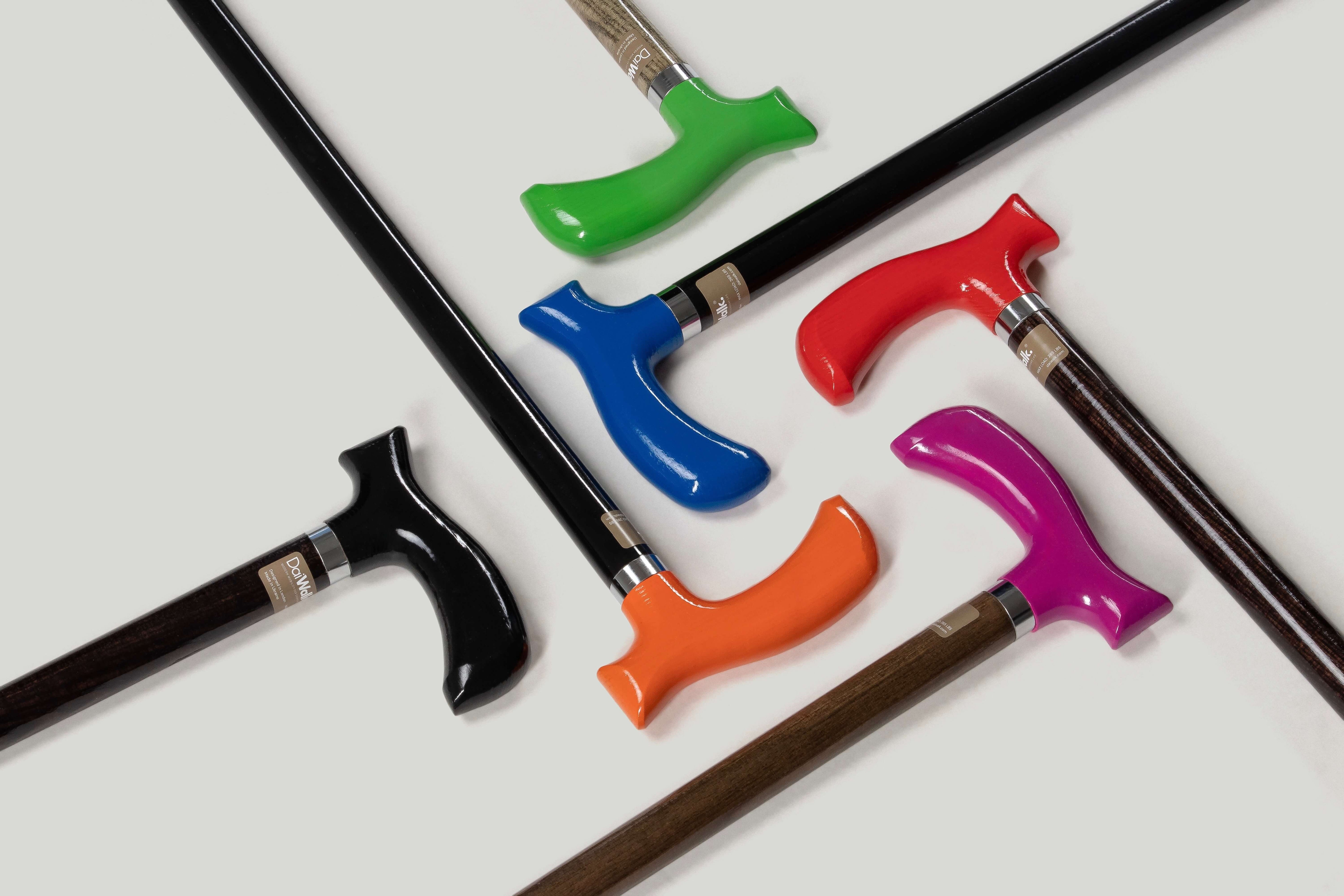
The walking cane category has an upper-height problem (standard canes too short for tall users) and a less-discussed lower-height problem: the standard telescoping mechanism's minimum extension may still be too long for very short users. For users under approximately 150cm (4'11), the correct cane height is below 760mm — and several standard cane configurations cannot reach this setting.
The Minimum Height Problem
Most telescoping walking canes have a minimum extension of 730–780mm. This corresponds to the point at which the inner shaft bottoms out against the mechanism stop. For a user whose wrist crease height is 720mm — typical at approximately 145cm body height — the cane cannot be shortened to the correct height.
The consequence: the user operates with a cane 10–30mm too long, resulting in elevated shoulder, trunk compensation, and reduced load-reduction benefit. If you already have a cane and suspect it is too long for you, the free 3-question cane height check confirms it in under a minute.
| Body Height | Approximate Wrist Crease Height | Typical Standard Cane Minimum | Gap |
|---|---|---|---|
| 145cm (4'9) | ~715mm | 730–780mm | 15–65mm too long |
| 150cm (4'11) | ~740mm | 730–780mm | 0–40mm |
| 155cm (5'1) | ~765mm | 730–780mm | Within range |
| 160cm (5'3) | ~790mm | 730–780mm | Within range |
The Fixed-Length Solution for Short Users
Fixed-length canes ordered to specification bypass the minimum-extension constraint entirely. A fixed-length DaiWalk shaft can be produced at any length — including below 730mm for users who need it.
For users under 155cm: the fixed-length option is the most reliable path to correct height. Use the cane length calculator to determine the exact shaft length, then specify this at order. The shaft is produced to that length without the mechanical constraints of a telescoping system.
Handle Size for Smaller Hands
Short users typically have smaller hands. The Anatomic Grip™ at 35–38mm effective grip diameter is designed for the median adult hand. For users with significantly smaller hands (grip circumference below 175mm), this diameter may be slightly wide — requiring more finger spread and increasing the grip force necessary to maintain handle control.
For users with small hands: the Anatomic Grip™ still outperforms the T-bar on pressure distribution even at smaller hand sizes. If grip force feels high, experiment with a slightly lower grip position on the handle — holding slightly forward of the palm's natural resting position reduces the effective grip diameter by 3–5mm.
Weight Consideration for Petite Users
Smaller users typically weigh less — meaning the absolute load transferred through the cane is lower. A 55kg user offloading 20% transfers approximately 11kg through the handle, vs. 14kg for a 70kg user. Handle pressure at 11kg load is proportionally lower, making the pressure difference between handle types slightly less dramatic in absolute terms.
Cane weight, however, matters more for petite users proportionally — a 340g cane represents a larger fraction of arm-muscle capacity for a 55kg user than for a 90kg user. Minimum weight configuration is worth prioritising for smaller users with limited arm strength.
Use the cane length calculator for height, and view fixed-length ordering options at the DaiWalk walking cane collection. Not sure which handle, finish and tip suit you? The free walking cane finder matches a configuration to how and where you walk.
Related Reading
- How to Measure Cane Length Correctly
- Fixed vs. Adjustable Walking Cane
- Best Walking Cane for Tall People
- Walking Cane Weight
Height and wrist crease data from published anthropometric tables. Minimum extension data from DaiWalk internal measurement of standard telescoping mechanisms. Fixed-length production specification from DaiWalk product documentation.


