


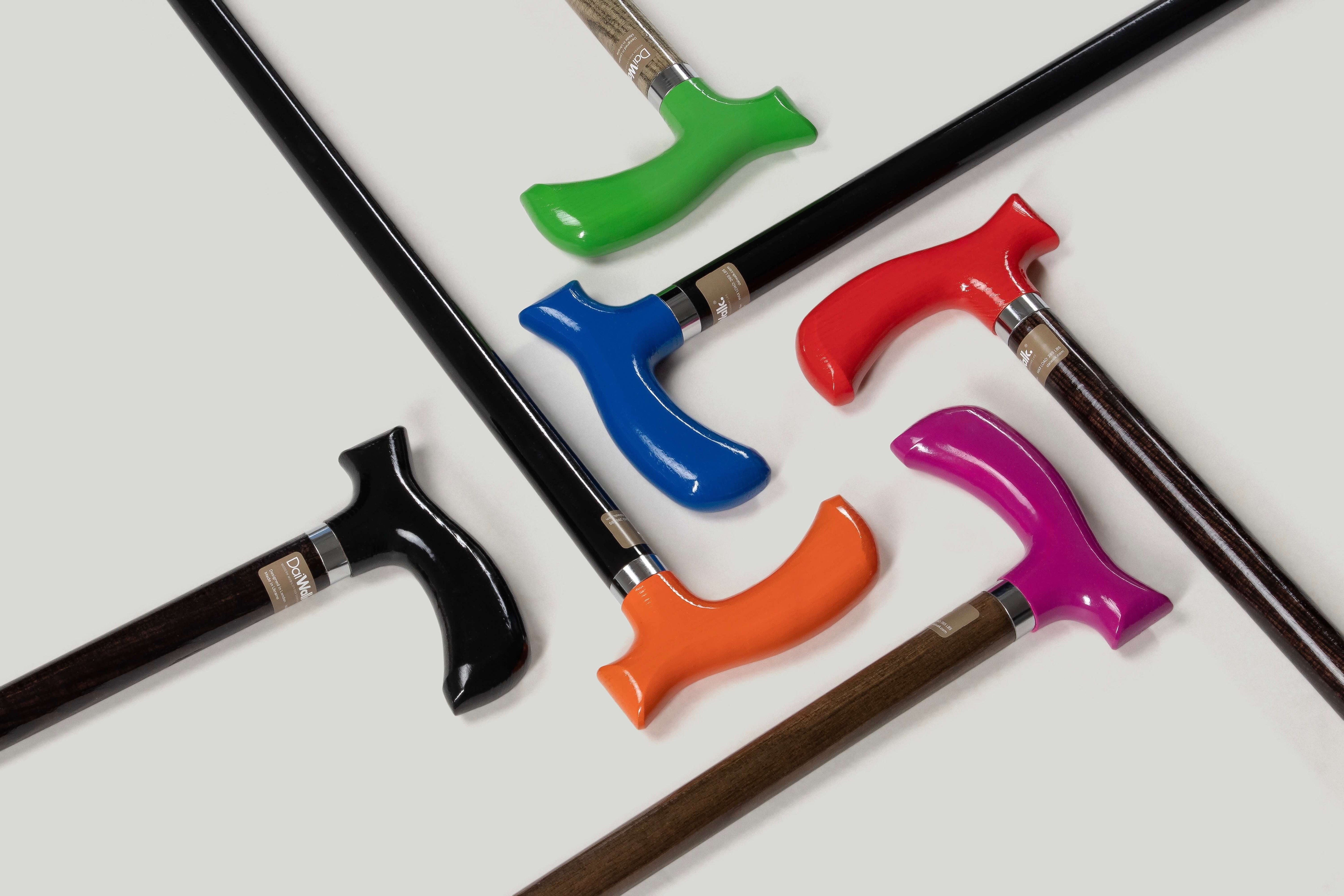
Handcrafted is one of the most overused descriptors in the walking cane market. Products described as handcrafted range from items assembled by hand from mass-produced components (a loose, broad definition) to items where the primary shaping, finishing, and fitting operations are performed by a craftsperson using hand tools (a narrow, meaningful definition). Buyers cannot distinguish between these from a product listing.
Here is what handcrafted actually implies about production quality, what to verify, and where it produces measurable performance differences.
What Handcrafted Can Mean (Spectrum)
| Level | Description | Actual Craft Content |
|---|---|---|
| Assembly only | Components manufactured by machine, assembled by hand | Low — the critical operations are automated |
| Finishing by hand | Machine-formed components finished (sanded, polished, oiled) by craftsperson | Moderate — surface quality reflects skill; structural operations are machine |
| Shaped and finished by hand | Raw material (wood billet, metal tube) shaped primarily using hand tools and manual machinery; finished by hand | High — form, fit, and surface quality reflect craft skill throughout |
| Made to order by a single craftsperson | One craftsperson responsible for the entire piece from material selection to final quality check | Highest — maximum traceability; quality tied to individual skill and accountability |
Where Handcraft Produces Measurable Differences
In walking cane production, the operations where handcraft produces performance differences (not just aesthetic differences) are:
Handle fitting to shaft: The interface between handle and shaft is a structural joint. Machine-tolerance fitting produces a gap of 0.1–0.3mm — sufficient for micro-movement under load. Hand-fitted joints can be precisely fitted to zero gap — the handle does not move relative to the shaft.
Wood grain selection: A craftsperson selecting wood blanks for handle production can orient the grain for maximum structural strength — selecting pieces where the grain runs parallel to the primary load axis. Machine-fed production uses whatever orientation the blank presents. Grain orientation affects both strength and the appearance of the final piece.
Surface finish quality: Machine sanding produces a uniform but relatively shallow surface preparation. Hand sanding through progressive grits (80 → 120 → 180 → 240 → 320) produces a smoother final surface with better oil penetration, better grip, and better long-term weather resistance.
Individual quality inspection: A craftsperson who finishes a piece can inspect it holistically before shipment. Batch machine production relies on statistical sampling — some defective units reach buyers.
Questions That Reveal Actual Craft Content
To distinguish genuine handcraft from marketing language, ask:
- What specific operations are performed by hand?
- What is the production volume per day or week?
- Is there a single craftsperson responsible for each piece, or a production line with specialised stations?
- Can I see photographs or video of the production process?
- What happens if I receive a piece with a visible defect?
Genuine artisan producers can answer the first three questions specifically. Marketing use of the word typically cannot.
DaiWalk Production
DaiWalk walking canes are produced to order. Each handle is selected from material stock, shaped, and finished by hand — sequential grit sanding to 320, hand oiling with food-grade finish. Handle-to-shaft fitting is checked individually before assembly. Each completed cane is inspected before shipping.
Production volume is intentionally limited by this process. Lead time reflects actual production time, not warehouse availability. This is not a positioning statement — it is the consequence of the production method.
The 84 possible configurations available on the Original 1.0™ cannot be stocked as finished inventory — each combination (7 handle colours × 2 wood species × 6 tip types × individual height setting) is built to the specific order.
View available configurations at the handcrafted walking cane collection and the full product range.


