


Long COVID — persistent symptoms following acute COVID-19 infection — produces mobility challenges that do not fit standard walking cane indications. The primary limiting factors are post-exertional malaise (PEM), autonomic dysfunction (POTS or orthostatic intolerance), and neurological fatigue. None of these are orthopaedic conditions. Yet mobility aids, including walking canes, are increasingly reported as useful by long COVID patients who find that reducing the physical effort of walking extends their functional envelope.
The Relevant Long COVID Symptoms for Cane Use
Post-exertional malaise (PEM): A disproportionate worsening of symptoms following physical or cognitive exertion that does not resolve with normal rest. For PEM-affected long COVID patients, any reduction in physical effort during walking — including offloading through a cane — can meaningfully extend the distance or duration possible before PEM is triggered.
POTS / orthostatic intolerance: Dysautonomia affecting heart rate and blood pressure control during upright posture. Standing and walking produce symptoms (dizziness, pre-syncope, palpitations) that a cane addresses by providing a support point — but the primary management is medical, not mobility aid selection.
Neurological fatigue: Similar to MS-type fatigue — cognitively and physically exhausting, worsens through the day, not proportional to exertion level. A cane that reduces the muscular effort of walking reduces the total fatigue burden incrementally.
Why Walking Canes Appear in Long COVID Self-Management
Long COVID patients who use walking canes typically report two benefits:
- Extended walking distance before PEM onset — the reduced muscular demand from offloading through the cane pushes the PEM trigger threshold further out
- Reduced cognitive load of walking — balance and stability become easier, freeing cognitive resources; relevant because cognitive fatigue and physical fatigue interact in PEM
These are incremental benefits, not transformative ones. The cane does not treat long COVID or PEM. It is an energy conservation tool within the broader pacing strategy that long COVID management requires.
The Pacing Consideration
PEM management in long COVID requires pacing — staying below the anaerobic threshold that triggers post-exertional worsening. A walking cane that reduces effort per step effectively raises the ceiling before the threshold is reached. But it does not raise the ceiling indefinitely — users who extend their walks because the cane makes it easier, without pacing discipline, may still trigger PEM by walking too far.
The cane enables more walking within a controlled pacing framework, not unlimited walking.
Configuration for Long COVID
| Priority | Feature | Reason |
|---|---|---|
| 1 | Minimum weight | Every gram reduces arm fatigue — critical for PEM-sensitive users |
| 2 | Anatomic Grip™ | Minimum grip force required — forearm effort is a fatigue source |
| 3 | Collet mechanism (0mm play) | Eliminates stabilisation cost of shaft play — forearm fatigue source |
| 4 | Wood handle | Thermal neutrality for temperature-sensitive post-COVID users; passive grip reduces effort |
| 5 | Correct height | Incorrect height increases shoulder and trunk effort — both fatigue sources |
POTS-Specific Notes
For long COVID users with POTS: the cane provides a support point during pre-syncope episodes but does not address the cardiovascular mechanism. If POTS symptoms are severe, a rollator with a seat may be more appropriate — the ability to sit immediately when symptoms peak is more valuable than the specific mobility support a cane provides.
For mild POTS with occasional orthostatic symptoms: a cane provides the support needed during the seconds between symptom onset and finding a seat or wall to lean against.
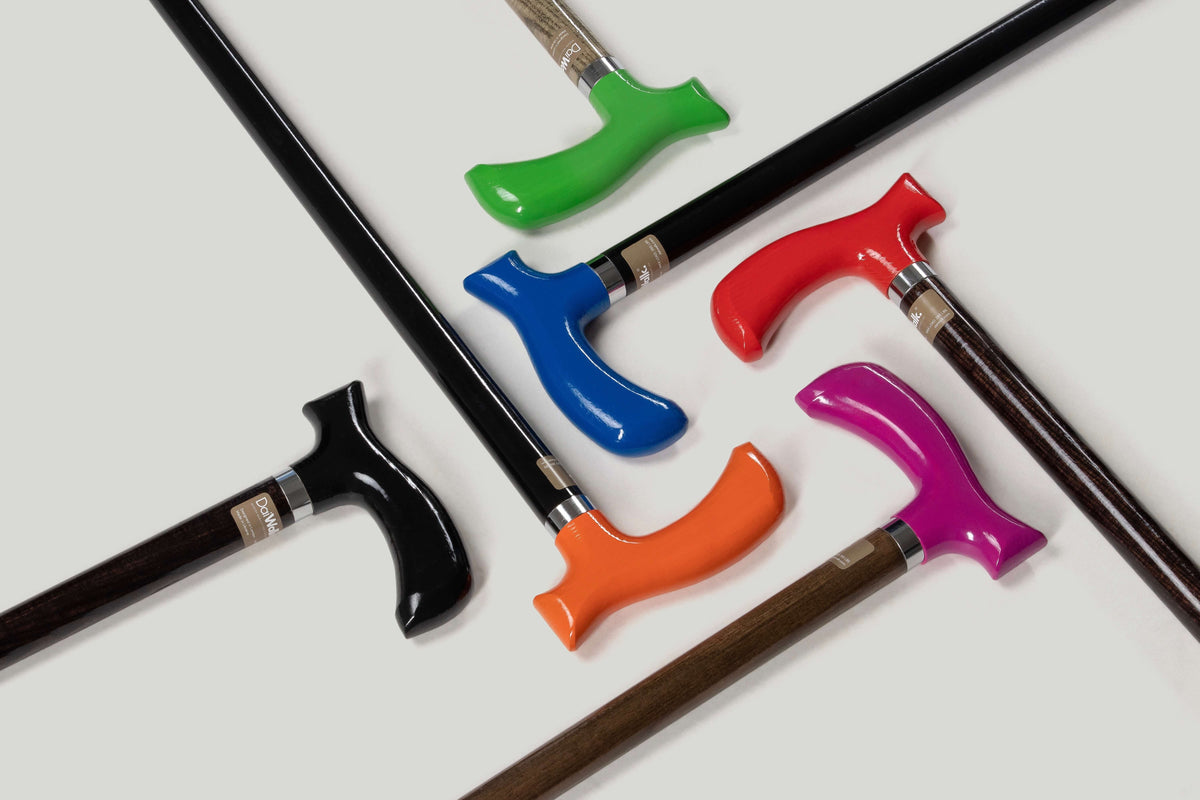
View configuration options at the DaiWalk walking cane collection.
Related Reading
- Walking Cane for MS: Fatigue Configuration
- Walking Cane for Fibromyalgia
- Walking Cane Weight
- Walking Cane for Chronic Pain
Long COVID symptom data from peer-reviewed infectious disease and rehabilitation medicine literature. PEM mechanism from ME/CFS and long COVID research consensus documents. Configuration priorities from DaiWalk fatigue-condition consultation framework.


