


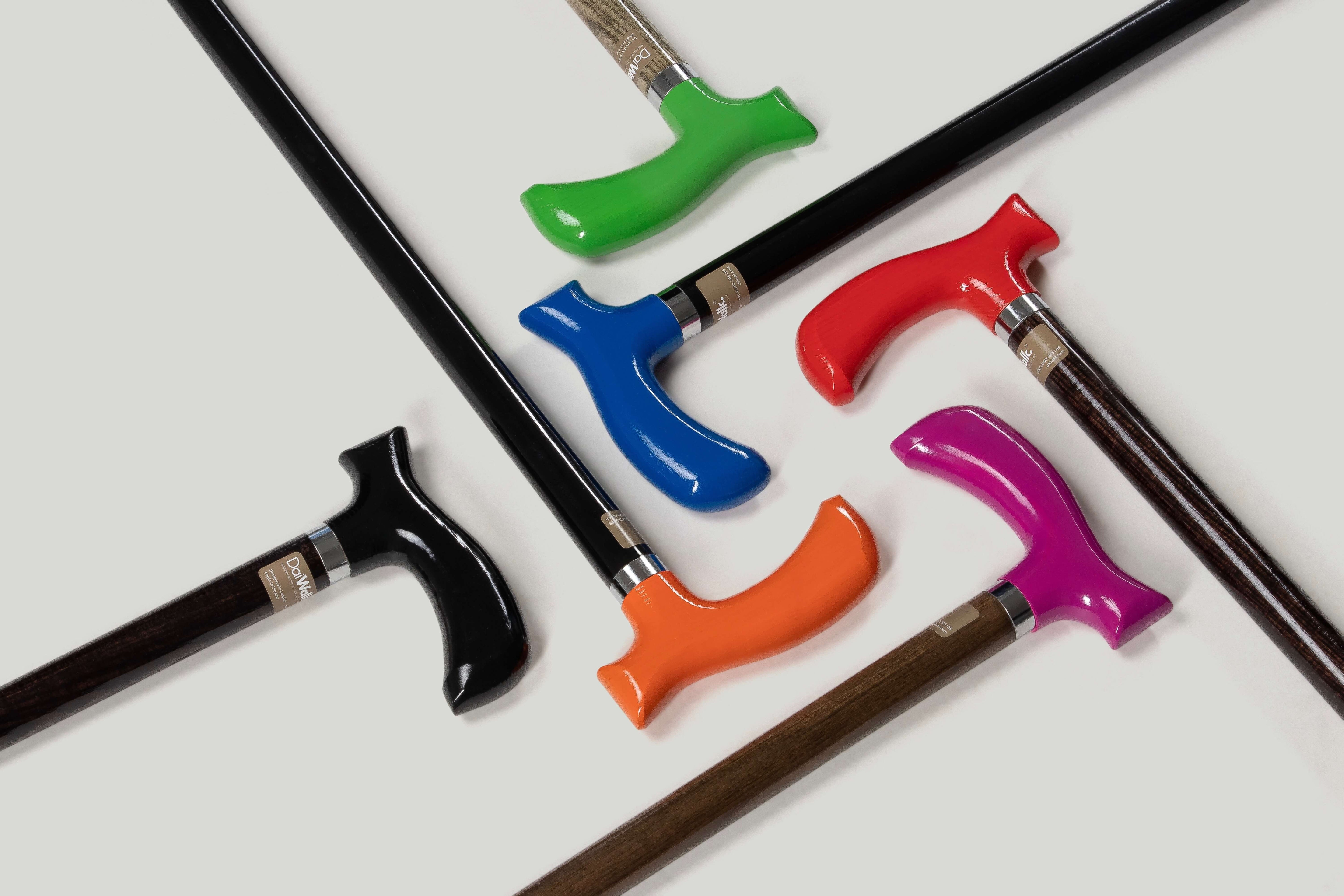
Walking cane weight is the most discussed specification in the lightweight cane category and one of the least useful in isolation. A 280g cane is not categorically better than a 340g cane. The question is whether the weight difference is meaningful at your usage level, and whether the methods used to reduce weight compromise other performance characteristics.
Here is what the data shows about weight, fatigue, and performance tradeoffs.
Weight Ranges in the Market
| Category | Weight Range | Typical Construction |
|---|---|---|
| Ultra-light carbon fibre | 170–220g | Carbon shaft, minimal tip, basic handle |
| Standard aluminium | 320–420g | Aluminium shaft, standard handle, rubber ferrule |
| DaiWalk (wood handle + collet) | 295–340g | Wood handle, aluminium shaft, compound tip |
| Quad cane | 480–620g | Aluminium, four-point base, pivot mechanism |
| Folding cane | 350–480g | Folding joints add 60–130g over equivalent fixed shaft |
When Weight Difference Is Meaningful
The biomechanical threshold for perceptible cane weight difference in the hand during walking is approximately 40–60g. Below this threshold, most users cannot distinguish between weights in single-step use. The fatigue effect accumulates over extended use — over 8,000 daily steps, a 60g difference represents approximately 480kg of additional cumulative lift over a day.
For users walking 4+ hours daily, weight becomes a genuine consideration. For users walking 1–2 hours daily, the weight difference between a 250g and a 380g cane produces negligible fatigue difference in our customer data.
What Manufacturers Do to Reduce Weight — And the Tradeoffs
| Weight Reduction Method | Weight Saved | Performance Cost |
|---|---|---|
| Carbon fibre shaft (vs. aluminium) | 80–120g | Higher cost; some vibration transmission reduction; brittleness if dropped at angles |
| Smaller shaft diameter | 30–60g | Reduced torsional stiffness; more flex under load |
| Thinner shaft wall | 20–40g | Reduced lateral rigidity; increases deformation under heavy load |
| Removing adjustment mechanism | 45–80g | Fixes height — requires precise measurement before ordering |
| Smaller/lighter tip | 15–30g | Reduced contact patch; worse traction |
| Synthetic lightweight handle | 20–50g | Reduced tactile quality; worse wet grip performance |
The DaiWalk Weight: Where It Falls and Why
The DaiWalk Original 1.0™ weighs 295–340g depending on configuration (oak vs. wenge handle, tip type, shaft length). This places it in the lower range of wood-handled canes and below most aluminium-handled canes with equivalent shaft specifications.
Wood handles are denser than synthetic alternatives — a wenge handle section adds approximately 45g compared to an equivalent ABS plastic handle. This weight is accepted because the performance characteristics of wood (passive grip, wet traction, thermal comfort) are not available in lighter synthetic materials.
The collet mechanism adds approximately 18g compared to a button-and-hole mechanism. This weight is accepted because the mechanism eliminates shaft play.
Who Should Prioritise Weight
- Users with limited arm strength (neurological conditions, proximal muscle weakness): even small weight reductions are meaningful; consider carbon fibre shaft options
- Extended daily users (4+ hours): the cumulative lift calculation becomes significant; weight optimisation pays off
- Travel users: carry weight matters for overhead bin and pack weight; lighter is materially better
- Occasional users (under 2 hours daily): weight is not a meaningful differentiator at this usage level
Weight Is Not a Proxy for Quality
The lightest cane in a category is not the best cane in that category. Buyers who select by weight as a primary filter typically end up with thin-shaft, lightweight-tip, minimal-mechanism designs that score poorly on shaft rigidity, traction, and durability.
The correct filter sequence: minimum acceptable shaft rigidity → minimum acceptable tip traction for your surfaces → preferred handle ergonomics → then optimise weight within those constraints.
For most users, the DaiWalk at 295–340g is neither the lightest available option nor a heavy cane. It represents the minimum weight achievable with wood handle, compound tip, and 0mm-play collet mechanism. Users who need lower weight should consider the fixed-length shaft variant (removes 45–70g from the mechanism) or consult about carbon shaft options.
View weight specifications per configuration on the product page.
Related Reading
- Lightest Walking Cane Without Sacrificing Stability
- Fixed vs. Adjustable Walking Cane
- The Zero-Rattle Standard
- Walking Cane for Travel
Weight data from DaiWalk production units. Competitive weight range from purchased units. Customer fatigue data from 18-month follow-up programme (n=112).


