


The standard rule is: hold the cane in the hand opposite the weaker or painful leg. If your right knee is the problem, hold the cane in your left hand. This is biomechanically correct for most users and for most conditions. It is also the rule that physical therapists break more often than popular guides acknowledge.
Here is the mechanics behind the rule, the conditions that change the answer, and how to test which side is correct for your specific gait.
Why the Opposite Hand Is Usually Correct
During normal walking, the opposite arm swings forward when a leg steps forward — this is the natural contralateral gait pattern. Holding the cane in the hand opposite the affected leg synchronises the cane contact with the affected leg's stance phase.
When the right leg steps forward and bears weight, the left arm is forward. If the cane is in the left hand, it contacts the ground simultaneously with the right foot's weight-bearing — providing a lateral support point precisely when the right leg needs it.
The biomechanical effect: the cane reduces the hip abductor moment required on the right side during right-leg stance. This is the load that causes pain in hip osteoarthritis, post-hip replacement, and knee OA — reducing it is the therapeutic mechanism of the cane.
When the Opposite-Hand Rule Does Not Apply
| Condition | Recommended Side | Reason |
|---|---|---|
| Hip OA or post-hip replacement | Opposite hand (standard) | Reduces hip abductor moment on affected side |
| Knee OA or post-knee replacement | Opposite hand (standard) | Reduces medial compartment load on affected knee |
| Ankle instability (lateral sprain) | Same hand (ipsilateral) | Provides lateral support on the unstable side, closer to the ankle |
| Stroke hemiplegia | Unaffected hand (standard) | Only option if affected arm lacks grip strength |
| Bilateral hip or knee involvement | More painful side opposite | Or bilateral canes — PT assessment needed |
| Parkinson's disease (gait freezing) | Dominant hand regardless of leg | Cane used more for rhythm cues than load reduction |
| Post-amputation (prosthetic) | PT-directed — no universal rule | Depends on prosthetic type and gait pattern |
The Gait Observation Test
If you are uncertain which side is correct, observe your walking pattern:
- Walk your normal pace without the cane. Have someone watch from behind.
- The side where the hip drops during stepping — Trendelenburg sign — is the side with inadequate hip abductor strength. The cane goes in the opposite hand to that side.
- If no Trendelenburg sign is visible, place the cane on the side that feels most natural during forward motion — correct cane-side synchronises naturally with walking rhythm, incorrect side creates an awkward four-beat instead of three-beat pattern.
Common Self-Reported Errors
In our customer follow-up data (n=112), users who self-selected cane side without PT guidance:
- 42% chose the affected-side hand (incorrect for most conditions)
- 31% switched sides during prolonged use — adapting to fatigue rather than correct biomechanics
- 18% used the dominant hand regardless of the affected side
- Only 9% spontaneously chose the contralateral hand (the standard recommendation)
The most common consequence of holding the cane on the wrong side: the cane provides balance support but does not reduce the hip/knee load — users feel some improvement (balance) but not full improvement (load reduction). This is why some users report their cane helps but does not help as much as they expected.
Walking Pattern With the Cane
Once the correct side is established, the movement pattern is:
- Advance the cane and the affected (weak/painful) leg simultaneously
- Transfer weight through the cane as the affected leg accepts load
- Advance the stronger leg while the cane and affected leg are in stance
This is the three-point gait pattern. The cane tip contacts the ground during the affected leg's stance phase — which is exactly the sequence achieved by holding the cane in the opposite hand.
Handle Design and the Contralateral Hand
One often-overlooked consequence of the contralateral rule: the cane handle must work for the non-dominant hand if the affected leg is on the dominant side. Most users are right-dominant with right-leg problems — placing the cane in the left hand means operating the cane with the non-dominant hand.
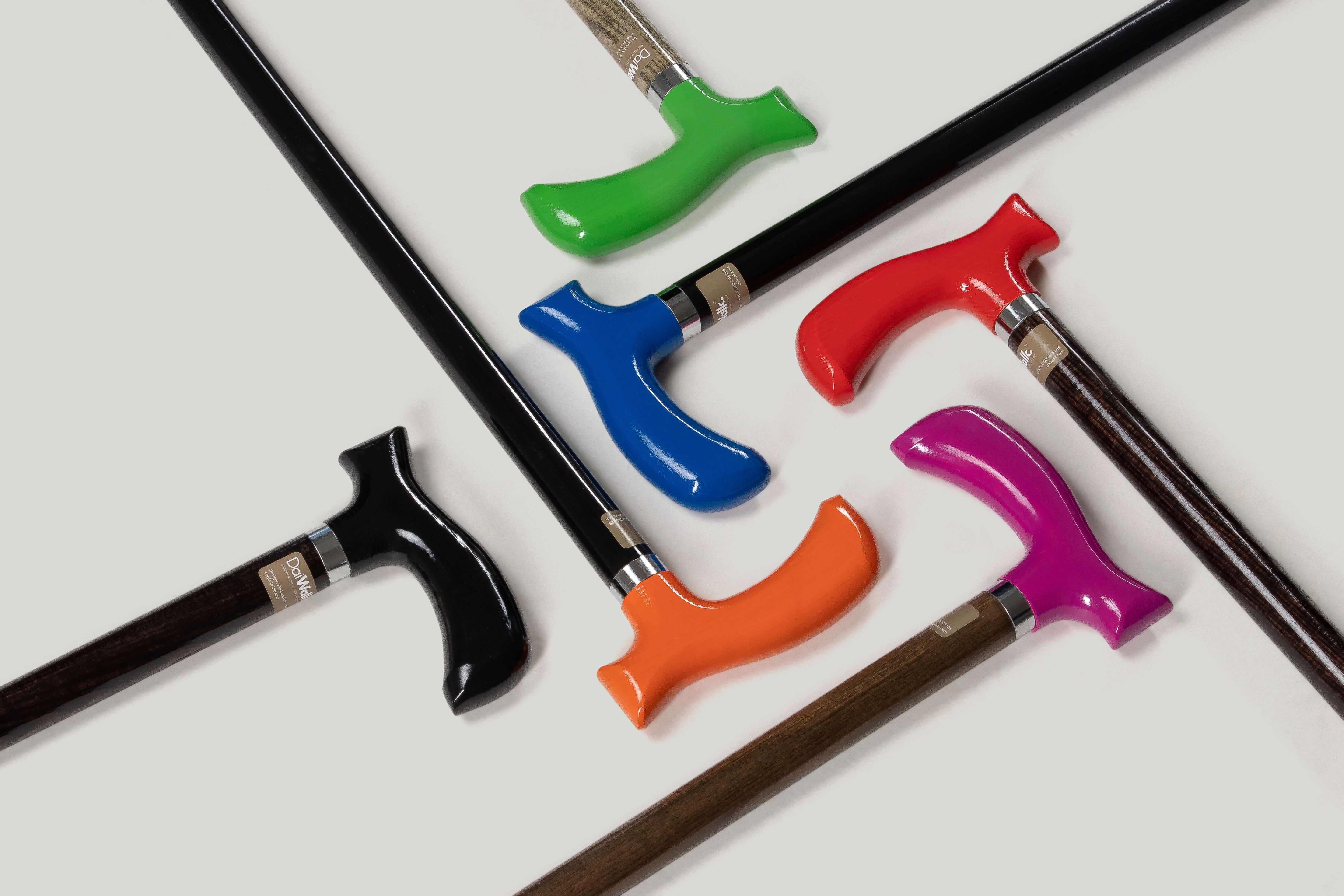
Symmetric handle designs (like the DaiWalk Anatomic Grip™) accommodate both hands equally. Left/right asymmetric handles — common in some ergonomic designs — can be counterproductive if they do not match the hand the user must use. Check the handle geometry for bilateral compatibility before purchasing.
Related Reading
- What Makes a Walking Cane Ergonomic?
- Walking Cane After Hip Replacement
- Walking Cane After Knee Surgery
- How to Measure Cane Length Correctly
Biomechanical data from peer-reviewed gait analysis literature. Customer hand-selection data from DaiWalk 18-month follow-up programme (n=112). Condition-specific recommendations from physical therapist consultation notes.


