


If your wrist aches after using a walking cane, the cane is probably wrong for you in one of three specific ways. Here's how to diagnose which one — or skip straight to our free walking cane wrist pain checker, which pinpoints the cause in about a minute.
The three causes of cane-related wrist pain
1. The cane is the wrong height
This is the most common cause, and the most overlooked. When a cane is too short, you lean into it. When it's too long, your elbow locks and your wrist absorbs the shock instead of your arm muscles.
The correct height: stand upright, let your arm hang naturally at your side, and measure the distance from the floor to your wrist crease. That's your cane height. Not your hip. Not your belly button. Your wrist crease.
Most people set their cane 2-3 inches too short because it feels more natural to reach down. It isn't. Adjust the shaft and walk for ten minutes — the difference is immediate.
2. The handle shape doesn't match your grip
Standard T-bar handles concentrate all load on one point of the palm — the area just below the index and middle fingers. Over a full day of walking, this creates localised pressure that becomes pain.
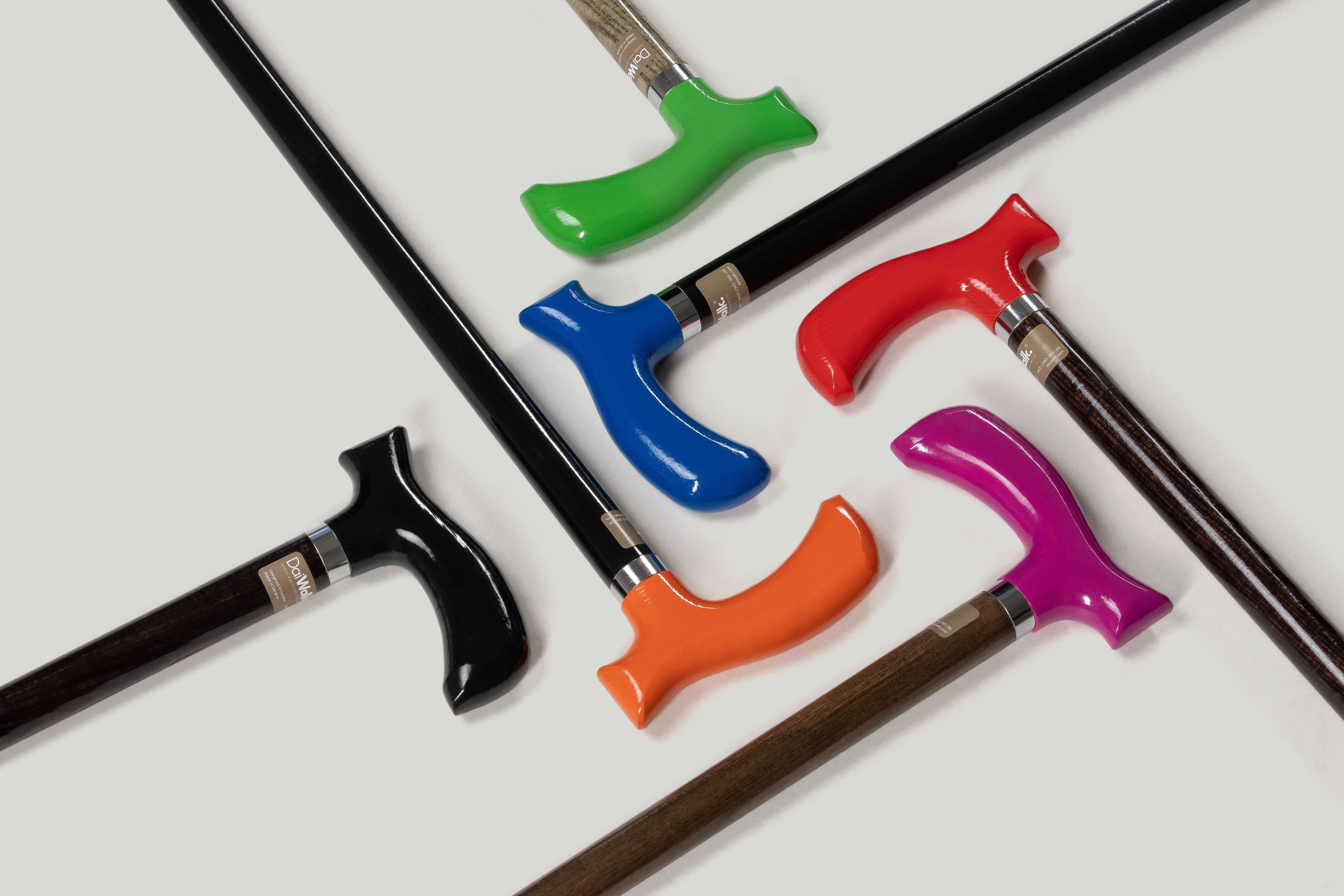
Anatomically-shaped handles (like the Anatomic Grip™ on DaiWalk canes) spread load across the entire palm, including the heel of the hand. The wrist stays neutral instead of flexing forward to compensate.
If you're using a straight T-bar and experiencing wrist pain, handle shape is likely contributing. Read more about how the Anatomic Grip™ was engineered in How we designed the Anatomic Grip™.
3. You're putting too much weight on the cane
A walking cane isn't designed to bear full body weight — that's what a crutch or rollator is for. A cane should take approximately 15-25% of your body weight during the stance phase of your gait.
If you're leaning heavily on the cane with every step, the wrist and shoulder will eventually protest. This often indicates that the cane height is wrong, or that you need a different mobility aid entirely.
Quick checklist
- Stand upright — is the cane handle exactly at your wrist crease? If not, adjust the shaft.
- Look at the handle shape — is all the pressure on one spot? Consider an ergonomic handle.
- How much weight are you putting on it? A cane should assist, not carry.
- How long are your sessions? If you're walking more than an hour, take breaks.
When to see a specialist
If adjusting height and handle type doesn't reduce pain within a week, see a physiotherapist. Wrist pain from a cane can sometimes indicate that you need a different gait aid — a forearm crutch, rollator, or quad cane — depending on your specific balance and strength needs.
What we changed at DaiWalk
The Anatomic Grip™ on every Original 1.0™ was designed specifically around this problem. Before finalising the geometry, we tested four different palm profiles across a range of hand sizes and walking distances. The current shape keeps the wrist in a more neutral position than a standard T-bar under the same load — reducing the pressure concentration at the palm.
It doesn't eliminate the need for correct height adjustment — nothing does — but it changes what happens at the palm during contact.
Run the free Wrist Pain Checker | Calculate your cane height | See the Original 1.0™ collection
Related articles
- How we designed the Anatomic Grip™ — the engineering behind the handle that reduces wrist load
- DaiWalk vs a standard walking cane: 6 differences that actually matter
- How to choose the right rubber cane tip — the tip also affects impact on the wrist


