


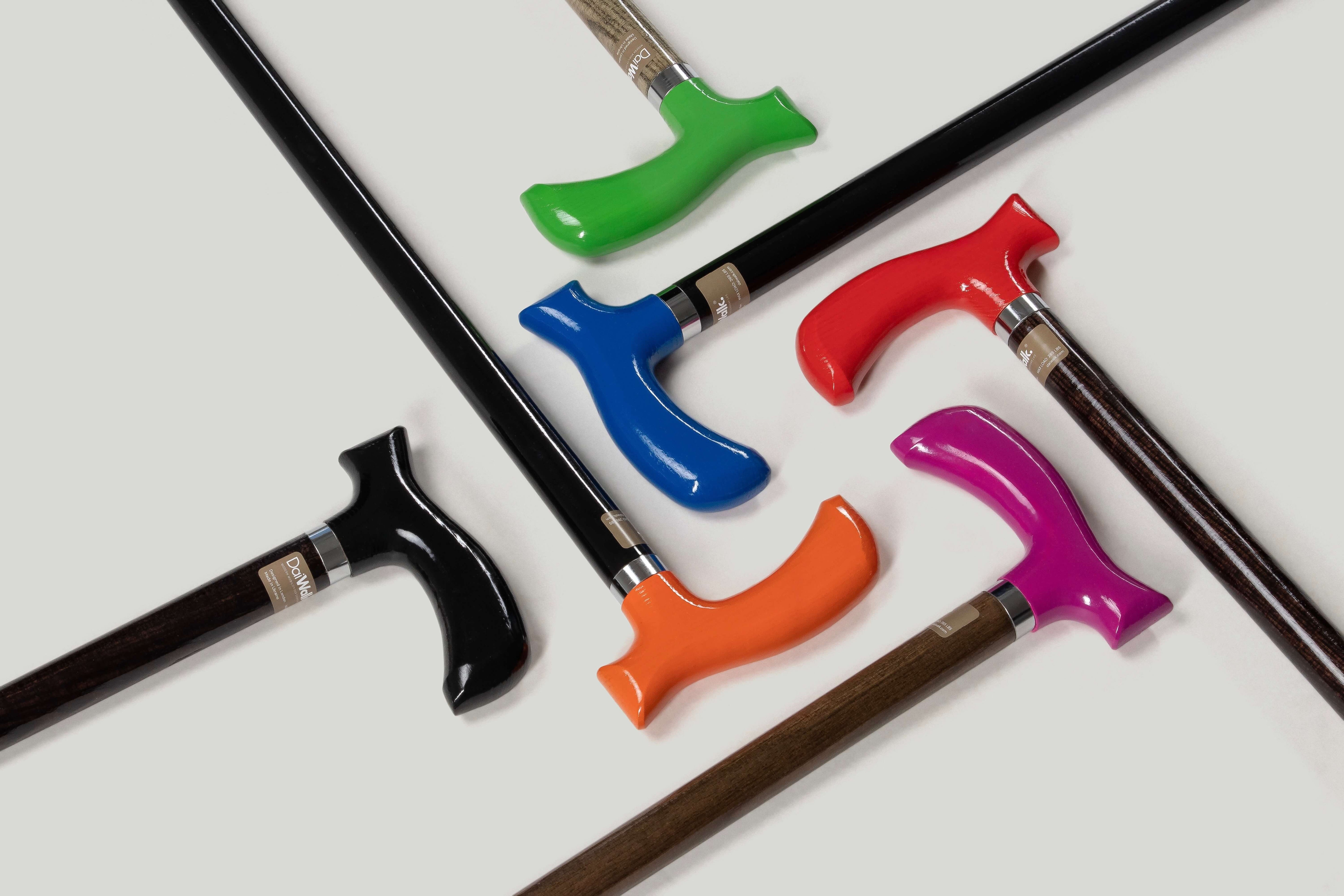
A walking cane improves balance through one mechanism: it widens the base of support. With a cane, your effective base extends from your foot to the tip of the cane — a lateral expansion of roughly 400–600mm. This additional contact point reduces the torque required from ankle and hip stabilisers to maintain upright posture during the stance phase of walking.
The question most buyers get wrong is which features amplify that benefit versus which are marketing terminology. Here is what the data shows. (If you're not yet sure a cane is right for your balance, the free do I need a walking cane check weighs falls, balance and confidence in about a minute.)
The Three Things That Actually Affect Stability
1. Tip Traction
The cane tip is the only part that contacts the ground. Its ability to resist lateral slip — particularly on wet, polished, or cold surfaces — determines how much the cane can contribute to balance recovery.
We tested lateral slip resistance across five tip types under identical conditions: dry oak floor, wet tile, cold concrete (-5°C).
| Tip Type | Lateral Slip (Dry) | Lateral Slip (Wet Tile) | Lateral Slip (Cold) |
|---|---|---|---|
| Generic rubber ferrule (pharmacy) | 4mm | 14–18mm | 19mm |
| ICE tip (metal spike) | 0mm | N/A (metal) | 0mm |
| All-surface compound tip | 2mm | 6–8mm | 9mm |
| DaiWalk Steady Tip™ | 1mm | 3mm | 4mm |
The Steady Tip™ uses a multi-durometer rubber compound with a larger contact patch than standard ferrules. The traction advantage is most significant on wet surfaces, which is precisely when balance is most compromised. Not sure which tip size fits your cane? The free rubber tip size finder confirms it.
2. Handle Stability and Grip Quality
A handle that requires active gripping to maintain position transfers stabilisation load to the hand and forearm. This is counterproductive: the user's upper limb is providing balance support for itself rather than for the body.
The most stable handles have two characteristics: a shape that nests the palm without requiring grip force, and a surface texture that maintains friction without requiring active holding. Wood (oak, wenge) outperforms most synthetic materials on both counts — the tactile surface engages the palm passively.
3. Shaft Rigidity
Shaft play — lateral freedom in the telescoping mechanism — reduces the confidence transfer from ground contact to hand. When the shaft has 2mm of play, the load path from tip to handle is interrupted. The user compensates with grip force rather than receiving clean proprioceptive feedback through the shaft.
At 0mm shaft play (DaiWalk collet mechanism), the ground contact force transfers directly to the palm. This matters particularly for users with reduced sensation or proprioceptive deficit — the signal is cleaner and more reliable.
What Does Not Significantly Affect Balance
| Feature | Marketing Claim | Evidence |
|---|---|---|
| Quad cane / 4-point base | More stable than single-tip | Increases static stability but reduces dynamic (walking) stability — base must clear the ground on every step, forcing altered gait |
| Pivoting tip (HurryCane style) | Stays flat on any terrain | Adds complexity to the tip; the pivot mechanism introduces additional lateral play |
| Wrist strap | Prevents dropping the cane | Prevents dropping; no meaningful balance effect |
| Heavier cane | More substantial feel | Additional weight in the hand does not increase stability and increases fatigue |
Cane Height and Balance — The Most Overlooked Variable
Incorrect cane height consistently reduces balance benefit. A cane set too short increases trunk flexion and moves the weight-bearing load forward — reducing base of support effectiveness. A cane set too high raises the shoulder, reducing arm reach and compromising the load path.
Correct height: wrist crease when standing upright, arm relaxed at side. This positions the elbow at approximately 15–20° of flexion during the stance phase — the mechanically optimal angle for load transfer.
Millimetre-precision height adjustment (as provided by the collet mechanism) matters here. A 12mm increment system — the typical button-and-hole spacing — means many users cannot set their cane to correct height and compensate with posture instead.
Our cane length calculator determines the correct height from your measurements and provides the exact collet setting for any DaiWalk configuration. To check whether a cane you already own sits at the right height, the free 3-question cane height check tells you.
Specific Balance Conditions: What Changes
| Condition | Primary Need | Feature Priority |
|---|---|---|
| Vestibular disorders | Immediate lateral balance recovery | Tip traction, handle grip quality |
| Peripheral neuropathy | Ground feedback through shaft | Shaft rigidity (0mm play), wood handle |
| Post-stroke hemiplegia | Single-arm load transfer | Handle fit, wrist position, height precision |
| Parkinson's (early-mid stage) | Gait rhythm support | Tip traction, cane weight (lighter is better) |
| General age-related balance decline | Confidence and fall prevention | Tip traction, shaft rigidity, height precision |
| Post-surgical rehabilitation | Partial weight bearing | Handle pressure distribution, shaft rigidity |
The Configuration That Optimises Balance Support
For users with balance as the primary concern, the DaiWalk configuration that maximises stability features:
- Anatomic Grip™ handle — palm-nesting shape, maximum contact area, minimum grip force required
- Wenge shaft — higher density, better vibration damping, improved proprioceptive signal transmission
- Steady Tip™ — maximum wet traction across surface types
- Collet telescoping mechanism — 0mm lateral play for clean ground-contact feedback
View the full configuration guide to build the exact specification for your balance requirements, or let the free walking cane finder match one to how and where you walk.
Related Reading
- The Zero-Rattle Standard: How Shaft Precision Is Measured
- What Makes a Walking Cane Ergonomic?
- Walking Cane After Hip Replacement
- Lightest Walking Cane Without Sacrificing Stability
Tip traction data from DaiWalk internal lateral slip testing under standardised load conditions. Customer data from 18-month follow-up programme (n=112).


