


Chronic pain and walking cane use have a non-obvious relationship. Most people understand that a cane can reduce pain by offloading a joint. What is less understood is how the cane itself — its weight, handle pressure, shaft stability — can either reduce pain burden during use or add new pain sources that compete with the original condition.
A cane that is correctly specified for chronic pain reduces the user's total daily pain load. A cane that is incorrectly specified may reduce the primary pain while adding forearm, wrist, or palm pain — a net neutral or negative outcome.
The Total Pain Load Concept
Chronic pain users walking with a cane experience pain from at least two sources simultaneously:
- The primary condition (knee OA, hip arthritis, neuropathy, fibromyalgia, etc.)
- The cane itself — palm pressure, wrist load, forearm stabilisation effort
The goal of cane selection is to minimise the sum of both sources. A cane that reduces primary condition pain by 30% but adds 20% from poor handle ergonomics provides a 10% net improvement. A cane with better handle ergonomics that reduces primary pain by 25% and adds 5% from handle discomfort provides a 20% net improvement — a better outcome from a lower-cost primary pain reduction.
Where the Cane Adds Pain: The Three Sources
1. Palm Pressure at the Handle
The handle is the interface between the cane and the body. Peak pressure at a T-bar handle under 30kg load: 4.2 N/cm². Over 8,000 daily steps, the cumulative palm load is significant — and for chronic pain users with hand sensitivity (fibromyalgia, rheumatoid arthritis, neuropathy), this pressure can trigger focal pain at the thenar eminence.
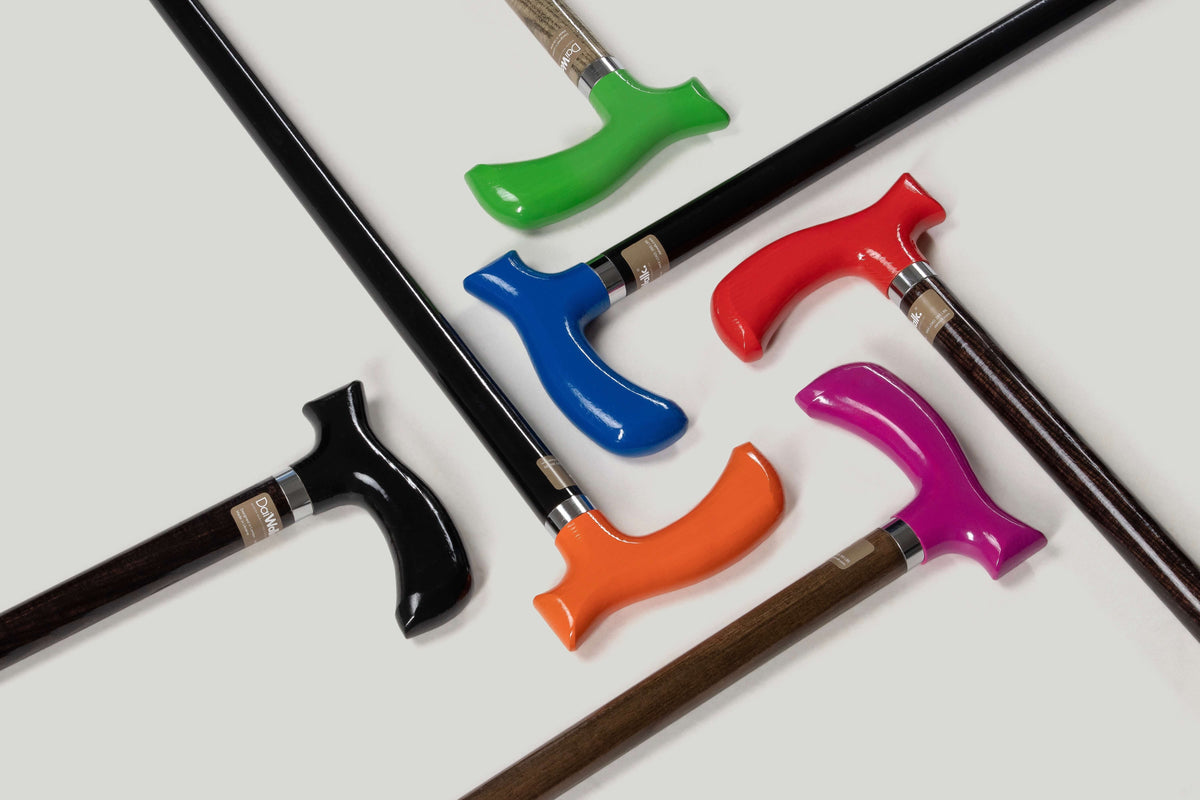
The Anatomic Grip™ at 1.9 N/cm² distributes the same load across a larger palm area, reducing peak pressure by 55%.
2. Wrist Load from Shaft Play
Shaft play (1.5–3mm in button-and-hole mechanisms) requires constant micro-stabilisation from the wrist and forearm flexors. For chronic pain users, this stabilisation load is additive to the existing muscular burden. Over extended daily use, the forearm fatigue from stabilising a rattling shaft can produce wrist and forearm pain.
Zero shaft play (collet mechanism, 0mm) eliminates this stabilisation cost.
3. Cane Weight in the Hand
Every gram of cane weight adds to the cumulative load on the holding arm across a full day of use. For chronic pain users with upper limb involvement, this can be the difference between comfortable use and arm fatigue that makes the cane counterproductive past a certain duration.
Configuration for Minimum Total Pain Load
| Priority | Feature | Why |
|---|---|---|
| 1 | Anatomic Grip™ handle | 55% lower peak palm pressure than T-bar |
| 2 | Collet mechanism (0mm play) | Eliminates forearm stabilisation cost |
| 3 | Minimum weight configuration | Reduces cumulative arm load, particularly relevant for upper limb conditions |
| 4 | Correct height (wrist crease measurement) | Incorrect height produces shoulder and trunk pain secondary to compensation |
| 5 | High-traction tip | Reduces cognitive load of monitoring foot placement — less attention spent on slip prevention, lower overall stress level |
Conditions With Specific Upper Limb Concerns
For chronic pain conditions that also affect the hands and arms:
- Rheumatoid arthritis: All hand joints affected — handle pressure concentrated at inflamed MCP joints is a primary pain trigger. Wide-diameter handles reduce MCP load. Anatomic Grip™ preferred.
- Carpal tunnel syndrome: Wrist extension during cane use can increase carpal tunnel pressure. Height verification critical — cane too long forces wrist extension. Forearm cuff alternative worth considering for severe CTS.
- Fibromyalgia: Allodynia can make standard handle pressure painful. Handle pressure minimisation is priority. See Walking Cane for Fibromyalgia for full detail.
- CRPS (Complex Regional Pain Syndrome): Temperature sensitivity in affected limb — wood handle preferred for thermal neutrality. Avoid metal handles that conduct temperature.
The Duration Threshold
Chronic pain users typically have a duration threshold — a walking time beyond which pain escalates. The correctly configured cane extends this threshold. The incorrectly configured cane (wrong height, high handle pressure, shaft play) compresses it — the user reaches the pain threshold sooner because of the cane's contribution, not despite it.
Users who report the cane stops helping after 20–30 minutes should consider whether the cane specification is adding pain rather than only the primary condition progressing.
Full configuration options at the DaiWalk walking cane collection.
Related Reading
- Walking Cane for Fibromyalgia
- Walking Cane for Arthritis
- Walking Cane Handle Types Compared
- What Makes a Walking Cane Ergonomic?
Handle pressure data from DaiWalk internal pressure mapping study (n=14 participants, 30kg load protocol). Shaft play data from competitive product testing. Pain load framework from occupational therapy and chronic pain rehabilitation literature.


