


The average age at which people begin using a walking cane is dropping. Chronic illness, connective tissue disorders, post-viral conditions, and sports injuries are placing people in their 20s and 30s into a product category that was designed for a demographic 40 years older.
The canes available to them were not designed with them in mind. The stigma they face was not designed out of the product. And the advice they receive — use whatever is functional, appearance does not matter — is both wrong and counterproductive.
Appearance matters because it determines whether the cane gets used. (If you are still weighing whether you need a cane at all, the free do I need a walking cane check is a neutral place to start.)
The Abandonment Problem in Younger Users
In our customer acquisition data, younger buyers (under 45) who come to DaiWalk have the highest prior abandonment rate of any age group. 47% had previously owned a walking cane they stopped using — significantly higher than our overall abandonment figure of 38%.
The reasons given:
- 52%: It felt stigmatising to carry in public
- 31%: Wrist or palm pain made extended use uncomfortable
- 17%: The cane did not perform adequately on their active lifestyle terrain
The first reason — stigma — is a design failure, not a personal failing. A product that users feel unable to carry in public is a product that has not done its job.
The Identity Problem With Standard Walking Canes
Standard walking canes communicate one thing visually: medical equipment. This is appropriate for a hospital corridor. It is not appropriate as the only option for a 28-year-old with hypermobility syndrome who needs mobility support for the rest of their life.
The visual language of a cane carries meaning. Chrome shaft, black plastic handle, generic rubber tip — these are signals that the object belongs to a medical context, not to the person carrying it. For younger users navigating workplaces, social settings, and public spaces where they are already managing questions about their condition, a cane that announces itself as medical equipment adds a layer of visibility they did not choose.
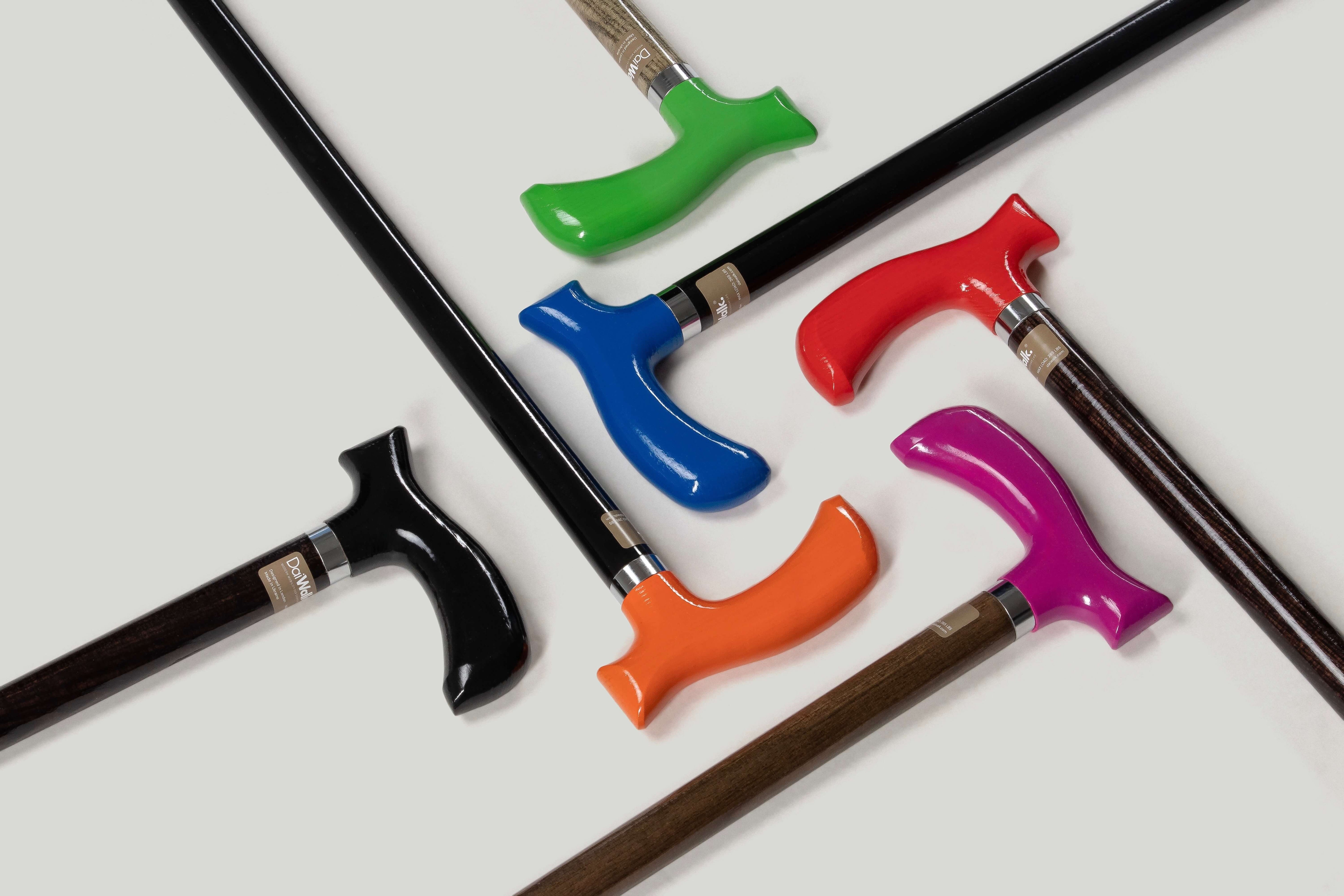
The DaiWalk Original 1.0™ is available in seven handle colours, two wood finishes, and a black alloy option. The shaft finishes are chosen to look like designed objects, not clinical equipment. The POP™ series takes this further — individually hand-painted canes that function as art objects.
None of this changes the biomechanics. The cane still provides the lateral stability and joint offloading it should. What changes is what it communicates — and that communication determines whether it gets used.
The Conditions Most Common in Younger DaiWalk Buyers
| Condition | Age Range (DaiWalk data) | Primary Functional Need | Design Variable That Matters Most |
|---|---|---|---|
| Hypermobility (EDS/HSD) | 19–38 | Joint protection, wrist stability | Handle geometry, shaft rigidity |
| Long COVID / ME-CFS | 25–45 | Energy conservation, low-fatigue use | Cane weight, grip force, tip shock absorption |
| Lupus / RA | 22–50 | Variable use (good days and bad days) | Adjustability, handle comfort on flare days |
| Post-surgical (hip, knee, ankle) | 18–45 | Gait retraining, precise height | Height precision, shaft stability |
| Sports injury (chronic) | 20–40 | Active terrain use, durability | Tip system, shaft play |
For hypermobility specifically — the most common condition among younger DaiWalk buyers — the handle geometry is the critical variable. Hypermobile wrists under load tend toward hyperextension. A T-bar handle at 14 degrees of wrist extension during stride compounds an existing instability pattern. The Anatomic Grip™ at 2 degrees of wrist extension reduces this load significantly. The full ergonomic data is in What Makes a Walking Cane Ergonomic?
Active Lifestyle Terrain: What Standard Canes Cannot Handle
Younger users are more likely to use a cane across demanding terrain — cobblestones, uneven paths, stairs, crowded transport — and for longer uninterrupted periods. The performance gap between a standard tip and a surface-matched DaiWalk tip is most visible in these conditions.
| Terrain | Standard Tip Performance | DaiWalk Tip | Performance Difference |
|---|---|---|---|
| Wet urban pavement | 14–18mm lateral slip | Steady: 3mm | Critical — especially at speed |
| Cobblestones | Single point catches or misses | Hex: 6-point contact | Eliminates the catch risk entirely |
| Long daily commute | Fatigue accumulates at standard tip | Core: 25% impact reduction | Wrist fatigue over 5km measurably lower |
All tips are in the interchangeable tip collection and swap without tools in under 30 seconds. Not sure which size fits your current cane? The free rubber tip size finder confirms it.
The Visibility Decision: When Not to Be Discrete
Some younger users make the opposite choice — they want the cane to be visible, deliberate, and impossible to read as medical equipment. They want it to be the most interesting object in the room.
The POP™ series was made for this. Each cane is individually hand-painted by artists. No production run. No identical pieces. The price starts at $137 because the labour is real — each piece takes hours to complete.
For younger users who have decided that the cane is part of their identity and they will own that identity on their terms, the POP™ is the product. For those who want the performance without the visibility, the Original 1.0™ in Stealth Black is the equivalent in the other direction.
What Younger DaiWalk Buyers Actually Say at Six Months
From our 180-day follow-up with buyers under 45:
I spent two years avoiding using a cane because everything available looked like hospital equipment. The first week with the DaiWalk I used it every day without thinking about it. That had never happened before.
The wrist pain I had with my previous cane disappeared in the first month. My physio noticed my gait had improved before I even told her I had switched.
People ask about the cane now instead of asking about my condition. That is a completely different conversation.
The Configuration for Younger Users
Prefer a shortcut? The free walking cane finder returns a specific setup from three quick questions.
Based on usage patterns from DaiWalk buyers under 45:
| Profile | Recommended Configuration |
|---|---|
| Hypermobility, indoor and urban | Original 1.0™, oak handle, Steady Tip, exact height via calculator |
| Active commuter, all weather | Original 1.0™, wenge handle, Steady Tip + Hex Tip |
| Variable use (good days and bad days) | Original 1.0™, alloy handle, Core Tip + lanyard for flexibility |
| Maximum style statement | POP™ series + Steady Tip |
| Discretion priority, workplace | Original 1.0™, Stealth Black, Elegant Tip |
The full configuration tool, 3D visualiser, and height calculator are on the DaiWalk product page. Every data point in this article is sourced from our internal testing programme and customer follow-up — not from manufacturer claims or generic research.
Related Reading
- Walking Cane for Women: The Design Gap Nobody Talks About
- Walking Canes and Style: How to Carry Yours With Intention
- What Makes a Walking Cane Ergonomic?
- Why Your Walking Cane Hurts Your Wrist — and How to Fix It
Abandonment data from DaiWalk customer acquisition interviews (n=112). Age-segmented condition data from pre-purchase consultations. Six-month follow-up quotes from buyers under 45, reproduced with permission.


