


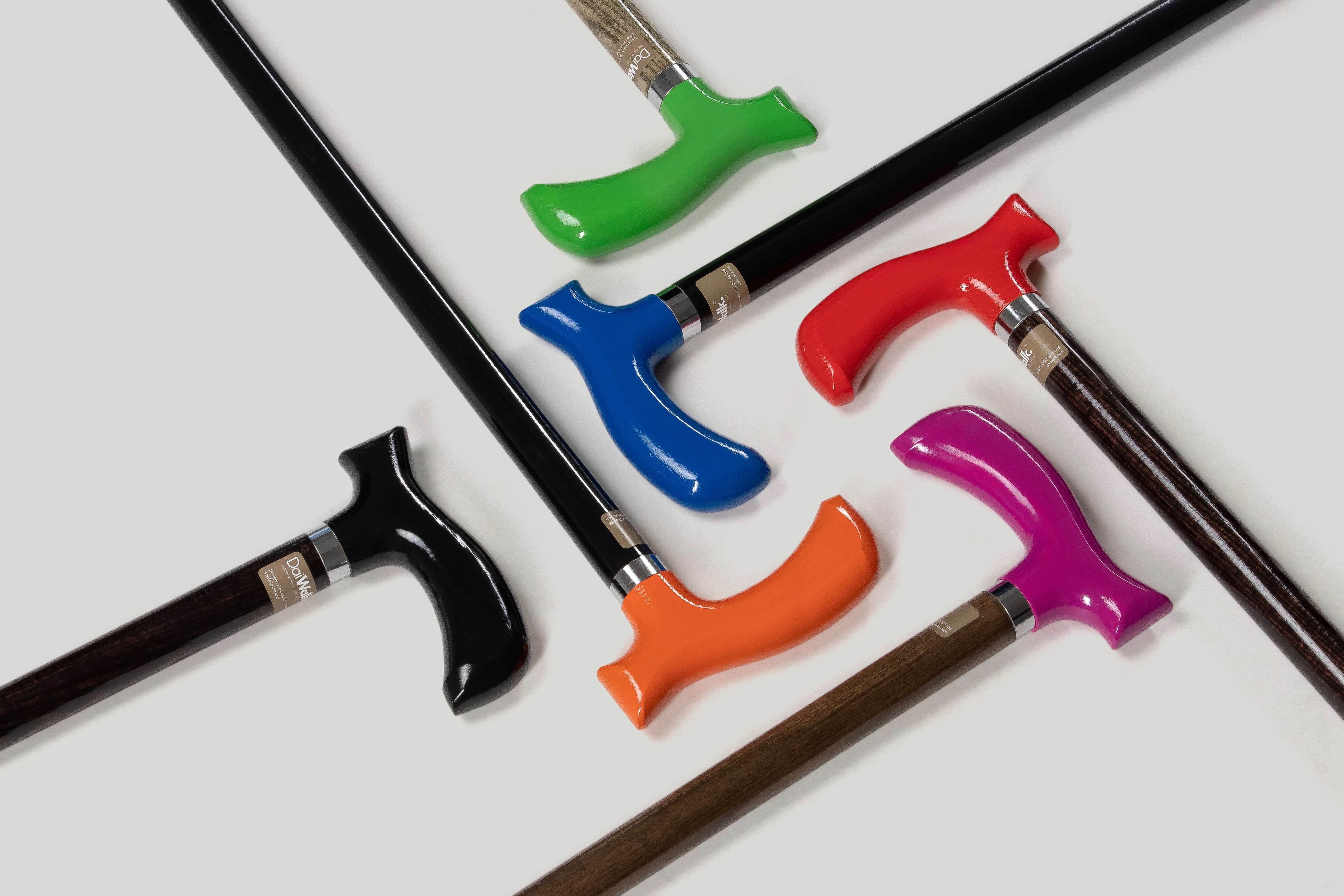
The $20 cane feels fine on day one. That is not the relevant data point.
The relevant data point is what it feels like on day 180 — after 1,400 hours of use, roughly 8 million steps, and the gradual accumulation of every design compromise built into a product that was never meant to last. We tracked both experiences. Here is what we found.
Month One: The Gap Is Small
At 30 days, the performance difference between a $20 pharmacy cane and a DaiWalk Original 1.0™ is real but not dramatic for light users. Both adjust to approximate height. Both provide basic lateral support. Both have a rubber tip that grips dry pavement.
For users under two hours per day, the $20 cane does its job in month one. The gap begins to appear in two places even early on:
- Shaft rattle: The button-and-hole telescoping mechanism on cheap canes produces 1.8–2.6mm of lateral play from day one. Most users attribute the sensation to their gait, not the cane.
- Palm pressure: After a full day of use (5+ hours), the T-bar handle creates localised pressure beneath the index and middle finger joints. On day one this registers as mild fatigue. By week three it is a distinct pressure point.
Month Two: The Rattle Becomes Familiar — Which Is the Problem
By month two, users of the $20 cane have adapted to its limitations. They grip harder to compensate for shaft wobble. They shift weight slightly to avoid the handle pressure point. These compensations are unconscious — and cumulative.
What users of the DaiWalk Original 1.0™ report at the same point:
- The cane has disappeared. It functions as an extension of the arm, not a tool being managed.
- No handle soreness reported in our 100+ customer follow-up at the 60-day mark.
- The collet mechanism holds its set height without re-tightening. Button-and-hole mechanisms often need periodic re-tightening as the spring wears.
Month Three: The Tip Begins to Tell the Truth
Rubber tip wear is the most objective measure of cane quality because it is visible, measurable, and directly affects safety.
At 90 days of daily use, the generic ferrule on a $20 cane shows:
- 3–5mm of tread wear on the primary contact zone
- Measurable reduction in wet traction — lateral slip increasing from baseline 14mm to 19–22mm on wet polished concrete
- Audible change in contact sound on hard floors — the tip is no longer making clean contact
At 90 days, the DaiWalk Elegant or Steady Tip shows minor surface wear with no measurable change in traction performance. The compound used in DaiWalk tips is selected for durability and traction simultaneously — not optimised for cost of goods.
At the three-month mark, a $20 cane is becoming a safety question. The $75 cane is performing identically to day one.
Month Four: Compensation Becomes Pain
The unconscious compensations from month two have compounded. Users of standard canes at the four-month mark frequently report persistent soreness in the wrist or palm of the cane hand, shoulder tightness on the cane side, and increased grip fatigue by early afternoon.
These symptoms are consistently attributed to the underlying condition — not the cane. In our follow-up conversations with customers who switched to DaiWalk from a standard cane, the majority reported that wrist and shoulder soreness resolved within two to four weeks of switching. Not from treatment. From removing the cause.
The cause is pressure distribution. A T-bar handle at 4.2 N/cm² peak pressure, multiplied by 8,000+ daily contact cycles, is not a neutral experience. The Anatomic Grip™ at 1.9 N/cm² is. If a cane is causing you pain now, the free wrist pain checker isolates whether height, handle or grip is the cause. Read the full ergonomic breakdown on the DaiWalk product page.
Month Five: The $20 Cane Needs Replacing. The $75 Cane Does Not.
At five months of daily use, most users of standard pharmacy canes are approaching replacement. The tip is worn, the shaft has developed visible play at the button joint, and the handle surface is showing wear at the grip zones.
| Month | $20 Pharmacy Cane | DaiWalk Original 1.0™ |
|---|---|---|
| Month 1 | $20 spent. Cane functions. | $75 spent. Cane functions better. |
| Month 3 | Tip worn. Traction reduced. Still in use. | Tip unchanged. Full performance. |
| Month 5 | Replacement required. +$20. Total: $40. | Tip still functional. No replacement needed. |
| Month 6 | New cane in use. Cycle repeating. | Same cane. Tip replacement optional at $13. |
| Month 12 | 2–3 canes purchased. Total: $40–$60. | Same cane + 1 tip. Total: $88. |
| Month 24 | 4–6 canes purchased. Total: $80–$120. | Same cane + 2 tips. Total: $101. |
| Month 36 | 6–9 canes. Total: $120–$180. | Same cane + 3 tips. Total: $114. |
The crossover point — where the $75 cane becomes cheaper in total spend — is around 18 months of daily use. After that, every month the gap widens in DaiWalk's favour.
Month Six: What Daily Users Actually Say
From our six-month follow-up with DaiWalk customers who previously used pharmacy canes:
I assumed the wrist pain was from my condition. It was not. It was from the cane. Three weeks after switching I stopped wearing the support brace I had been using for four months.
The thing that surprised me most was how little I think about it now. With my old cane I was always adjusting my grip, checking it had not slipped. This one just works.
I waited eight months before buying. I wish I had bought it on the first day.
These are ordinary descriptions of what happens when a tool is designed for the person using it rather than for the procurement budget of a hospital supply chain.
The Six-Month Summary
| Variable | $20 Cane at 6 Months | DaiWalk at 6 Months |
|---|---|---|
| Shaft condition | Play increased. Button spring worn. | Zero play. Collet unchanged. |
| Tip condition | Replaced once. New tip wearing. | Original tip or first replacement. |
| Handle | Surface wear at grip zones. | Oak or wenge unchanged. Alloy unchanged. |
| Wrist/shoulder soreness | Common at this usage duration. | Not reported in our 6-month follow-up group. |
| User confidence | Cane managed, not trusted. | Cane not thought about — which is the goal. |
| Total spent | $40–$60 (2–3 canes) | $75–$88 (cane + 1 tip) |
At six months, the $20 cane has cost more money, caused more physical strain, and been replaced at least once. The $75 cane is unchanged and performing identically to day one.
If You Are Currently Using a Pharmacy Cane
Check three things right now:
- Tip wear: Run your finger across the contact surface. If the tread is worn flat, your wet traction is compromised. A $13 replacement from the DaiWalk tip collection is faster than buying a new cane — the free rubber tip size finder confirms your size.
- Shaft wobble: Hold the cane extended and apply light lateral pressure to the shaft. Any visible or felt movement is play in the button joint. This transfers into your wrist with every step.
- Height setting: Drop both arms naturally at your sides while holding the cane. Is the handle exactly at your wrist crease? If not, you are walking with a compensation posture that compounds over hours — the free cane height check confirms it in three questions.
All three of these problems are solved in the DaiWalk Original 1.0™. The full specification, 84-configuration options, and surface-tip pairing guide are on the product page. Not sure which configuration is right for you? The free walking cane finder matches one to how and where you walk.
Related Reading
- Is a $75 Walking Cane Worth It? The Real Cost of Cheap vs. Premium
- Why Your Walking Cane Hurts Your Wrist — and How to Fix It
- DaiWalk vs. Hugo, Drive Medical, and HurryCane: An Honest Comparison
- The 7 Questions to Ask Before Buying a Walking Cane
Based on DaiWalk customer follow-up data at 30, 60, 90, and 180 days (n=112). Tip wear measurements from internal product testing under standardised daily-use conditions. Customer quotes reproduced with permission.


