


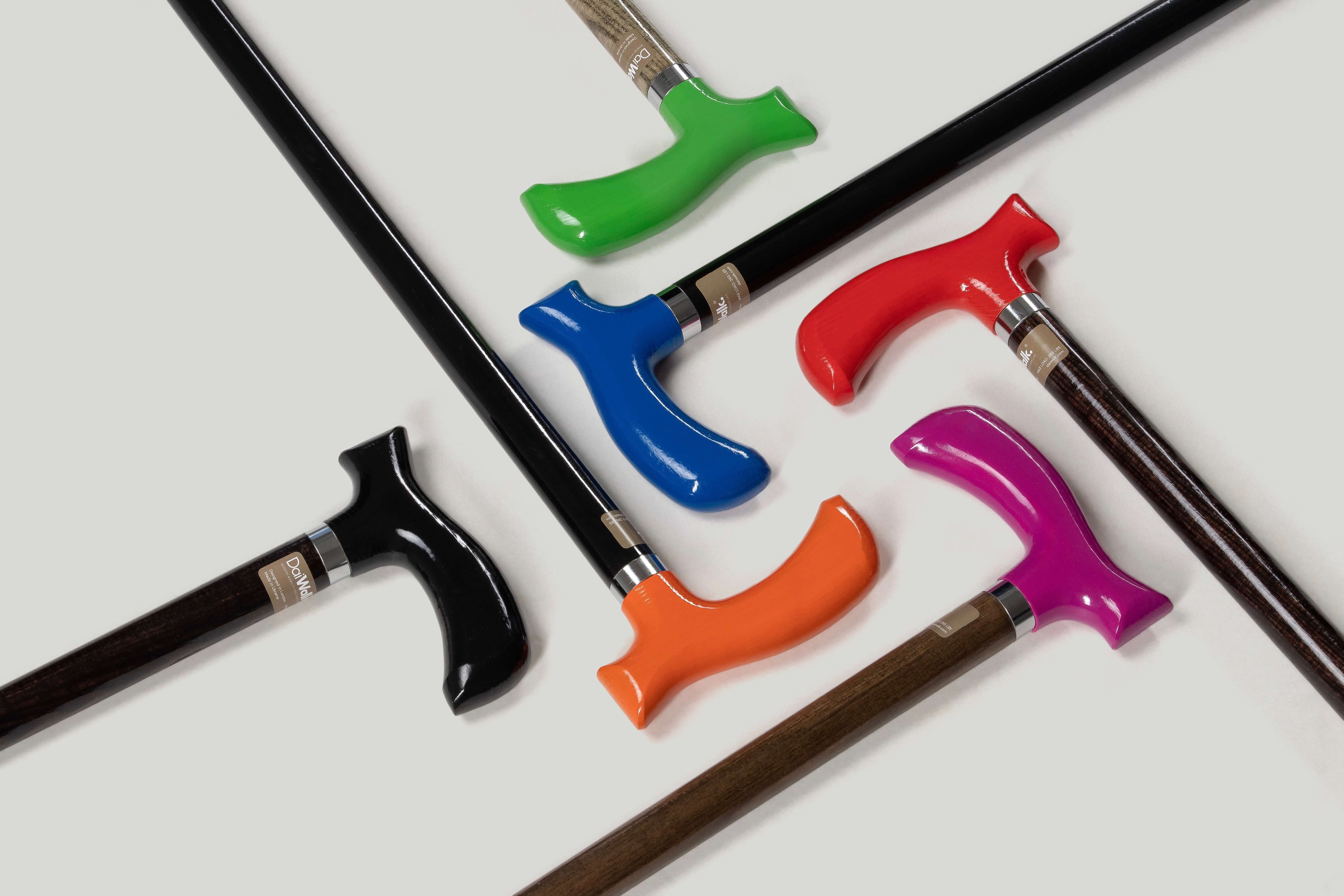
After working with over 100 customers configuring their DaiWalk cane, we noticed a pattern. The people who were unhappy with previous canes — pharmacy purchases, online impulse buys, NHS-issued equipment — had all skipped the same questions. Not because the questions are obscure. Because nobody ever told them to ask.
These are the seven questions we ask every customer before recommending a configuration. Answer them before you buy anything — or let our free walking cane finder turn your answers into a specific configuration in under a minute.
Question 1: How Many Hours Per Day Will You Actually Use It?
This is the most important question and the one buyers skip most often.
Usage duration determines every other specification. A cane used for two hours of weekend walking has different requirements than a cane used for eight hours of daily commuting and work. The handle that feels fine for twenty minutes concentrates enough pressure over five hours to cause real wrist pain. The tip that holds on dry pavement fails on the wet walk home.
| Daily Usage | Usage Profile | What This Changes |
|---|---|---|
| Under 2 hours | Occasional / recovery | Handle geometry matters less. Basic tip sufficient. |
| 2–5 hours | Moderate / commuting | Handle pressure distribution becomes critical. Tip selection by primary surface. |
| 5+ hours | Full-day mobility aid | Every variable matters. Shaft rigidity, handle geometry, tip compound, weight — all interact. |
Honest answer: Most daily cane users underestimate their hours by 30–40%. Count every walking session including short trips — to the kitchen, to the car, around the office. The total is usually higher than expected.
Question 2: What Surface Do You Walk On Most?
The rubber tip is the only part of your cane that touches the ground. It is the most surface-specific component — and the most commonly mis-specified.
Before buying, identify your primary surface:
- Dry indoor floors (offices, homes, shops): Non-marking, silent tip. The DaiWalk Elegant Tip is designed for this.
- Wet urban pavement (daily outdoor use, rain): Wet-compound rubber with deeper tread. The DaiWalk Steady Tip reduces lateral slip from 18mm (generic tip) to 3mm on wet polished concrete.
- Cobblestones or uneven terrain (European cities, older buildings): Multi-point contact tip. The DaiWalk Hex Tip uses six contact points to find grip on irregular surfaces where a single point either catches or misses entirely.
- Mixed surfaces daily: Consider buying two tips and swapping — all DaiWalk tips change in under 30 seconds without tools.
Full surface-to-tip matching with traction data: 5 Surfaces Where Your Rubber Cane Tip Makes the Most Difference.
Question 3: Have You Measured Your Correct Height — Not Your Hip Height?
The standard advice is wrong. Setting a cane to hip height produces a shaft 2–4cm too short for most users — causing forward lean, shoulder compensation, and wrist pain under load.
The correct measurement:
- Stand in your normal walking shoes
- Arms hang naturally at your sides — do not reach down
- Measure from the floor to the crease of your wrist
- That number is your cane height
A button-and-hole mechanism (used in Hugo, Drive Medical, HurryCane, and most pharmacy canes) adjusts in 12–25mm increments. Your ideal height may fall between two holes — leaving you permanently 6–12mm from correct. The DaiWalk collet mechanism adjusts continuously to the nearest millimetre. No compromise.
Use the DaiWalk Cane Height Calculator if you are unsure of your measurement — it accounts for shoe heel height and generates your precise setting.
Question 4: Do You Have Any Existing Wrist, Elbow, or Shoulder Issues?
If yes, handle geometry is not a secondary consideration. It is the primary one.
A standard T-bar handle concentrates load at a single point beneath the index and middle finger joints — measured at 4.2 N/cm² peak pressure in our testing. For a user with arthritis, tendinitis, or carpal tunnel syndrome, this is 8,000 repetitions per day of load directly onto the compromised structure.
The DaiWalk Anatomic Grip™ distributes that same load across three contact zones — palm heel, mid-palm, and finger base — reducing peak pressure to 1.9 N/cm². A 55% reduction at the highest-load point.
If you have any upper limb condition and are buying a cane with a standard T-bar, the handle is making your condition worse with every step.
The biomechanics of handle pressure: Why Your Walking Cane Hurts Your Wrist — and How to Fix It. Already in pain from a cane you own? The free wrist pain checker pinpoints which of the three causes applies to you.
Question 5: Will You Use It in Low-Light or Wet Conditions?
Two specific conditions that require tip upgrades most buyers do not anticipate:
Wet conditions: Standard rubber tips are optimised for wear resistance, not wet traction. On wet polished concrete at a standard pavement gradient, a generic tip shows 14–18mm of lateral slip under body-weight load. The DaiWalk Steady Tip, using a wet-optimised compound, shows 3mm. That difference is not academic — it is the difference between a planted step and a sideways slip.
Low-light conditions: If you walk in the evenings, in car parks, or in any environment where visibility to drivers and cyclists matters, the DaiWalk Neon Tip uses a transparent rubber body that scatters ambient light rather than absorbing it. It is the only walking cane tip specifically designed for this scenario.
Both tips are available separately at $13 in the interchangeable tips collection — you do not need to buy a new cane to upgrade.
Question 6: Is This for Daily Use or Occasional Use?
This question determines the correct investment level — and whether premium specifications are worth their cost.
| Use Case | Annual Cost: Pharmacy Cane ($22) | Annual Cost: DaiWalk ($75) | Recommendation |
|---|---|---|---|
| Occasional (under 5hrs/week) | $22–$44 (1–2 replacements) | $75 (no replacement needed) | Either works. DaiWalk still wins on comfort. |
| Moderate (5–20hrs/week) | $44–$88 (2–4 replacements) | $75 + $13 tip (year 2) | DaiWalk cheaper from year 2 onward. |
| Daily heavy (20hrs+/week) | $88–$176 (4–8 replacements) | $75 + $13 tip annually | DaiWalk significantly cheaper. Performance gap critical. |
For daily heavy use, a pharmacy cane is not just more expensive over time — it actively performs worse on the criteria that matter most at high usage: handle pressure, shaft stability, and tip traction.
Question 7: What Happens When You Set the Cane Down?
This question reveals whether a self-standing tip matters to you. Most buyers do not think about it until the cane falls for the first time at a restaurant or waiting room.
Two DaiWalk tips self-stand:
- Quad Tip: Four-point base. Self-standing on most flat surfaces. Best for users who set the cane down frequently and need it to stay where they put it.
- Hex Tip: Six-point base. Self-standing and the highest-traction option for outdoor terrain — cobblestones, gravel, uneven surfaces.
If you want the cane with you at all times without thinking about where to lean it, the DaiWalk leather lanyard is a more practical solution than a self-standing tip: it loops around the wrist and cane handle, keeping the cane at your side when not in use without requiring a surface to lean against.
Your Answers, Applied
Based on these seven questions, the right DaiWalk configuration is almost always identifiable before you order. The most common combinations from our customer base:
| Answer Profile | Recommended DaiWalk Configuration |
|---|---|
| Heavy daily use + wrist issues + wet urban | Original 1.0™, oak handle, Steady tip + Core tip as backup |
| Moderate use + cobblestones + style priority | Original 1.0™, wenge handle, colour of choice, Hex tip |
| Full-day use + shoulder sensitivity + indoor primary | Original 1.0™, Anatomic Grip™, Elegant tip, exact height set |
| Evening walking + mixed terrain + visibility | Original 1.0™, alloy handle, Neon tip + Steady tip |
| Gift purchase + daily user + unknown surface | Original 1.0™ + leather lanyard + Steady tip + Elegant tip |
The full configuration tool — including a 3D visualiser and surface-tip pairing guide built around your seven answers — is on the DaiWalk product page. It takes under two minutes and produces a specific recommendation, not a category.
Related Reading
- Walking Cane Buying Guide 2026: What No One Tells You
- Is a $75 Walking Cane Worth It? The Real Cost of Cheap vs. Premium
- What Makes a Walking Cane Ergonomic? The Science of Grip, Height, and Load
- How to Choose the Right Rubber Cane Tip — A Practical Comparison
- DaiWalk vs. Hugo, Drive Medical, and HurryCane: An Honest Comparison
Framework based on pre-purchase consultations with 100+ DaiWalk customers. Configuration recommendations reflect actual order patterns and post-purchase feedback collected over 18 months.


