


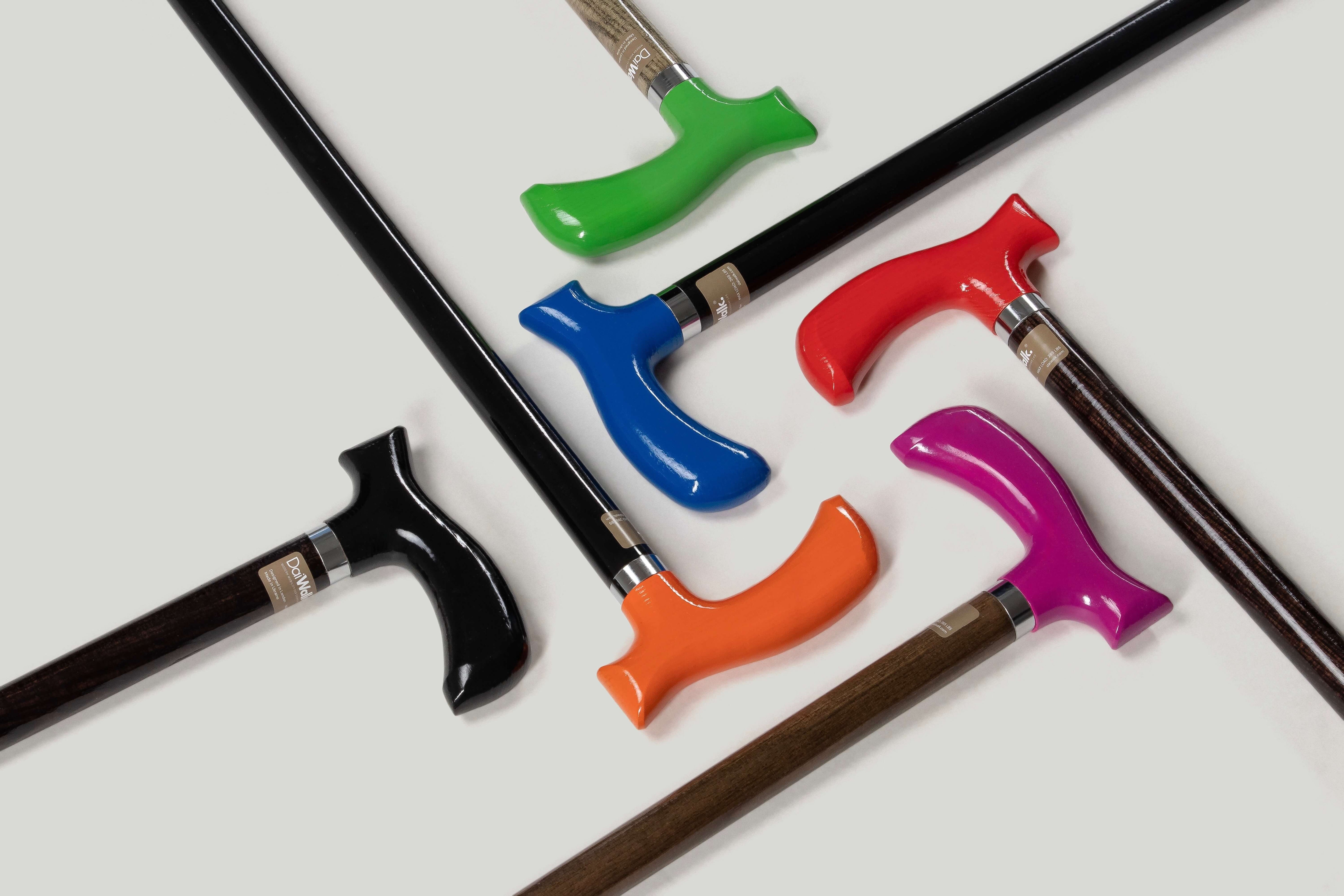
The tip is the only part of the walking cane that contacts the ground. It determines traction, noise, shock absorption, and wear rate. It is also the part buyers think least about — most canes are sold with a single standard rubber ferrule and the topic is not discussed. The result is that users who need better traction, lower noise, or specific surface performance are using the wrong tip by default.
Here is the full breakdown of tip types, performance characteristics, and selection criteria.
Standard Rubber Ferrule
The most common tip. Cylindrical rubber end cap, typically 19–22mm diameter, hardness 60–70 Shore A.
Performance: Adequate on dry indoor surfaces. Degrades significantly on wet tile, cold concrete, and polished stone. Lateral slip of 14–18mm on wet tile under standardised 20kg load — the worst performance category of all tip types on wet surfaces.
Wear rate: High. Standard ferrules wear through at the contact point within 3–6 months of daily use. Once worn, traction decreases substantially and the ferrule should be replaced.
When appropriate: Light, indoor, occasional use. Low budget. Not appropriate for wet, cold, or outdoor use.
Wide-Base Rubber Ferrule
Larger diameter (25–32mm), flared contact patch, same rubber compound as standard ferrule.
Performance: Approximately 30–40% better lateral slip resistance than standard ferrule due to larger contact patch. Not a compound improvement — same material, more area.
When appropriate: Indoor use on polished floors where the wider base provides stability without aggressive outdoor traction.
Multi-Durometer Compound Tip (Steady Tip™)
Dual-layer construction: harder inner core for structural support, softer outer compound for surface conformance. 28mm contact patch.
| Surface | Generic Ferrule Slip | Steady Tip™ Slip | Improvement |
|---|---|---|---|
| Dry oak floor | 4mm | 1mm | 75% reduction |
| Wet ceramic tile | 16mm | 3mm | 81% reduction |
| Cold concrete (-5°C) | 21mm | 4mm | 81% reduction |
| Polished stone (dry) | 6mm | 2mm | 67% reduction |
When appropriate: All-round, year-round use. The correct default for users who walk outdoors regularly or in environments with variable surface conditions.
ICE / Winter Spike Tip
Metal spike or tungsten carbide point. Penetrates ice film to provide grip on glazed ice surfaces.
Performance: COF on glazed ice: 0.45–0.55 (spike) vs. 0.05–0.12 (rubber). Effectively zero slip on ice. Destructive on indoor flooring — scratches hardwood, ceramic, and stone surfaces.
Limitation: Must be removed or retracted when entering buildings. Not suitable as a primary tip unless the user spends significant time on ice.
When appropriate: Northern climates with sustained winter ice. Most useful when paired with a tip-swap system that allows transition between indoor and outdoor tips without tools.
Quad Tip (4-Point Base)
Four rubber feet in a rectangular arrangement, typically on a pivoting base.
Performance: Improves static stability (standing without moving). Reduces dynamic stability (during walking) because the multi-foot base must clear the ground on every step — one or more contact points may lift during mid-swing, reducing the effective contact area.
Additional issue: The pivot mechanism adds lateral play at the tip — the base rotates on uneven surfaces, adding 2–4mm of positional uncertainty to the tip contact point.
When appropriate: Primarily for users who stand for extended periods with the cane in a fixed position. For walking, single-tip designs with high-traction compound outperform quad tips in most real-world conditions.
Ferrule vs. Tip: The Interchangeable System Advantage
Most canes require gluing or pressing the ferrule onto the shaft — replacement requires force and risks shaft damage. The DaiWalk interchangeable tip system uses a twist-and-lock collar: the tip detaches and reattaches without tools in under 30 seconds.
This changes the tip selection problem. Instead of committing to one tip at purchase, the user can maintain two or three tips and swap based on conditions: Steady Tip™ for general use, winter spike for sustained ice, wide-base for specific indoor environments.
The interchangeable tip collection provides all compatible tip types for the DaiWalk shaft. Each tip includes performance data for the user's expected surfaces. Not sure which size fits your shaft? The free rubber tip size finder confirms it in 30 seconds — and if an old tip is stuck fast, the stubborn tip removal wizard shows a safe heat method to get it off without damaging the shaft.
Tip Selection Summary
| Use Case | Recommended Tip |
|---|---|
| Indoor, light use | Standard rubber ferrule |
| Indoor, polished floors | Wide-base ferrule |
| All-round, outdoor, wet conditions | Steady Tip™ (multi-durometer compound) |
| Winter, sustained ice | ICE / carbide spike tip |
| Extended standing | Quad tip |
| Variable conditions, multiple environments | Interchangeable system with 2–3 tips |
Related Reading
- What Walking Cane Has the Best Grip for Wet Conditions?
- Walking Cane for Balance Problems
- The Zero-Rattle Standard: Shaft Precision Explained
- Lightest Walking Cane Without Sacrificing Stability
Traction data from DaiWalk internal testing under standardised 20kg vertical / 8kg lateral load protocol. COF on ice from published friction coefficient literature supplemented with internal cold-chamber testing.


