


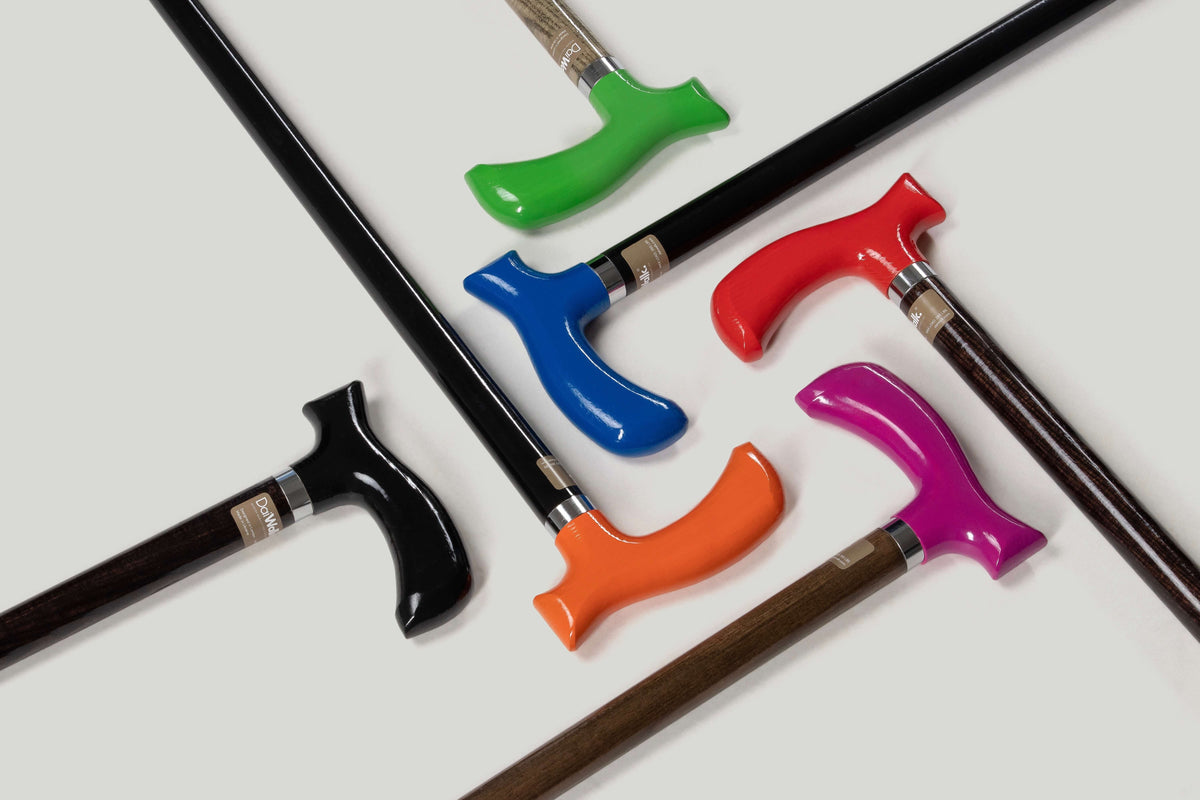
A hiking staff and a walking cane look identical to most buyers. Both are shafts with a handle at the top and a tip at the bottom. The engineering differences are significant and make each category poor at the other's job.
Using a hiking staff as a walking cane produces the wrong height, the wrong handle orientation, the wrong tip, and no load-reduction mechanism. Using a walking cane for hiking produces a traction failure on trail surfaces and possible shaft failure under lateral load on uneven terrain.
The Core Differences
| Specification | Walking Cane | Hiking Staff / Trekking Pole |
|---|---|---|
| Handle orientation | Horizontal or palm-contoured — supports vertical load transfer | Vertical grip with wrist strap — designed for push-back during stride |
| Height calibration | Set to wrist crease for stance-phase load reduction | Set to 90° elbow for forward propulsion |
| Tip material | Rubber compound — indoor and general outdoor surface traction | Carbide spike — penetrates soil and rock; destructive on indoor floors |
| Shaft design | Rigid under vertical load; handles 30kg+ continuous | Designed for cyclic push loads; not tested for sustained vertical weight bearing |
| Bilateral / unilateral use | Typically single; contralateral to affected leg | Typically bilateral; symmetric load pattern |
| Biomechanical purpose | Reduce hip/knee load; improve balance during affected-leg stance phase | Reduce upper body fatigue; improve propulsion on ascent/descent |
The Height Difference Specifically
Walking cane height: wrist crease to floor (arm naturally at side). Produces approximately 15–20° elbow flexion during stance.
Hiking staff height: set to 90° elbow flexion (arm out in front). This is 50–80mm taller than walking cane height for most users.
A hiking staff used as a walking cane is 50–80mm too tall. At this height, the shoulder elevates during use, the load path is compromised, and the ergonomic benefit of the cane is negated. Users who try a trekking pole as a cane and find it unhelpful have usually encountered this height mismatch.
Tip Compatibility
Trekking pole carbide tips penetrate soft outdoor surfaces (soil, gravel, loose stone) and provide excellent trail traction. On indoor surfaces (tile, wood, marble), the metal point provides essentially no friction and will scratch and damage the floor.
Rubber tip covers exist for trekking poles to address this, but they are an afterthought in the design — they attach loosely and are not engineered for the lateral load patterns of walking cane use.
Walking cane rubber and compound tips are not designed for soft outdoor surfaces. On loose soil, gravel, or wet grass, a small-diameter rubber ferrule will sink or slide. The correct tip for mixed terrain is a wide-compound tip with larger diameter — not a carbide spike, but not a standard small ferrule either.
Where There Is Genuine Overlap
For walking on hard outdoor surfaces — paved paths, stone promenades, packed-gravel paths — a walking cane with a high-traction compound tip performs adequately. The difference from a trekking pole on these surfaces is minimal. The DaiWalk Steady Tip™ handles packed outdoor surfaces well.
For off-trail hiking, loose soil, and significant ascent/descent, trekking poles are the correct tool and a walking cane is not a substitute.
The Walking Stick Category
The walking stick sits between the two categories: taller than a walking cane, used for terrain navigation and rhythm rather than load reduction, no medical purpose. Traditional walking sticks are decorative and functional for light terrain support.
DaiWalk products in this context: the designer walking stick collection includes items intended as style objects with light functional use, distinct from the load-bearing walking cane specification.
The full comparison of canes, sticks, and poles covers the category distinctions in more detail.
Practical Recommendation
If you need a cane for medical load-reduction and also want a trekking pole for hiking: buy both. The applications are genuinely different. A dual-purpose compromise performs poorly at both functions.
If you occasionally walk on outdoor packed surfaces and want one item: a walking cane with a compound tip (not a standard ferrule) covers the majority of real-world use cases for urban and semi-rural walking.


