


Single-Point Canes vs. Quad Canes: Which Provides Better Balance?
When your doctor, physiotherapist, or occupational therapist says you need a cane, the very next question is rarely discussed with enough depth: which kind? The two most common options — the single-point cane and the quad cane — look different, function differently, and suit different bodies and lifestyles in ways that go far beyond what most product listings ever explain.
The instinctive assumption is that more contact points equal more stability. A quad cane has four feet on the ground. A single-point cane has one. Surely the quad wins? The reality, as biomechanics research and clinical practice consistently show, is considerably more nuanced. For many users — perhaps the majority — a well-chosen single-point cane provides superior real-world balance, better gait mechanics, and a dramatically improved quality of life.
This guide breaks down every meaningful difference between the two cane types: what they are, how they interact with your balance system during walking, which conditions genuinely benefit from each, and how factors like stairs, outdoor terrain, and long-term musculoskeletal health should influence your decision. Whether you are recovering from surgery, managing a chronic condition, or exploring walking aids proactively, this is the most thorough comparison you will find.
What Is a Single-Point Cane?
A single-point cane — also called a standard cane or straight cane — is defined by a single point of ground contact at the bottom of a vertical or slightly angled shaft. It is the oldest and most widely used walking aid in the world, and for good reason. Its simplicity is not a limitation; it is an engineering virtue that aligns with the natural mechanics of human walking.
The anatomy of a single-point cane has three main components: the handle, the shaft, and the tip. Each of these elements varies considerably across designs, and understanding those variations matters when selecting the right cane for a specific body, gait, and set of daily activities.
Handle types are perhaps the most functionally significant variable. The traditional derby or palm-grip handle distributes pressure across the full palm and is well-suited for users who bear moderate weight on the cane throughout a stride. The offset or functional grip handle places the user's weight directly over the shaft, reducing wrist torque — a crucial feature for those managing wrist arthritis or carpal tunnel syndrome. Ergonomic molded handles, often anatomically shaped for left or right hands, provide maximum comfort for long-duration use. Fritz handles, sometimes called tourist handles, offer a classic curved form that is easy to hang on a surface but provides less biomechanical efficiency under load.
Shaft types split primarily between fixed-length and adjustable designs. Fixed-length aluminum or wooden shafts are typically lighter and stiffer, making them preferred for users whose height is stable. Telescoping aluminum shafts allow height adjustment, which is essential for growing users, for sharing between multiple people, or for fine-tuning height after a change in footwear. Carbon fiber shafts represent a premium category — they are among the lightest available, with excellent vibration-dampening properties that reduce fatigue and joint stress during long walks.
Weight is a decisive advantage of single-point canes. Most quality single-point canes weigh between 250 and 500 grams, depending on material and handle design. This low mass means the arm and shoulder experience significantly less fatigue over the course of a full day of use compared to a heavier quad cane. For users who depend on their cane consistently throughout the day, cumulative weight fatigue is a real and often overlooked concern.
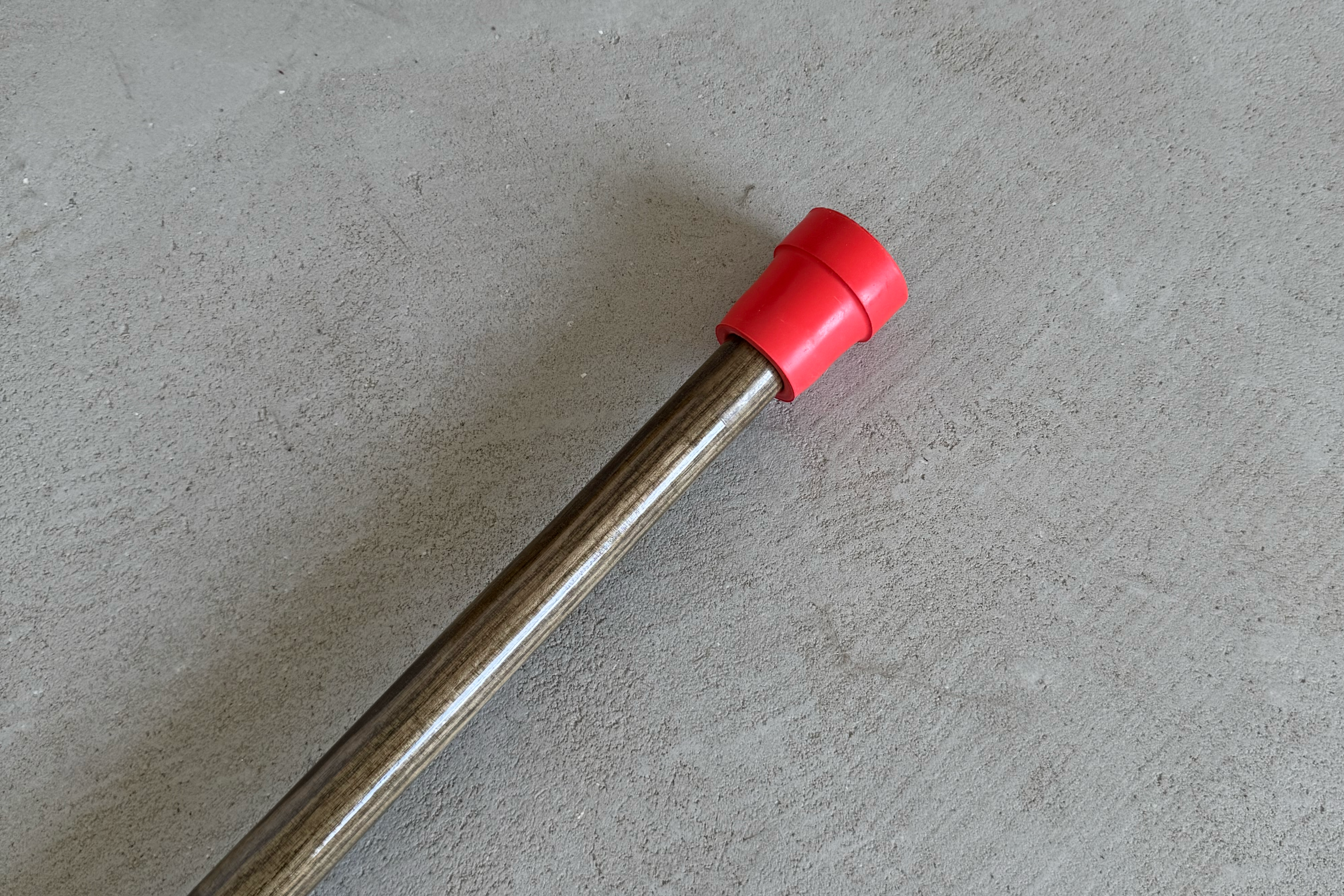
The single rubber tip at the base — which should always be kept in good condition and replaced regularly — provides a direct, responsive point of contact with the ground. Upgraded tips, including flex tips that maintain ground contact on uneven surfaces and ice-spike tips for winter use, are readily available as accessories that dramatically extend the cane's versatility.

What Is a Quad Cane?
A quad cane — also called a quadruped cane, four-point cane, or broad-based cane — features a single shaft that branches into a four-legged base at the bottom. Those four legs end in four individual rubber feet, giving the cane a rectangular or square footprint on the ground. This multi-foot design is the defining characteristic that separates quad canes from all other walking aids in the cane category.
Quad canes come in two primary variants defined by the width of their base: narrow-base quad canes and wide-base quad canes. Narrow-base versions have a footprint of roughly 6 by 6 inches. Wide-base models spread to approximately 10 by 7 inches or larger. The wider the base, the greater the static stability — but also the greater the bulk, weight, and interference with normal walking stride width. Many users and clinicians find that narrow-base quad canes offer a reasonable middle ground, providing more support than a single-point cane in stationary positions without as severely disrupting gait as wide-base models.
The most frequently cited benefit of quad canes is their ability to stand independently. Unlike a single-point cane, which will fall over when not held, a quad cane remains upright on its own when placed beside a chair, a hospital bed, or a counter. For users who frequently move between seated and standing positions, and who need both hands free momentarily during that transition, this is a practical and meaningful advantage. Clinically, this is often cited as a key reason quad canes are recommended in early post-surgical or acute care settings.
Quad canes are also designed to bear higher loads than standard single-point canes. Their wider base distributes vertical force across four contact points, reducing the risk of the cane shifting or slipping under significant body weight. This makes them appropriate for users who require weight-bearing support beyond what a standard single-point cane is designed to provide.
However, quad canes carry inherent disadvantages that become more apparent as users move beyond stationary positions. Weight is the most immediate issue: a typical quad cane weighs 600 to 900 grams — roughly 50 to 100 percent heavier than a comparable single-point cane. Over the course of a day's use, this additional mass places measurable extra strain on the wrist, elbow, and shoulder of the supporting arm. For users with upper-limb weakness, arthritis, or rotator cuff issues, this is not a trivial concern.
The four-foot base also introduces a geometric constraint. The rectangular footprint of a quad cane must fit within the walking corridor of the user's stride. On narrow sidewalks, in crowded spaces, on escalators, or in any environment where lateral space is limited, the quad cane's base can catch, tip, or simply fail to sit flat, undermining its stability advantage entirely. On uneven terrain, the four feet are unlikely to make simultaneous ground contact, which means the cane rocks unpredictably — again eroding its core benefit.

How Each Type Affects Your Balance
To understand the real difference between these two cane types, you must first understand that human balance operates in two distinct modes: static balance and dynamic balance. These are not the same thing, and a cane that excels at one can actively compromise the other.
Static balance refers to stability while standing still or transitioning between seated and standing positions. It is the kind of balance most people intuitively think about — remaining upright without falling when not in motion. A quad cane's four-foot base provides a larger support polygon (the geometric area between contact points), which genuinely helps with static stability. If you are standing at a sink washing dishes, or pausing on a crowded pavement, or rising slowly from a chair, the quad cane offers a measurably broader platform of mechanical support.
Dynamic balance, by contrast, refers to stability during movement — specifically during walking. This is where the biomechanics become counter-intuitive. Walking is not a process of standing still repeatedly. It is a controlled, cyclical series of falls and recoveries, with one leg perpetually behind, one ahead, and a brief single-leg stance phase in every stride. During this process, the body's center of mass moves in three dimensions: forward, vertically, and slightly side to side. The cane's role during walking is not to create a static platform but to provide a responsive, adaptive third point of support that integrates smoothly with the body's natural gait cycle.
Research in rehabilitation science has consistently found that single-point canes are superior to quad canes for dynamic balance during walking in the majority of community-ambulating users. Studies published in rehabilitation medicine journals have found that quad cane users demonstrate significantly slower walking speeds, shorter stride lengths, and increased asymmetry in gait compared to users of single-point canes. Slower gait speed, counterintuitively, is itself a fall risk factor — it correlates with reduced confidence, increased time in single-limb stance, and greater cognitive load during walking.
The mechanical reason is straightforward. A single-point cane tip can be placed precisely where the user needs it, adjusted naturally from step to step, and lifted and repositioned with minimal energy expenditure. The quad cane's base must be lifted entirely clear of the ground with each step and repositioned as a unit — a four-footed platform that must land flat. This places greater demands on the user's shoulder and wrist during the swing phase, and the larger footprint creates more opportunity for uneven landings, wobble, or awkward placement relative to the advancing foot.
Furthermore, quad canes significantly alter gait biomechanics in ways that may accelerate rather than prevent long-term balance problems. Slower, more cautious gait patterns reduce the neuromuscular feedback loops that maintain proprioception and balance system fitness over time. There is a growing body of clinical opinion — and emerging research — suggesting that users who can safely walk with a single-point cane should do so, precisely because the more natural gait pattern it encourages is itself therapeutic and protective.
Learn correct cane technique →
Single-point canes provide one precise, repositionable ground contact that integrates naturally with walking mechanics.
Quad canes distribute load across four feet — superior for stationary support but mechanically cumbersome during walking stride.
Studies show quad cane users often walk significantly slower than single-point cane users — a key predictor of fall risk and reduced independence.
The proprioceptive dimension of cane use is also worth noting. When a single-point cane tip contacts the ground, the user receives direct tactile feedback about the surface — its hardness, its texture, whether it is level. This sensory information travels up the shaft through the handle and into the hand and arm, feeding into the user's overall spatial awareness. A quad cane's four-foot base, by distributing and somewhat dampening this ground-contact signal, can reduce the quality of this proprioceptive feedback — ironically making the user slightly less aware of what the ground beneath them is doing at any given moment.
For users with peripheral neuropathy, vestibular disorders, or age-related proprioceptive decline, the quality of this ground feedback may be as important as the cane's mechanical stability properties. In such cases, the choice between cane types deserves careful discussion with a physiotherapist or occupational therapist rather than defaulting to the assumption that four points are always better than one.
Head-to-Head Comparison
The table below compares single-point and quad canes across nine criteria that matter most in daily use. Review both the desktop table and — if you are on mobile — the card-format breakdown below it.
| Criterion | Single-Point Cane | Quad Cane (Narrow) | Quad Cane (Wide) |
|---|---|---|---|
| Contact Points | 1 — precise, repositionable | 4 — fixed narrow base | 4 — wider rectangular base |
| Static Stability | Moderate | Good | Excellent |
| Dynamic Balance (Walking) | Excellent | Moderate | Limited |
| Weight | 250–500 g (lightest) | 500–700 g (moderate) | 600–900 g (heaviest) |
| Stair Use | Yes — recommended | With care | Not recommended |
| Outdoor / Uneven Terrain | Adapts well | Limited | Poor |
| Self-Standing | No | Yes | Yes |
| Gait Preservation | Excellent | Moderate | Poor |
| Recommended For | Active users, outdoor use, long-term daily use, preventive users, arthritis, mild balance issues | Post-surgical recovery, moderate hemiplegia, users who sit/stand frequently | Acute stroke recovery, high fall risk, limited ambulators, clinical/hospital settings |
Matching the Cane to Your Condition
No single cane type is universally correct. The right choice depends on the specific nature of your balance or mobility challenge, the phase of recovery or management you are in, and what your daily life actually requires. Below is a condition-by-condition guide informed by clinical practice and rehabilitation science.
Post-Surgical Recovery
In the immediate post-operative period — especially after hip or knee replacement — a quad cane may be prescribed by your surgeon or physiotherapist to provide maximum static stability while weight-bearing confidence is rebuilt. However, most rehabilitation protocols aim to transition patients to a single-point cane within weeks, as gait normalization is a primary goal of recovery. If your therapist has not discussed this transition timeline with you, ask.
Stroke & Hemiplegia
Stroke survivors with significant upper limb weakness or hemiplegia on the affected side face a unique challenge: the cane must compensate for the loss of the arm's active stabilizing role. Wide-base quad canes are commonly prescribed in acute stroke rehabilitation for their self-standing feature and high static stability. As motor function returns, a narrow-base quad and eventually a single-point cane may be appropriate — an evolution that should be guided by a neurological physiotherapist.
Arthritis
For users managing osteoarthritis of the hip or knee, the primary purpose of a cane is to offload the affected joint by transferring weight through the arm during the stance phase of gait. A well-fitted single-point cane held in the opposite hand is the standard clinical recommendation for hip and knee OA. Its lighter weight and natural gait integration mean less energy expenditure and less stress on the wrist and shoulder.
Vestibular & Balance Disorders
Users with vestibular disorders — including BPPV, Ménière's disease, or age-related vestibular decline — experience balance challenges that are intermittent and unpredictable. A lightweight single-point cane provides a grounding tactile reference point that helps the nervous system orient itself. In this application, the proprioceptive feedback quality of a single-point cane often proves more valuable than the static stability platform of a quad cane.
Active & Preventive Users
A growing segment of cane users are not managing an acute condition but using a cane proactively. For these users, a single-point cane is almost always the right choice. Its low weight, natural gait compatibility, and wide range of stylish designs make it far more likely to be carried and used consistently. Read our guide on 5 signs it is time to start using a mobility aid.
Parkinson's Disease
Users with Parkinson's disease often benefit from specific cane features that address the characteristic gait disruptions of the condition — shortened stride length, shuffling, and freezing episodes. A lightweight single-point cane with a high-visibility tip can serve well between freezing episodes, but some users may benefit from specialty assistive devices depending on their stage of the condition.
Terrain, Stairs, and Real-World Use
Laboratory and clinical assessments of cane performance often miss what matters most in practice: how each cane type behaves in the varied, unpredictable, sometimes hostile environments that real daily life presents. The differences between single-point and quad canes become most pronounced when you move beyond the flat, controlled corridor of a rehabilitation unit.
Indoor use is where the two cane types are most evenly matched, and where quad canes show their strongest relative performance. On flat, level flooring — hardwood, tile, carpet — the quad cane's four-foot base can sit flat consistently, providing its full stability benefit. The self-standing feature is especially useful in home environments where the user frequently transitions between seated and standing: at the kitchen counter, in the bathroom, at a desk.
Urban outdoor environments quickly reveal the quad cane's limitations. City pavements are rarely perfectly flat. Pavement joins, drainage slopes, dropped kerbs, cobblestones, tarmac patches, and expansion joints all create micro-level irregularities that prevent a quad cane's four feet from making consistent simultaneous ground contact. A cane that rocks unpredictably is not providing the stability advantage for which it was prescribed — it is introducing a new source of instability. Single-point canes navigate these surfaces naturally, with the tip adapting continuously to the ground beneath it.
Stairs deserve particular attention. A single-point cane can be used on stairs with the cane held in one hand and the stair rail in the other. The technique is: step up with the stronger leg first when ascending, step down with the weaker leg first when descending, keeping the cane on the same level as the weaker leg at all times. Read our comprehensive guide on navigating stairs with a cane safely for detailed technique guidance.
Quad canes present significant challenges on stairs. Their wide base cannot fit neatly on a standard stair tread, requiring the cane to be angled or used with only partial contact — negating its stability advantage precisely when it is most needed. Most occupational therapists advise against using wide-base quad canes on stairs entirely.
Natural terrain — garden paths, parks, gravel, grass, woodland trails — presents the clearest case for single-point canes. A single pointed tip finds solid purchase far more reliably than a four-foot platform. Explore DaiWalk's range of interchangeable tips for options suited to different outdoor environments.
Travel and transport also favors the single-point cane heavily. Navigating airports, train stations, and public transport with a quad cane is cumbersome — the wide base catches on escalator edges, fits poorly under seat rows, and is difficult to manage alongside luggage. Single-point canes are compact, lightweight, and airline-compliant as carry-on items.

The Long-Term Case for Single-Point Canes
Beyond the immediate functional comparison, there is a compelling long-term case for single-point canes that is rarely framed explicitly: the way a mobility aid is designed shapes not just how users move today, but how their bodies, confidence, and independence evolve over months and years of use.
Gait preservation is rehabilitation. Every step taken with a single-point cane is a step that more closely approximates normal human walking mechanics. The stride length, cadence, weight transfer, and arm swing of a single-point cane user are closer to normative values than those of a quad cane user. Muscles that work through a natural range of motion maintain their strength and coordination more effectively. Joints that move through normal loading patterns experience less asymmetric wear. Balance systems that receive normal proprioceptive stimulation during walking remain better calibrated over time.
Quad cane-induced gait abnormalities — slower speed, shorter stride, reduced weight transfer — can become habituated over months of use, creating a dependency pattern that may be harder to reverse than the original condition that prompted cane use. This is a recognized risk in rehabilitation circles, though it is rarely communicated clearly to patients at the point of prescription.
Weight fatigue over time. The cumulative physical cost of carrying a heavier assistive device every day cannot be dismissed. For a user who spends six to eight hours on their feet daily, the difference between a 300-gram single-point cane and a 700-gram quad cane translates to meaningful additional load on the shoulder, rotator cuff, and wrist over thousands of repetitive lifting movements. Shoulder impingement and wrist strain are recognized secondary complications of long-term cane use, and cane weight is a contributing factor.
Aesthetics, identity, and compliance. Research in mobility aid compliance consistently finds that users who feel embarrassed by or disconnected from the appearance of their device use it less reliably, especially in social situations. A person who leaves their cane at home because they find it visually stigmatizing is a person at significantly higher fall risk on those outings. Single-point canes offer a far wider range of designs, materials, and aesthetics than quad canes. As explored in our article on why aesthetics matter in cane design, the visual identity of a mobility aid is not vanity — it is a functional component of whether the aid is actually used.
Design Is Not Decoration. It Is Compliance.
A mobility aid that stays at home provides zero protection. The cane you use consistently, confidently, and with pride is the cane that keeps you safe. DaiWalk builds single-point canes that people want to carry — because we believe the best walking aid is the one you actually use.
- Premium single-point design built around biomechanical correctness
- Lightweight construction that reduces long-term arm and shoulder fatigue
- Interchangeable tip system for all terrain types and seasonal conditions
- Aesthetic identity that supports confidence and consistent use
- Sized and weighted for all-day community ambulation
Frequently Asked Questions
These are the questions most commonly asked by people comparing single-point and quad canes. Each answer is written to be directly useful — not hedged with unnecessary caveats, but honest about where individual variation and professional guidance matter.
No — and this is one of the most persistent and consequential misconceptions in mobility aid selection. A quad cane provides superior static balance: the kind of stability you experience when standing still, rising from a chair, or pausing momentarily. Its four-foot base creates a wider support polygon and genuinely reduces the risk of the cane tipping over during stationary use.
However, the majority of falls involving cane users happen during walking, not standing. For dynamic balance — the continuous, fluid series of adjustments your body makes with every step — single-point canes consistently outperform quad canes in clinical research. They allow faster walking speed, more symmetric stride patterns, and more natural gait mechanics, all of which are factors that reduce fall risk during ambulation.
The practical conclusion: for users whose main challenge is getting safely from one place to another — which describes most community-living cane users — a well-fitted single-point cane usually provides better overall balance outcomes than a quad cane of equivalent height and weight. The exception applies to acute clinical settings, immediately post-surgery, or in cases of severe upper limb weakness where static stability is genuinely the priority.
In many cases, yes — and for users who were prescribed a quad cane during an acute phase of recovery, transitioning to a single-point cane as function improves is often an explicit goal of rehabilitation. The key is ensuring the transition is made at the right time, with appropriate technique guidance, and — ideally — with a physiotherapist's sign-off.
The right time to consider switching is when:
- Your walking speed and confidence have improved significantly from your lowest point
- You can stand safely without the cane for brief periods — suggesting static stability is less of a limiting factor
- Your quad cane feels cumbersome on outdoor surfaces, stairs, or in crowded environments
- Your therapist or physician has indicated that your recovery or condition management is stable
When switching, spend your first few days with the single-point cane in familiar, low-risk environments before moving to more challenging terrain. See our guide on correct cane technique for detailed fitting instructions.
Stroke recovery is one of the clearest cases where cane selection needs to track carefully with the phase of recovery rather than being a fixed prescription. In the acute and early subacute phase — typically the first few weeks after stroke — a wide-base quad cane is often the appropriate choice. The self-standing feature is practically important when the affected side provides little assistance with postural management, and the broad base provides maximum static stability during sit-to-stand transitions.
As motor function returns during the subacute and community reintegration phase, a narrow-base quad cane may be appropriate. The transition to a single-point cane typically becomes appropriate when:
- Upper limb strength and control on the cane-side arm are sufficient to manage a single-point cane without fatigue
- Gait speed has normalized enough that the quad cane's weight and bulk are becoming net negatives
- The treating neurological physiotherapist has assessed gait and recommended the transition
Never attempt a cane change after stroke without professional assessment. The neurological complexity of post-stroke gait — including spasticity, foot drop, and fatigue patterns — requires individualized guidance that no general article can replace.
Yes — measurably and consistently, according to multiple studies in rehabilitation science. The mechanism is primarily mechanical: a quad cane's base must be lifted entirely clear of the ground and repositioned as a rigid unit with every step, whereas a single-point cane tip can be swung forward with minimal lift and placed with minimal effort. The additional weight of the quad cane amplifies this energy cost with every stride cycle.
In studies comparing cane types in community-ambulatory subjects, quad cane users consistently demonstrate:
- Reduced self-selected walking speed — often by 15 to 30 percent compared to single-point cane users at equivalent ability levels
- Shorter stride length — suggesting a more cautious, restricted gait pattern
- Greater step-to-step variability — a marker of balance difficulty, not greater stability
- Higher perceived exertion for equivalent distances — due to extra weight and more effortful repositioning
Slower walking speed matters beyond inconvenience. Gait speed is a clinically validated predictor of fall risk, functional independence, and broader health outcomes in older adults. A cane that consistently slows you down may be increasing rather than decreasing your overall risk profile.
Yes — single-point canes are the recommended cane type for stair use, provided the user has learned and practiced correct stair technique. When ascending, lead with the stronger leg first; when descending, lead with the weaker leg first. The cane moves with the weaker leg at all times.
Key safety considerations for stair use with a single-point cane:
- Cane tip condition — a worn or cracked rubber tip on a smooth step is a significant slip hazard; inspect and replace tips regularly
- Step width — ensure the cane tip lands fully on the stair tread, not at the very edge
- Lighting — adequate stair lighting is essential; many stair falls occur due to misjudged step edges
- Never rush — take one step at a time, ensuring full weight transfer before the next step
For detailed stair navigation guidance, see our full article: Walking Cane Safety: How to Navigate Stairs with Confidence.
A high-quality single-point cane is defined by several factors that together determine whether it will be safe, comfortable, durable, and — critically — something you actually want to use every day. Here is what to evaluate before purchasing:
- Weight — aim for under 500 grams for all-day use; carbon fiber and aircraft-grade aluminum offer the best weight-to-strength ratio
- Handle ergonomics — the handle should fit your hand comfortably without causing wrist extension; offset or functional handles are often best for long-duration use or wrist conditions
- Height adjustability — the correct height puts your wrist at hip level with a slight elbow bend of 15 to 20 degrees
- Shaft rigidity — avoid excessive flex in the shaft under load; it creates an unstable feel and reduces confidence
- Tip quality — the rubber tip should have a wide contact surface, deep tread pattern, and good abrasion resistance; it should be easily replaceable when worn
- Tip compatibility — browse DaiWalk's interchangeable tip collection for options suited to every terrain and season
- Design and finish — a cane you are proud of is a cane you will use consistently
Browse the full range of DaiWalk walking cane accessories to see how a quality single-point cane can be adapted to any lifestyle or mobility need.


