


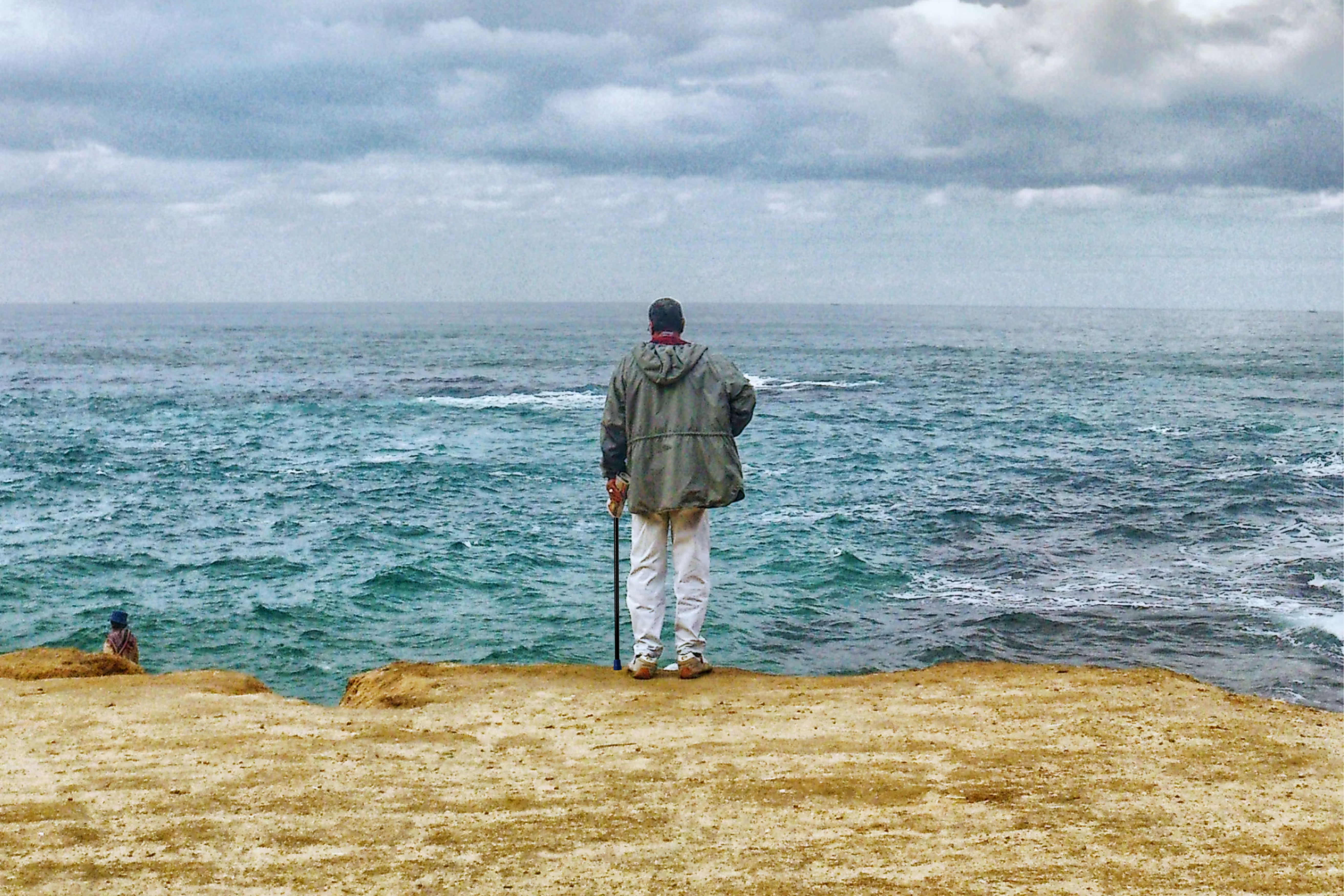
Most of what is sold as mental health advice requires effort, expense, or a significant change to who you are. Walking requires none of those things. It asks only that you put on your shoes and go outside.
The evidence is not ambiguous. Regular walking reduces symptoms of depression and anxiety, improves sleep quality, and increases cognitive clarity. It is one of the most-studied and most-consistently-effective interventions in mental health research — and it costs nothing.
This guide explains the mechanisms, helps you find a rhythm that suits your life, and addresses the practical question that often goes unanswered: what happens when pain, balance issues, or mobility challenges make walking feel out of reach. The answer, in most cases, is that walking is still available to you — it may simply require a different approach.

Section 01
The science behind walking and mental health
Walking triggers a cascade of neurological and biochemical effects that directly improve mood and reduce the physiological signature of stress. Understanding the mechanisms makes it easier to take the habit seriously — and to resist the temptation to dismiss it as "just" going for a walk.
Within minutes of starting a walk at moderate pace, the brain begins releasing endorphins — the same compounds involved in the so-called runner's high. Unlike running, walking is accessible to most people and produces the effect reliably without the recovery demands of high-intensity exercise.
A second mechanism is the regulation of cortisol, the primary stress hormone. Chronic elevated cortisol — the kind produced by unrelenting work pressure, anxiety, or poor sleep — is associated with depression, impaired memory, and immune suppression. Moderate aerobic activity, including brisk walking, reduces cortisol levels measurably after a single session.
Walking also increases BDNF (brain-derived neurotrophic factor), a protein that supports the growth and maintenance of neurons. Low BDNF levels are consistently found in people with depression. Regular walking increases BDNF production over time, which is one reason the mental health benefits compound with consistency rather than showing up only during the walk itself.
Studies consistently find 30%+ reduction in self-reported anxiety scores after 8 weeks of regular walking.
A 2023 meta-analysis found that 75 minutes of brisk walking per week reduces depression risk by around 21%.
Most research shows measurable mood improvement begins within 20 minutes of starting a walk at moderate pace.
Walking outdoors adds a further dimension. Exposure to natural light helps regulate circadian rhythm and serotonin production, both of which are disrupted in seasonal depression and general low mood. Even in urban environments, the combination of natural light, moderate physical movement, and a change of visual scene produces effects not replicated by indoor exercise.
Walking vs. other exercise for mental health. A 2024 review of 97 trials found that walking was as effective as running, cycling, and yoga for reducing symptoms of depression — and significantly easier to sustain long-term. Adherence rates for walking programmes are consistently higher than for gym-based interventions.
Section 02
Finding your daily rhythm
The research is clear that consistency matters more than intensity. A twenty-minute walk every day produces greater mental health benefit than a two-hour walk on Saturday. The goal is not fitness performance — it is a reliable daily signal to your nervous system that your body is safe, capable of movement, and engaged with the world.
Finding the right rhythm means finding the right time, the right route, and the right pace for your life as it actually is — not as you think it should be.

The most common failure pattern is not laziness — it is optimism. People commit to 10,000 steps before they are ready, miss a day due to weather or exhaustion, and abandon the habit entirely. A more durable approach is to start with a target you cannot fail: ten minutes, at the same time each day, for two weeks.
| Time of day | Mental health benefit | Practical consideration | Best for |
|---|---|---|---|
| Morning (before 10am) | Cortisol regulation, improved focus all day | Requires earlier wake time; weather dependent | Anxiety, low energy, poor sleep |
| Lunchtime | Breaks rumination cycles, afternoon mood lift | Easy to skip; time-limited | Work stress, afternoon fatigue |
| Late afternoon (4–6pm) | Stress recovery from workday, appetite regulation | Fits naturally after work for many people | General stress management |
| Evening (after 7pm) | Decompression, prepares nervous system for sleep | Avoid too close to bedtime if sleep-sensitive | Insomnia, evening anxiety |
Your chosen time matters less than your consistency. The goal is to make the walk as automatic and frictionless as brushing your teeth — something that happens without a decision being made each day.
Section 03
Building consistency — the habits that hold
Motivation is not a reliable resource. It peaks after a difficult week and disappears when you are comfortable. The people who walk consistently are not more motivated — they have removed motivation from the equation by making the habit structural.
The following principles are drawn from both behavioural research and practical experience with long-term habit change.
Anchor to an existing habit
Attach your walk to something you already do — after morning coffee, before lunch, after putting children to bed. The existing behaviour acts as an automatic trigger.
Set a minimum, not a target
Decide that ten minutes is a complete walk. On hard days, ten minutes is all you need to do. This removes the all-or-nothing thinking that kills habits.
Same route to start
Novelty requires decisions. A familiar route reduces the cognitive load of starting. You can vary it once the habit is established — not before.
Weather is not a reason
Rain, cold, and grey skies are the most common excuses. A short walk in light rain is not a miserable experience — and getting past this threshold makes the habit dramatically more resilient.
Track streaks carefully
Streak tracking works for some people and creates excessive pressure for others. Experiment, but allow yourself a "skip day" without resetting — missing once is normal; missing twice in a row is the pattern to avoid.
Walk alone at first
Social walks are valuable, but relying on another person's schedule makes the habit contingent. Establish the solo habit first, then layer in social walking as a bonus.
The two-day rule. The research on habit formation consistently shows that missing once has minimal impact on a habit's strength. Missing twice in a row begins to break the neural pathway. Treat the two-day rule as non-negotiable: whatever happens, never skip your walk two days in a row.
Section 04
Walking with a mobility aid — the mental health case
For people who use a walking cane, walker, or other mobility aid, there is a specific and underaddressed barrier to walking for mental health: the psychological weight of the aid itself. Many people delay or reduce their walking not because of physical limitation, but because of how they feel about being seen with a cane.
This matters because the mental health benefits of walking are, in many cases, most urgently needed by people dealing with pain, mobility challenges, and the psychological strain of chronic conditions. The irony is profound: the people who stand to gain most from a daily walking habit are the most likely to be stopped by stigma.

The design of a mobility aid changes the experience of using it. A cane that looks medical signals something different — to the user and to the people around them — than a cane designed as an object of intention and craft. This is not a superficial concern. The evidence on stigma and mobility aid use consistently shows that aesthetic design increases adoption rates and reduces the psychological burden of use.
Using a cane correctly also reduces the physical pain that cuts walks short. A properly fitted cane offloads up to 50% of the load on an affected hip or knee — meaning longer, more comfortable walks and a sustainable daily practice. See our guide to using a walking cane correctly to avoid back pain for the full technique breakdown.
DaiWalk perspective
A cane that earns its place in your life.
Every DaiWalk cane is designed with the belief that the tool you carry every day should reflect who you are — not signal limitation. When your cane feels like an accessory rather than a concession, it becomes easier to take it with you. And taking it with you is what makes the walk possible.
- Ergonomic handle designed to reduce palm fatigue on long walks
- Interchangeable rubber tips replaceable as they wear — keeping grip consistent
- Wrist strap available for added security on uneven terrain
- Colours and finishes designed to complement real wardrobes
If you are new to using a cane and unsure whether it is right for you, the article on 5 signs it's time to start using a mobility aid covers the decision clearly. The short answer: if pain or balance uncertainty is reducing your walking, a well-fitted cane will almost certainly expand what is possible.
Section 05
Environment, mindset, and making the walk count
Where and how you walk shapes the mental health benefit you receive. A distracted, stressed walk through traffic while checking your phone produces a different neurological outcome than an attentive walk through a park. This does not mean every walk needs to be a mindfulness exercise — but it does mean that certain choices amplify the return.
Green and blue spaces — parks, rivers, coastlines, even tree-lined streets — produce measurably lower cortisol and self-reported stress than walks through high-density urban environments. If you have access to nature, prioritise it. If you do not, a consistent neighbourhood route at low-traffic times produces comparable benefits to an occasional "special" walk somewhere beautiful.
Phone-free walking
Leaving your phone at home or setting it to silent for even 20 minutes significantly increases the restorative effect of a walk. Podcasts and music are fine — scrolling is not.
Pace and attention
Brisk enough to feel your body working, slow enough to notice your surroundings. The "effort" of noticing — a building, a tree, the quality of light — interrupts rumination.
Social walking
Walking alongside someone, rather than face-to-face, changes the nature of conversation. Difficult topics become more accessible. Many people find it easier to talk about mental health while moving.
Rain and cold
Mild discomfort during a walk activates the parasympathetic recovery response more strongly than pleasant-weather walking. Cold, damp walks are often the most restorative.

The question of whether to listen to anything while walking has no universal answer. For people walking to manage anxiety, silence or nature sounds tends to produce better outcomes than stimulating content. For people walking primarily to establish a habit or manage low mood, an engaging podcast or playlist removes the friction of starting and makes the walk genuinely enjoyable — which matters more for consistency than any physiological optimisation.
Walking on uneven terrain safely. If your walk takes you across cobblestones, parks, or sloped paths — and you use a mobility aid — our guide on navigating stairs and uneven ground confidently covers the technique in detail. Rubber tip grip plays a larger role than most people realise — see our guide to ferrule grip and slip prevention.
Browse replacement rubber tips →Section 06
Frequently asked questions
The most-cited threshold in research is 20–30 minutes of moderate-pace walking on most days of the week. However, even 10 minutes of brisk walking has been shown to produce an immediate mood-lifting effect. For long-term mental health outcomes — reduced anxiety, lower depression risk, improved sleep — consistency over weeks and months matters more than daily duration. Start with whatever time you can reliably commit to.
Both, but the mechanisms differ. For general mood, walking stimulates endorphin release and BDNF production over time. For anxiety specifically, walking reduces cortisol and activates the parasympathetic nervous system — the physiological "rest and digest" state that is the opposite of the anxiety response. Many people find that a 20-minute walk during or after an anxious period interrupts the physiological escalation of anxiety more effectively than sitting still and trying to think their way out of it.
Yes — with appropriate support. Pain that discourages movement often creates a feedback loop: reduced movement leads to weaker muscles and reduced joint stability, which increases pain, which further reduces movement. Walking with a correctly fitted cane breaks this cycle by offloading up to 50% of the load on an affected hip or knee joint, allowing movement that would otherwise be too painful to sustain. Start with very short distances and build gradually. If you are unsure whether a cane is appropriate for your situation, our article on 5 signs it's time to start using a mobility aid provides clear guidance.
Walking is not a replacement for clinical treatment of moderate to severe depression. However, research consistently shows that regular aerobic exercise — including walking — is a highly effective adjunct to therapy and medication, and comparable to both for mild to moderate symptoms. Exercise is increasingly included in clinical guidelines for depression management. If you are dealing with significant symptoms, the most effective approach combines professional support with lifestyle interventions including walking — not one or the other.
Yes, measurably. Studies comparing urban and natural walking environments consistently find lower cortisol, lower heart rate, and higher self-reported wellbeing in participants walking through green or blue spaces (parks, forests, riversides, coastlines). That said, the effect of walking itself is robust regardless of environment. If nature is not easily accessible to you, a consistent neighbourhood route at quieter times produces strong benefits. Access to nature is an amplifier, not a prerequisite.
This is one of the most common barriers to cane adoption, and it is worth addressing honestly. The discomfort is real, and it tends to be at its most acute in the first few weeks. What most people find is that the self-consciousness diminishes significantly once walking with the cane becomes routine — when the cane stops feeling like an announcement and starts feeling like an unremarkable part of how you move through the world. The design of your cane matters here: an object that you find visually considered and feel reflects your identity is meaningfully easier to carry in public. Our article on breaking the stigma around cane use goes deeper on this topic. The short version: a cane is a tool that expands your freedom — and the evidence on how others perceive cane users is far more positive than most people expect.
A walking cane is designed for everyday use — city pavements, stairs, indoor and outdoor mixed surfaces — and typically used in one hand to supplement balance and offload a specific joint. Trekking poles are designed for trail use in pairs, with baskets and tips suited to soft or rough terrain. DaiWalk canes are designed for everyday urban use and are appropriate for most walking environments you encounter in daily life. For dedicated trail walking, a specialist trekking pole or a cane with an appropriate interchangeable tip is worth considering. Our interchangeable tip range includes options suited to varied terrain.
Walk further. Walk better.
A cane designed to be part of your life — not set aside from it.
Shop the Original 1.0™ →


