


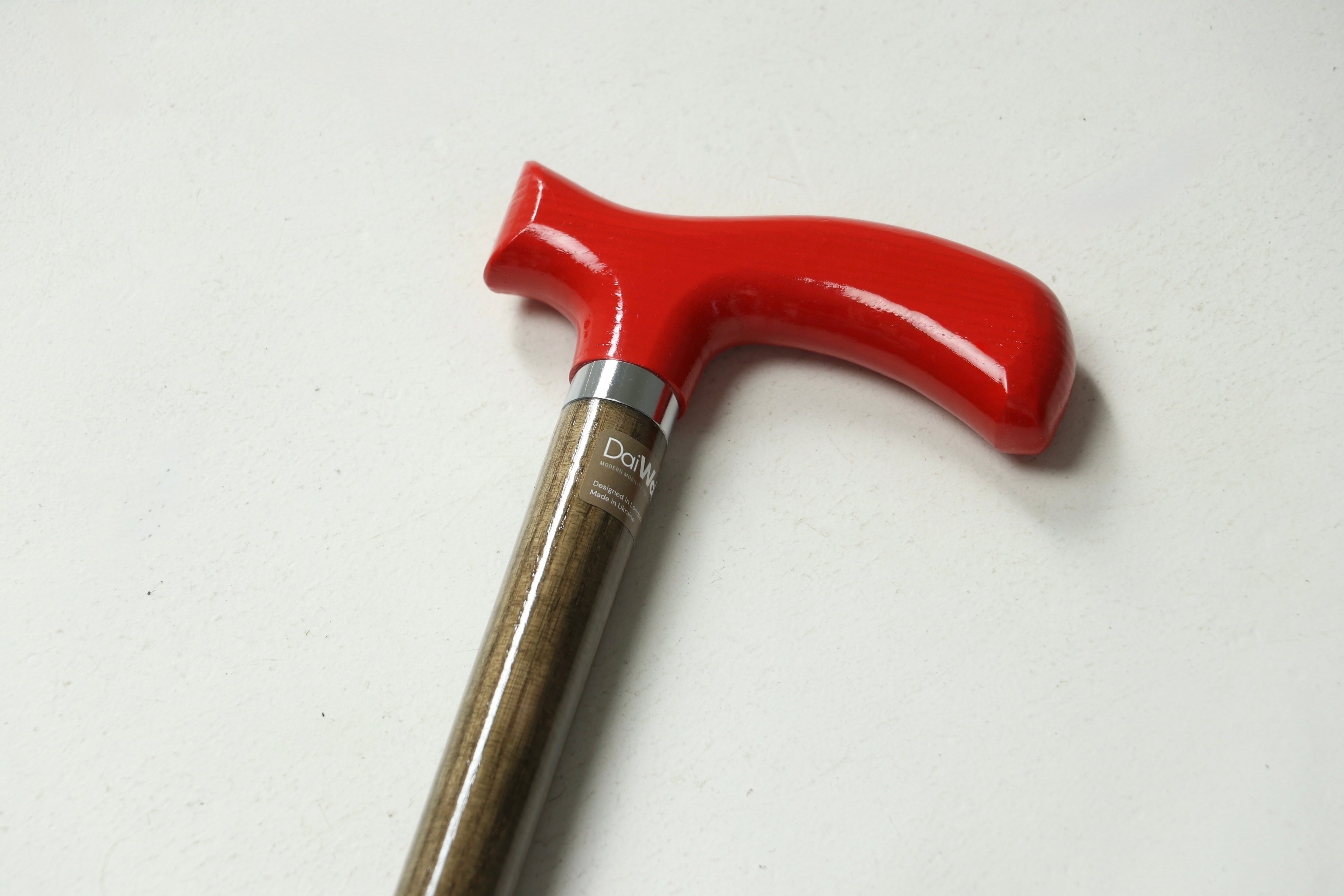
There is a moment most people recognise. You are standing in a mobility aid aisle, or holding a cane someone has suggested, and a quiet voice says: not yet. Not because you do not need one. But because of what you believe it means.
That voice is not yours. It belongs to decades of design choices, cultural assumptions, and a medical system that built mobility aids to look like medical equipment — beige, clinical, and easy to hide. The stigma around canes is not inevitable. It is constructed. And it can be dismantled.
This article exists to do exactly that: to examine where the stigma comes from, what the evidence actually shows about cane use, who is using walking canes in 2026, and what it means when you choose to walk with confidence rather than wait for a fall.

Section 01
Where the stigma comes from
The association between walking canes and old age is not rooted in biology. It is rooted in design history and the architecture of healthcare systems built in the twentieth century.
For most of that century, mobility aids were manufactured in the same supply chains as hospital equipment. They were designed to be functional, cheap, and easy to produce at scale. Aesthetics were never part of the brief. The result was a product category that looked — and still largely looks — like it belongs in a clinic, not a life.
When something looks medical, we assume it is for people who are unwell, dependent, or diminished. That assumption becomes cultural shorthand. A cane stops being a tool and becomes a symbol — one that many people resist, sometimes to the point of serious harm.
"People wait an average of two years after they need a cane before they begin using one. During that time, fall risk increases significantly."
The irony is stark. The stigma around using a cane causes more falls, more injuries, and more dependence than the cane ever would. We avoid the tool that would keep us active because we have decided it signals the opposite.
There is also a generational design gap. The cane was never redesigned for the generation that came of age with design-conscious objects — the generation that chooses headphones, trainers, eyewear, and bags as expressions of identity. Why would this generation accept a medical device as part of their daily life? They would not. And many are now creating, or choosing, something different.
A different starting point. DaiWalk was founded on the conviction that the design failure of traditional mobility aids is not acceptable. Read how the brand began with this belief in our original brand essay →
The typical time between needing a cane and actually starting to use one — driven primarily by stigma, not logistics.
In mobility aid surveys, nearly seven in ten people say the look of a cane influences whether they would use one in public.
Walking without a needed mobility aid triples the risk of a fall-related injury compared to consistent cane use.
Section 02
What the science actually says
Strip the stigma away and look at the biomechanics. A walking cane, correctly fitted and correctly used, is one of the most effective load-management tools available to a moving human body. The evidence for this is substantial, consistent, and has been replicated across decades of physiotherapy and orthopaedics research.

Joint load reduction
The most significant finding is that a well-fitted cane held in the opposite hand to an affected joint can reduce the compressive load on that joint by up to 50%. For someone managing hip or knee osteoarthritis, this is not a minor improvement — it is the difference between two hours of comfortable walking and twenty minutes of pain.
The mechanism is simple: the cane creates an additional base of support, allowing the upper body to offload part of its weight through the arm rather than transferring it fully through the lower limb with every step. This is particularly significant when descending stairs or navigating slopes. For a deep-dive into the biomechanics, see our guide on how to use a walking cane correctly to avoid back pain.
Fall prevention
Falls are the leading cause of injury-related death among adults over 65 worldwide. They are also, to a significant degree, preventable. Consistent cane use — particularly on uneven surfaces, stairs, and in low-light conditions — is among the most evidence-backed interventions for fall prevention. It is more reliable than shoe modifications, more available than supervised rehabilitation programmes, and more effective than doing nothing.
Cane users in longitudinal studies show substantially lower rates of fall-related injury compared to matched populations who avoid mobility aids despite comparable need.
Muscle strength is not reduced
One of the most persistent myths about cane use is that it weakens the legs. This is not supported by evidence. A cane reduces joint load — it does not replace muscular effort. Leg muscles continue to fire with every step. What changes is that they do so with less compressive stress on the joint itself.
When cane use is paired with appropriate exercise and physiotherapy — as it typically is in clinical recommendations — muscle strength is maintained or improved. The cane enables people to remain active; activity builds and sustains strength. The myth works backwards.
Evidence summary
The case for a cane, in plain language.
These are not opinions. They are findings that have been replicated across decades of peer-reviewed research in biomechanics, orthopaedics, and fall prevention.
- A correctly fitted cane reduces hip and knee joint load by up to 50% per step
- Cane users show significantly lower rates of fall-related injury in longitudinal studies
- Muscle strength is preserved — and often improved — when cane use enables continued activity
- The greatest risk factor is not using a cane when one is needed, not using one
- Pain reduction through cane use increases walking distance and overall daily movement
The handle you choose can amplify or diminish these benefits. For an evidence-based look at how handle geometry affects wrist and palm health, see the science of ergonomics and handle shape.
Section 03
Who uses a walking cane in 2026
The picture of a cane user as an elderly person shuffling through a hospital corridor is not just stigmatising — it is simply inaccurate. The actual population of cane users is far broader, younger, and more diverse than cultural assumptions suggest.
Post-surgery recovery
Hip replacements, knee reconstructions, and ankle surgeries all require a period of supported walking. Canes are the standard first tool, often for weeks or months post-procedure — for patients of every age.
Chronic joint conditions
Osteoarthritis, rheumatoid arthritis, and related conditions affect tens of millions globally. A significant number of people managing these conditions are in their thirties, forties, and fifties.
Hypermobility & connective tissue
Conditions such as hypermobile Ehlers-Danlos syndrome (hEDS) affect a younger demographic disproportionately. Canes provide the proprioceptive and stabilising support that unstable joints cannot self-provide.
Neurological conditions
Multiple sclerosis, Parkinson's, vestibular disorders, and stroke recovery all affect balance and gait. A cane is often the most practical daily intervention available outside supervised rehabilitation.
Sports injury & active recovery
Runners, footballers, climbers — people who push their bodies — often need cane support during recovery from stress fractures, ligament injuries, or overuse conditions. This demographic is typically 20–45.
Preventive & conscious use
An emerging group chooses a cane before it becomes necessary — particularly for high-mileage days, travel, or uneven terrain. They are not managing a condition; they are managing their body intelligently.
Not sure whether your situation calls for a cane? Our article on 5 signs it is time to start using a mobility aid offers a clear, non-clinical framework for making that decision.

Section 04
How design is changing everything
Design shapes perception. This is not a theory — it is demonstrated daily by every category of consumer object we interact with. Eyewear shifted from medical appliance to fashion statement through design. Hearing aids are undergoing the same transformation. Walking canes are next.
The traditional mobility aid was designed from a single angle: clinical function. Colour, material, proportion, handle geometry — none of these were considered as elements of a complete object. They were constraints to be minimised. The result is a product people are reluctant to use.
"A cane designed to be hidden will always feel like something to be ashamed of. A cane designed to be seen becomes something entirely different."
Designer canes — and specifically canes designed with the same attention given to a considered everyday carry — change the psychological equation. When the object itself is beautiful, carrying it stops being a concession and starts being a choice. For a detailed comparison of medical and designer cane approaches, see The Difference Between Medical and Designer Canes.
What makes a cane worth choosing
The criteria for a well-designed cane are not complicated, but they require simultaneous attention to function and form — something the traditional mobility aid industry rarely attempts:
- Handle geometry that distributes pressure across the full palm — not just the fingers or wrist
- Shaft material that balances low weight with structural confidence — so the object does not fatigue the carrier
- Proportions that suit real body heights — not one-size-fits-most adjustable assemblies
- Colour and finish treated as seriously as material and function — because the visual experience of carrying something affects whether it is carried
- Replaceable components where wear occurs — particularly the rubber tip — extending the life of the primary object without requiring full replacement
The tip is the most frequently overlooked component. A worn tip reduces traction significantly — this is a safety issue, not just a maintenance one. DaiWalk's interchangeable rubber tips are designed to be replaced every three to six months with daily use. See the full range of interchangeable tips, and for the science behind why this matters, read how a rubber ferrule prevents slips.
| Design dimension | Traditional medical cane | Design-led cane (DaiWalk) |
|---|---|---|
| Primary brief | Clinical function, low cost | Function and considered aesthetics |
| Handle design | Crook or offset, off-the-shelf | Ergonomic contour, tested across 70+ shapes |
| Colour palette | Grey, black, beige — incidental | Curated to complement real wardrobes |
| Shaft adjustability | Telescoping, multi-part | Fixed, single-piece — stronger, cleaner |
| Tip replacement | Generic universal tip | Designed interchangeable system |
| Carrying experience | Object to be hidden or managed | Object chosen and carried with intention |
Section 05
Reframing the decision to use a cane
The decision to start using a cane is typically framed as a loss. A loss of independence, of youth, of the ability to manage on your own. This framing is not just unhelpful — it is the exact inversion of what the evidence shows.
Using a cane when you need one is an act of self-respect. It is the decision to remain active, to protect your joints, to reduce your fall risk, and to participate in your life fully — rather than managing it increasingly from the sidelines because pain or instability have narrowed what feels possible.
Safety on every surface. Choosing a cane is only the first step — using it correctly on stairs, slopes, and uneven ground is equally important. Our guide to navigating stairs with confidence → walks through the correct technique step by step.
The language we use matters
Language shapes how we interpret objects and choices. Consider the difference between:
- "I have to use a cane now" — positions the cane as a defeat, a concession, something imposed from outside
- "I use a cane" — neutral; a statement of fact about how you move through the world
- "I choose to use a cane" — positions the cane as a decision made by an informed, autonomous person who has weighed the options
The third framing is the most accurate. No one forces a person to use a cane before they are ready. Choosing one, with knowledge of the benefits, is an exercise of agency — not a surrender of it.
Strength, visibility, and what we carry
There is a powerful parallel in how we discuss other adaptive tools. Glasses were once stigmatised — now they are fashion objects. Orthopaedic shoes were medical — now brands like New Balance and HOKA are worn by people who have never had a diagnosis. The category trajectory is consistent: function earns aesthetics, aesthetics earns choice, choice removes stigma.
Walking canes are in the middle of this transition. The people using design-led canes today — at galleries, on city streets, at work, on trails — are the leading edge of a shift that will make this a fully normalised choice within a generation. Some of them use canes because they need them. Some of them use canes because they want to. Both are valid. Both are choices.

The wrist strap is often overlooked as part of this equation. A well-designed strap keeps the cane with you in crowded environments, prevents it from clattering to the floor, and allows you to free your hand without setting the cane down. DaiWalk's walking cane accessories — including wrist straps — are designed to integrate with the cane rather than interrupt it. For more on strap selection, see how to choose a durable cane strap.
Section 06
Frequently Asked Questions
These are the questions we hear most often from people considering a cane for the first time — or reconsidering one after years of avoidance.
No. Using a walking cane is a sign of understanding how your body works and choosing to support it effectively. Athletes use supportive equipment during training. Surgeons use instruments that extend their capability. A cane is no different: it is a tool that allows you to do more, with less pain and greater safety.
The framing of cane use as weakness comes from stigma built around medical aesthetics — not from any physical or psychological reality. Every person who chooses a cane before a fall, before a surgery becomes necessary, or before chronic pain becomes limiting, is making a stronger decision than the person who waits.
There is no minimum age. The right age to use a cane is the age at which it would benefit you — whether that is 22 with a connective tissue condition, 34 recovering from a knee reconstruction, 55 managing early-stage osteoarthritis, or 70 navigating winter pavements. Age is not the variable. Stability, pain, and safety are.
The more accurate question is: does a cane make your daily movement safer, less painful, or more confident? If the answer is yes, then now is the right time — regardless of the number.
Not if the underlying condition is managed appropriately alongside cane use. A cane does not create dependency — it enables continued activity. People who use canes are generally more mobile than people who need canes and avoid using them, because the cane allows them to keep moving.
Dependency concerns are most often raised by people who associate cane use with deterioration — a correlation confusion. People whose conditions worsen often need more support, but the cane does not cause the worsening. In many cases, by enabling continued movement and reducing fall risk, cane use slows functional decline.
Nothing you are not comfortable saying. You do not owe anyone an explanation for how you manage your body. But if you want one, the most disarming answer is also the truest: "It helps me move better." That is it. There is nothing to justify, nothing to minimise.
Most unsolicited comments come from well-meaning curiosity rather than judgement. Responding with confidence rather than apology is the fastest way to reframe the moment — for yourself as much as for the person asking.
Yes, and this is precisely why DaiWalk exists. The design brief for our Original 1.0™ was to create a cane that earns its place in an outfit — not one that is tolerated alongside it. That means considered proportions, a handle designed for the palm rather than for the production line, and a colour palette chosen to complement real wardrobes rather than hospital supply lists.
A cane you are proud to carry is one you will actually use. That is not a trivial outcome — it is the whole point. See the DaiWalk Original 1.0™ to understand what this looks like in practice.
Yes — the contact base differs significantly. A single-point cane has one rubber tip, which provides reliable support on flat and moderately uneven surfaces and is the most practical choice for daily urban use. A quad cane has four contact points, offering greater stability and the ability to stand unsupported, but adds visual and physical bulk. Quad canes are most appropriate for post-surgical rehabilitation or where balance impairment is more significant. For a full comparison, see our article on single-point vs quad canes.
Replace your rubber tip when the tread pattern is visibly worn smooth, when the tip develops a wobble or lean, or when you notice a change in grip on wet or polished surfaces. With daily use, this typically means replacing every three to six months. A worn tip is a safety issue — grip reduction increases slip risk significantly. DaiWalk's interchangeable tip range is designed for straightforward replacement at home. See the full selection at daiwalk.com/collections/interchangeable-tips.
Yes. A prescription is not required to purchase or use a walking cane. They are available to anyone. If you are managing a specific medical condition, it is worth discussing cane use with your physiotherapist or GP so that technique and fit are optimised — but the decision to begin using a cane does not require formal authorisation.
Many of the most effective cane users started proactively — before a fall, before pain became limiting — and found that early adoption made a meaningful difference to their quality of movement long-term.
Walk with intention. Walk with DaiWalk.
The Original 1.0™ — designed to be carried, not hidden. Available in multiple colours and heights.
Shop the Original 1.0™


