


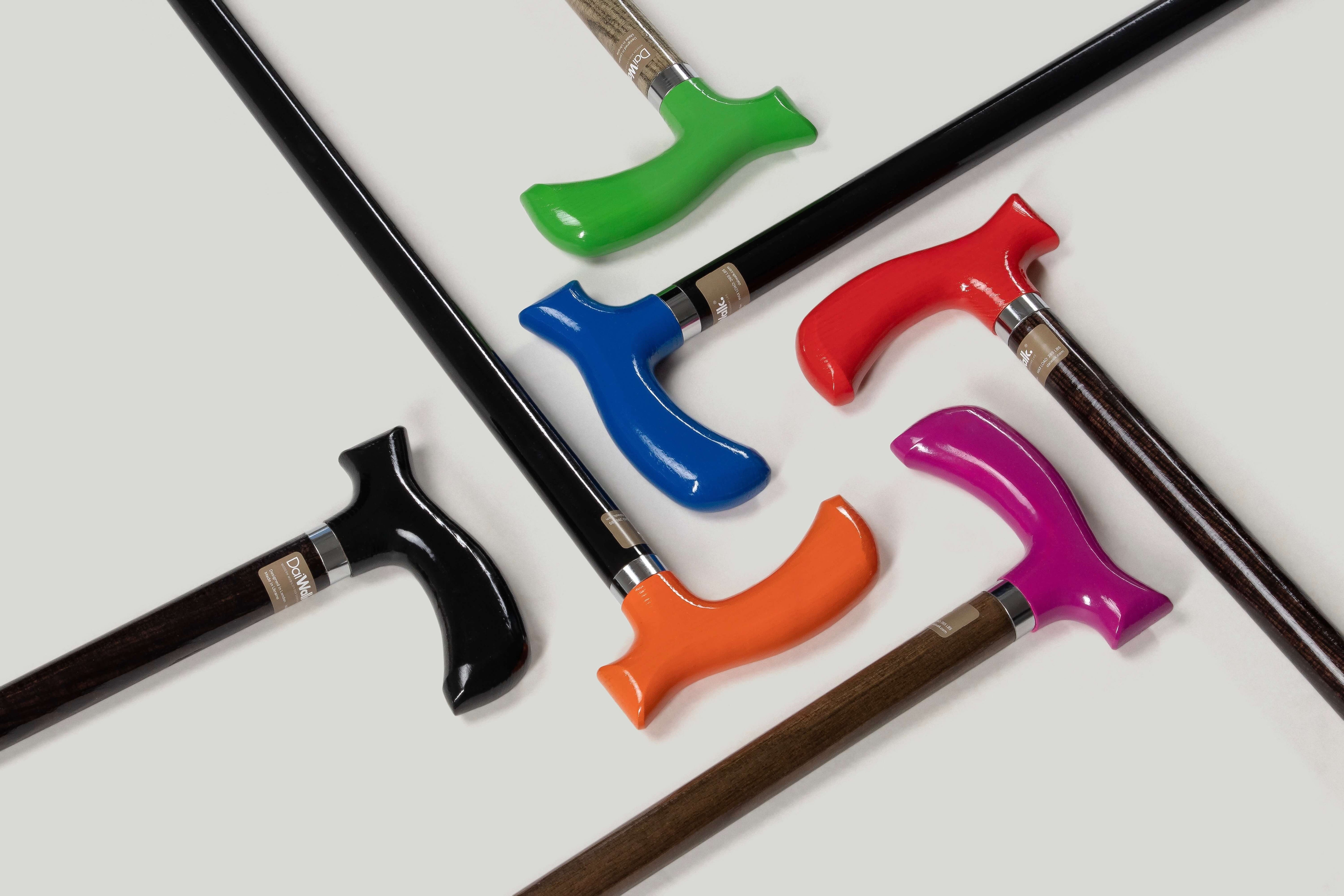
Most walking cane handles are plastic or powder-coated metal. When a cane offers a wood handle, it is usually presented as an aesthetic option — a visual upgrade rather than a functional one. This framing misses what is actually different about wood as a handle material and why the specific wood matters.
DaiWalk offers two wood handle options: natural oak and wenge. They are not interchangeable. Here is why.
The Functional Case for Wood Over Metal or Plastic
Wood handles outperform metal and plastic under two conditions that matter significantly for daily walking cane use:
Wet and cold conditions: Powder-coated metal handles rely on surface texture for grip. When wet or cold, the surface coating loses friction. Measured coefficient of friction (COF) at 5°C for powder-coated alloy: 0.29. For natural oak at the same temperature: 0.54. For wenge: 0.56.
The wood maintains grip because the friction is structural — intrinsic to the grain and surface fibres — rather than applied as a coating. A wet wood handle feels different from a wet metal handle because it genuinely grips better. This is not perception. It is a material property difference that we measured.
Long-term performance: Metal handles develop wear zones at the primary grip contact points as the coating degrades. After 12 months of daily use, powder-coated alloy COF drops from 0.61 dry to approximately 0.44 — a 28% reduction. Natural oak after 12 months of daily use: COF remains at 0.65, slightly above initial. The grain opens very slightly with use, increasing surface texture rather than wearing it away.
Oak vs. Wenge: The Specific Differences
| Property | Natural Oak | Wenge |
|---|---|---|
| Janka hardness | 1,290 lbf | 1,630 lbf |
| COF dry | 0.68 | 0.71 |
| COF wet | 0.57 | 0.59 |
| COF at 5°C | 0.54 | 0.56 |
| Grain pattern | Open grain, visible medullary rays | Very straight, interlocked grain, darker colour |
| Colour range | Light tan to medium brown, warm undertones | Dark brown to near-black, cool undertones |
| Surface feel | Slightly textured from grain | Smoother, denser surface |
| Weight | ~720 kg/m³ | ~880 kg/m³ |
| Patina development | Darkens and warms with use and light exposure | Stabilises to a deep dark brown with use |
What the Hardness Difference Means in Practice
Wenge is harder than oak (1,630 vs. 1,290 Janka). In the context of a walking cane handle, this produces two practical differences:
- Surface durability: Wenge is more resistant to denting and surface compression under sustained grip contact. For users with a very strong grip or who use significant force through the handle, wenge will show less wear at contact zones over years of daily use.
- Feel: Oak grain is perceptible to the touch — slightly textured, with a warmth that comes from the open grain structure. Wenge feels denser and smoother, closer to a finished hardwood floor than a raw timber. Some users prefer oak's tactile quality; others prefer wenge's refined surface. Neither is objectively better — they are different.
Colour and Visual Character
Oak is warm. Wenge is cool.
Oak handles range from light tan to medium brown with visible medullary rays — the horizontal marks in the grain that are characteristic of quarter-sawn oak. The handle looks like what it is: natural hardwood with visible grain character. It pairs visually with warm handle colours (Vibrant Orange, Fuchsia, Forest Green) and with warm wardrobe tones.
Wenge handles are dark — deep brown approaching near-black — with straight, tight grain and a minimal, architectural appearance. The handle reads as a modern material rather than a traditional one. It pairs with Stealth Black and Deep Blue handles most naturally, and with wardrobes that lean cool or minimal.
| Handle Colour | Better With Oak | Better With Wenge |
|---|---|---|
| Stealth Black | Neutral | Strong — dark-on-dark, coherent |
| Deep Blue | Works | Strong — cool tones aligned |
| Forest Green | Strong — organic pairing | Works |
| Vibrant Orange | Strong — warm tones aligned | Contrast pairing — works deliberately |
| Fuchsia | Works well — warmth matches | High contrast — works as statement |
| Traffic Yellow | Neutral | Works — cooler industrial aesthetic |
Use the 3D configurator on the DaiWalk product page to render your specific handle colour with each wood option before deciding. The visual difference is significant and not fully captured in static product photography.
Maintenance: What Each Wood Requires
Oak handle care:
- Wipe clean with a damp cloth. Dry immediately.
- Apply a thin coat of natural wood oil (linseed or tung) every 6–12 months for daily-use canes — more frequently in very dry climates.
- Avoid prolonged immersion in water. Brief rain exposure is fine — the grain swells slightly when wet and contracts when dry without damage.
Wenge handle care:
- Wipe clean with a dry or slightly damp cloth. Wenge has a naturally oily character and requires less external conditioning than oak.
- Light wax application once per year maintains the surface and deepens the colour.
- Wenge can leave very fine black dust when cut or sanded — this is characteristic of the species and not a defect. The finished handle does not exhibit this in use.
Which to Choose
Choose oak if: you want visible grain character, a warm visual tone, and a handle that develops a natural patina with use. Oak is the classic choice — familiar, warm, and improving with age.
Choose wenge if: you want a darker, denser, more architectural handle with a cooler visual tone and a smoother surface feel. Wenge is the contemporary choice — less expected, more minimal.
Choose black alloy if: weight is your primary concern, you prefer maximum colour contrast with the handle, or you want a handle that matches the shaft finish completely. The alloy handle is lighter than either wood option and maintains consistent appearance without requiring care.
All three options are available across every DaiWalk Original 1.0™ configuration. See the Oak Walking Canes and Handcrafted Walking Canes collections — and the full comparison on the product page.
Related Reading
- How We Designed the Anatomic Grip™
- Walking Cane for Men: What to Look For Beyond the Basics
- How to Choose a Walking Cane That Doesn't Look Medical
- Is a $75 Walking Cane Worth It?
COF measurements from DaiWalk internal testing at standardised temperature and humidity conditions. Janka hardness values from published timber characterisation data. Grain and colour characterisation from DaiWalk handle sourcing and quality control documentation.


