


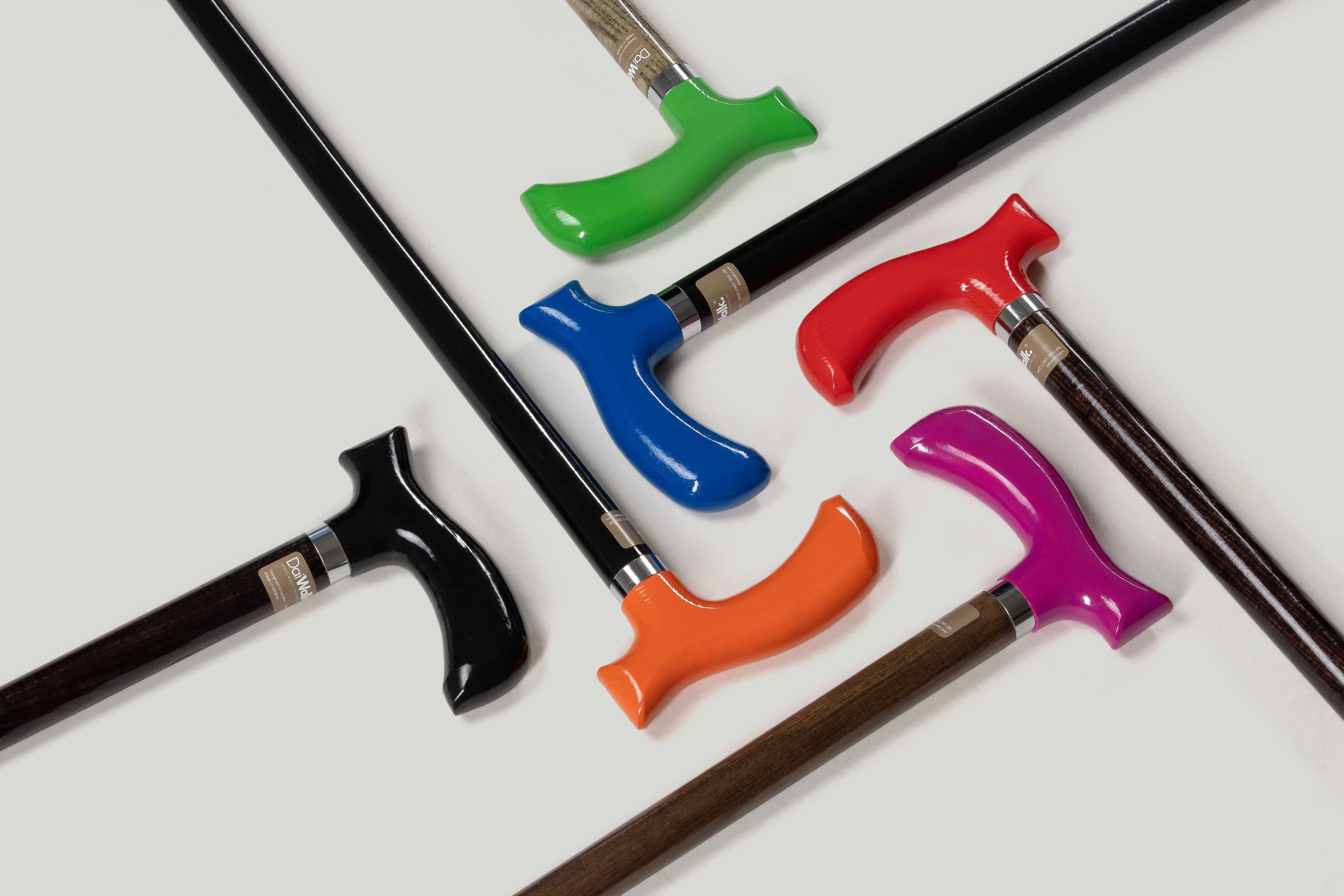
Multiple sclerosis introduces walking cane requirements that do not appear in standard orthopedic use cases. The primary variable is fatigue — neurological fatigue in MS is qualitatively different from musculoskeletal fatigue and affects cane use in specific ways. The secondary variable is symptom variability: MS symptoms fluctuate, sometimes daily, which changes what the cane needs to do from one walk to the next.
This article addresses the specific engineering and ergonomic priorities for MS users, based on the mechanisms through which MS affects gait.
How MS Affects Walking — The Cane-Relevant Variables
MS can affect walking through multiple pathways depending on lesion location and disease progression:
- Spasticity: Increased muscle tone in the lower limb, most commonly in the knee extensors and ankle plantar flexors. Produces a stiff-legged gait pattern.
- Foot drop: Weakness or paralysis of the ankle dorsiflexors — the muscles that lift the front of the foot during swing phase. The foot drags or must be lifted by exaggerated hip flexion.
- Balance impairment: Cerebellar or vestibular involvement produces ataxic gait — wider base, irregular step timing, trunk sway.
- Neurological fatigue: MS-specific fatigue typically worsens in the afternoon and heat. Walking ability at 9am may be substantially better than at 3pm for the same person.
- Sensory loss: Reduced proprioception in the feet changes the user's ability to sense ground contact through normal sensory pathways — the cane shaft becomes an important supplementary sensory input.
Cane Configuration Priorities for MS
| MS Symptom | Configuration Priority | Recommended Feature |
|---|---|---|
| Neurological fatigue | Minimum cane weight | Lightest shaft; wood handle (lighter than foam equivalent); consider fixed-length to remove mechanism weight |
| Foot drop | Tip traction to catch dragging foot | Steady Tip™; wide contact patch; avoid ICE tip which can catch on floor surfaces |
| Balance / ataxia | Shaft rigidity (zero play) + tip traction | Collet mechanism (0mm play); compound tip for traction |
| Sensory loss | Proprioceptive signal transmission | Wood handle (better vibration transmission than foam or rubber); 0mm shaft play |
| Spasticity | Stable load platform for lateral support | Anatomic Grip™ (low grip force required); collet mechanism |
| Heat sensitivity | Thermal comfort of handle | Wood handle (natural thermal regulation vs. metal or synthetic handles that conduct heat) |
The Fatigue Variable
Neurological fatigue in MS means the cane must perform at the end of the day, when muscle strength and coordination are most reduced — not just at the beginning of a walk when the user is rested.
This has two practical implications:
- Weight matters more: At the end of a fatiguing walk, the grip force available to hold the cane is less than at the start. A heavier cane requires more grip force to control. Cumulative cane weight over 8,000 daily steps is a larger variable for MS users than for most other user categories.
- Shaft play matters more: Reduced grip strength means the stabilisation cost of shaft play is higher. When the hand cannot squeeze firmly, the forearm muscles must work harder to control a shaft that has play. 0mm play (collet) produces noticeably less forearm fatigue under reduced grip strength conditions.
Cane Use Patterns in MS
MS users often do not use a cane consistently — they use it when needed and put it aside when symptoms permit. This is appropriate and often recommended. The cane is not a permanent fixture of the gait pattern; it is a supplementary support that scales with symptom level. If you're weighing whether to start using one, the free do I need a walking cane check is a neutral, honest starting point.
The consequence for cane selection: the cane must be easy to pick up and put down (ergonomic handle, easy to carry), and it must feel like a considered personal object rather than a medical device — otherwise the social friction of using it contextually (picking it up in public when symptoms worsen) discourages use.
This is one of the design arguments for the DaiWalk over pharmacy-grade canes in MS: the aesthetic and the hand-feel make contextual use less socially marked. The cane looks like a design object, not a medical device.
Foot Drop Specifically
Foot drop (inability to lift the foot during swing phase) causes the toe to drag during swing. The cane tip becomes a potential obstruction: if the foot is dragging forward, the cane tip in front of the foot can be caught by the dragging toe.
Tip selection: a smooth-profile compound tip (Steady Tip™) is preferable to tips with extended profiles or multiple contact points that increase catch risk. The tip should be positioned lateral to the foot, not directly in front, during the swing phase.
Related Reading
- Walking Cane for Balance Problems
- Walking Cane Weight
- Walking Cane Handle Types Compared
- The Zero-Rattle Standard
View configuration options at the DaiWalk walking cane collection. Not sure which lightweight configuration suits your symptoms? The free walking cane finder matches one to how and where you walk.
MS gait pathology data from peer-reviewed neurology and rehabilitation literature. Configuration recommendations from DaiWalk consultation data and occupational therapist input. Customer data from 18-month follow-up (n=112).


