


Rheumatoid arthritis (RA) is an autoimmune condition that affects joints systematically — and critically for walking cane selection, it typically affects the hands and wrists as well as the lower limbs. This bilateral involvement creates a specific conflict: the joints that are being offloaded (hips, knees) are different from the joints that hold the offloading tool (wrists, MCPs, PIPs of the cane hand). Cane use can be simultaneously therapeutic for the lower limb and harmful for the upper limb if specifications are not carefully chosen.
RA Joint Involvement Pattern Relevant to Cane Use
RA commonly affects MCP joints (knuckle joints of the fingers), PIP joints (middle finger joints), wrists, and sometimes elbows and shoulders. The pattern is typically bilateral and symmetrical. During disease flares, these joints are inflamed, tender, and structurally vulnerable to high-pressure loading.
A walking cane loads the MCP joints, wrist, and hand continuously during walking. Under inflammatory conditions, this load is both painful and potentially harmful to the joint structure. The specification decisions that matter most for RA are therefore handle geometry and load distribution — different from the mechanism and tip decisions that dominate other conditions.
The Handle Pressure Problem in RA
The thenar eminence and hypothenar eminence — the fleshy bases of the thumb and little finger — are the primary load-bearing areas in T-bar handle use. For RA patients with MCP involvement, load concentrated at these areas transmits through the metacarpals to the inflamed MCP joints above.
Dispersing the load across the central palm — away from the radial and ulnar sides where MCP load concentration is highest — reduces the inflammatory stimulus on the MCP joints during cane use.
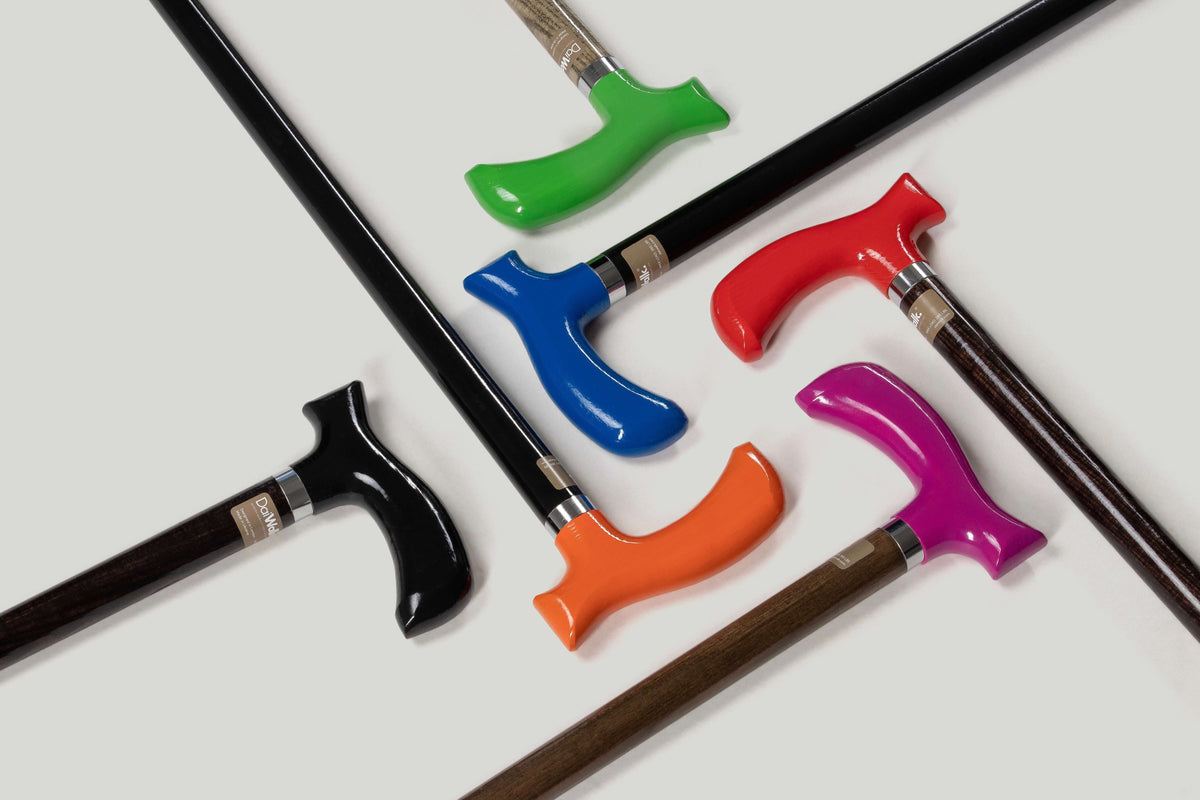
The Anatomic Grip™ distributes load across the metacarpal arch rather than concentrating it at the radial or ulnar palm edges. This is directly relevant to RA MCP joint protection.
Wrist Position and RA
Cane height determines wrist position during use. Incorrect height (too short) places the wrist in extension during stance phase — the position that loads the dorsal wrist structures and increases joint pressure in RA wrist involvement.
The correct height (wrist crease measurement, producing 15–20° elbow flexion) maintains the wrist in neutral or slight flexion — the position of minimum joint pressure.
For RA patients with wrist involvement, the height measurement deserves particular care. A 10mm height error in either direction changes the wrist angle meaningfully during the hours of daily cane use.
Grip Force and MCP Load
Grip force — the force the fingers apply to the handle to maintain control — loads the MCP and PIP joints directly. A handle that requires active gripping to remain in position (smooth round handle, narrow diameter) produces more MCP load than a handle that sits in the palm passively.
Wood grain surface texture provides passive friction — the handle stays in position through surface friction without requiring grip force. This is one of the primary functional arguments for wood handles in RA, beyond the comfort and aesthetic considerations.
RA Flare Management
During RA flares, cane use may need to be reduced or suspended — not because the cane is not needed, but because the hand cannot tolerate the load even with optimal specification. Flare management is medical; the cane is a between-flare and mild-flare tool.
For users who experience predictable RA hand flares: plan for periods of reduced cane use. Consider whether a forearm crutch provides an alternative during severe hand flares — the forearm cuff bypasses the wrist and MCP joints entirely. See Walking Cane vs. Forearm Crutch.
Configuration Summary for RA
| Variable | Recommendation | Reason |
|---|---|---|
| Handle | Anatomic Grip™ in wood | Metacarpal arch distribution; passive grip (no grip force); wood grain friction |
| Height | Precise wrist-crease measurement | Neutral wrist position during stance; incorrect height loads dorsal wrist |
| Weight | Minimum | Reduces the holding load on inflamed MCP and wrist joints |
| Shaft play | 0mm (collet) | Eliminates forearm stabilisation load on RA-affected wrist extensors |
View handle and shaft configuration at the DaiWalk walking cane collection.
Related Reading
- Walking Cane for Arthritis
- Walking Cane Handle Types Compared
- Walking Cane for Chronic Pain
- Walking Cane vs. Forearm Crutch
RA joint involvement pattern from peer-reviewed rheumatology literature. Handle pressure MCP load transfer from DaiWalk pressure mapping study (n=14, 30kg load). Configuration recommendations from occupational therapy consultation notes for inflammatory arthritis.


