


Walking cane return rates in e-commerce sit between 28% and 34% — significantly higher than most product categories. We know this because we track it, and because customers who come to DaiWalk frequently arrive after returning something else.
The returns are not random. Across our customer conversations, the same five reasons appear repeatedly. Every one of them is preventable before purchase.
One disclosure before the list. We have a direct stake in this: our canes are cut to each buyer's measurement, which makes them customised items that cannot be returned. We cannot fix a bad purchase with a free return label, so the only version of this business that works is one where you get it right the first time. That is why every sizing tool on this site is free and none of them ask for an email address.
Reason 1: The Height Was Wrong — And Could Not Be Fixed Afterwards
The most common return reason, accounting for approximately 40% of cases in our customer follow-up data.
Two problems compound here. First, buyers measure incorrectly — hip height instead of wrist crease, producing a cane 2–4cm too short. Second, even when they measure correctly, most adjustable canes use a button-and-hole system that adjusts in 12–25mm increments. The buyer's correct height may fall between two holes.
The result: a cane that cannot be set to the right height regardless of how carefully the buyer measured. This is the quiet flaw in the adjustable cane's main selling point — adjustable does not mean adjustable to your height, it means adjustable to the nearest drilled hole.
How to avoid it:
- Measure to your wrist crease, not your hip — arms hanging naturally, in the shoes you actually wear
- Use the free cane length calculator before ordering — it converts your height into the correct length in about thirty seconds
- Then buy a cane that can actually be made to that number, rather than one that rounds it to the nearest increment
The DaiWalk Steady Cane is cut to the length you specify, in one-inch steps from 28″ to 37″, with longer cuts on request — so there is no increment to compromise with. Already own a cane and not sure it fits? The free 3-question cane height check tells you whether it is too tall or too short before you decide to return it.
Reason 2: The Handle Caused Pain After Extended Use
Buyers test canes for five minutes in a shop or walk around the house for a day after delivery. At that duration, almost any handle feels acceptable.
The problem appears at three to five hours of continuous use — the threshold where handle geometry stops being a comfort consideration and starts being a load distribution issue. A T-bar handle concentrating 4.2 N/cm² at the finger joint base does not feel like a problem at hour one. At hour four, it registers as pain. By week three, users are returning the cane and blaming the product.
The product is not defective. The geometry was never designed for the load it is carrying.
What the data shows: In our customer follow-up at 60 days, zero users of the DaiWalk Anatomic Grip™ reported handle-related pain. In the same period, 31% of users who had previously used a standard T-bar cane for 5+ hours daily reported wrist or palm soreness they attributed to their cane. If a cane is already hurting your hand, the free wrist pain checker isolates whether height, handle or grip is the cause — often fixable without a return.
How to avoid it: Do not evaluate handle comfort at under one hour of use. Ask specifically about peak pressure distribution, not general comfort. If a manufacturer cannot tell you where and how load distributes across the palm, the handle was not designed with that question in mind.
Reason 3: The Tip Slipped — On a Surface the Buyer Walks on Every Day
Generic rubber ferrules are optimised for cost and basic dry-surface traction. They are not optimised for the specific surfaces most users actually encounter: wet urban pavement, polished hospital or office floors, cobblestones, or gravel.
A buyer who commutes through rain discovers their cane tip is not performing on their primary surface. The cane feels unsafe. It gets returned.
| Primary Surface | Generic Tip Performance | DaiWalk Matched Tip | Performance Difference |
|---|---|---|---|
| Wet pavement | 14–18mm lateral slip | Steady Tip: 3mm | 6x better traction |
| Polished indoor floors | Marks floor, audible drag | Elegant Tip: non-marking, silent | Eliminates the problem |
| Cobblestones | Single point catches in gaps | Hex Tip: 6-point contact | Eliminates catch risk |
| Low light / evening | Invisible, no visibility aid | Neon Tip: light-scattering | Visible to traffic at distance |
How to avoid it: Identify your primary walking surface before buying. Then match the tip to that surface — not to the default ferrule the manufacturer includes. The full surface-to-tip matching guide is in 5 Surfaces Where Your Rubber Cane Tip Makes the Most Difference, and you can confirm the right replacement size with the free rubber tip size finder or browse the DaiWalk tip collection.
Reason 4: The Cane Rattled or Wobbled Under Normal Use
Shaft play in a button-and-hole telescoping mechanism is not a defect — it is a design characteristic of that mechanism. Every cane using this system has 1.5–3mm of lateral play. Most buyers do not know this until they have the cane in hand and feel it during walking.
The perception: something is wrong with this specific cane. The reality: every cane with that mechanism has this characteristic. The return does not solve the problem — the replacement will have the same play.
Measured shaft play by shaft type:
| Shaft Type | Lateral Play Under 15kg Load | Rattle Risk | Re-tightening Required |
|---|---|---|---|
| Button-and-hole (standard) | 1.5–2.6mm | High after 3–4 months | Periodic |
| Twist-lock | 0.8–1.4mm | Moderate | Occasional |
| Solid one-piece shaft (DaiWalk Steady Cane) | No joint — nothing to displace | None | Not required |
How to avoid it: Ask what the shaft is before buying. If the listing does not specify, assume button-and-hole. The only thing that removes shaft play entirely is not having a joint in the shaft at all — which is why the Steady Cane is cut to length instead of adjusted. The trade-off, stated plainly, is that you lose adjustability; we cover who should accept that trade in Fixed vs. Adjustable: Which Is the Better Buy?
Reason 5: It Looked Medical. They Did Not Want to Use It.
This is the return reason nobody lists honestly — but it accounts for a significant proportion of walking cane abandonment. The cane works mechanically. The buyer cannot bring themselves to carry it in public.
This is not vanity. It is a real psychological barrier that has a real functional consequence: a cane that is not used provides zero fall prevention, zero joint offloading, and zero mobility improvement. The best-performing cane in the world has no value if the user leaves it at home.
In our customer acquisition data, 38% of DaiWalk buyers had previously owned a walking cane they stopped using. The most common reason given: it felt stigmatising to carry.
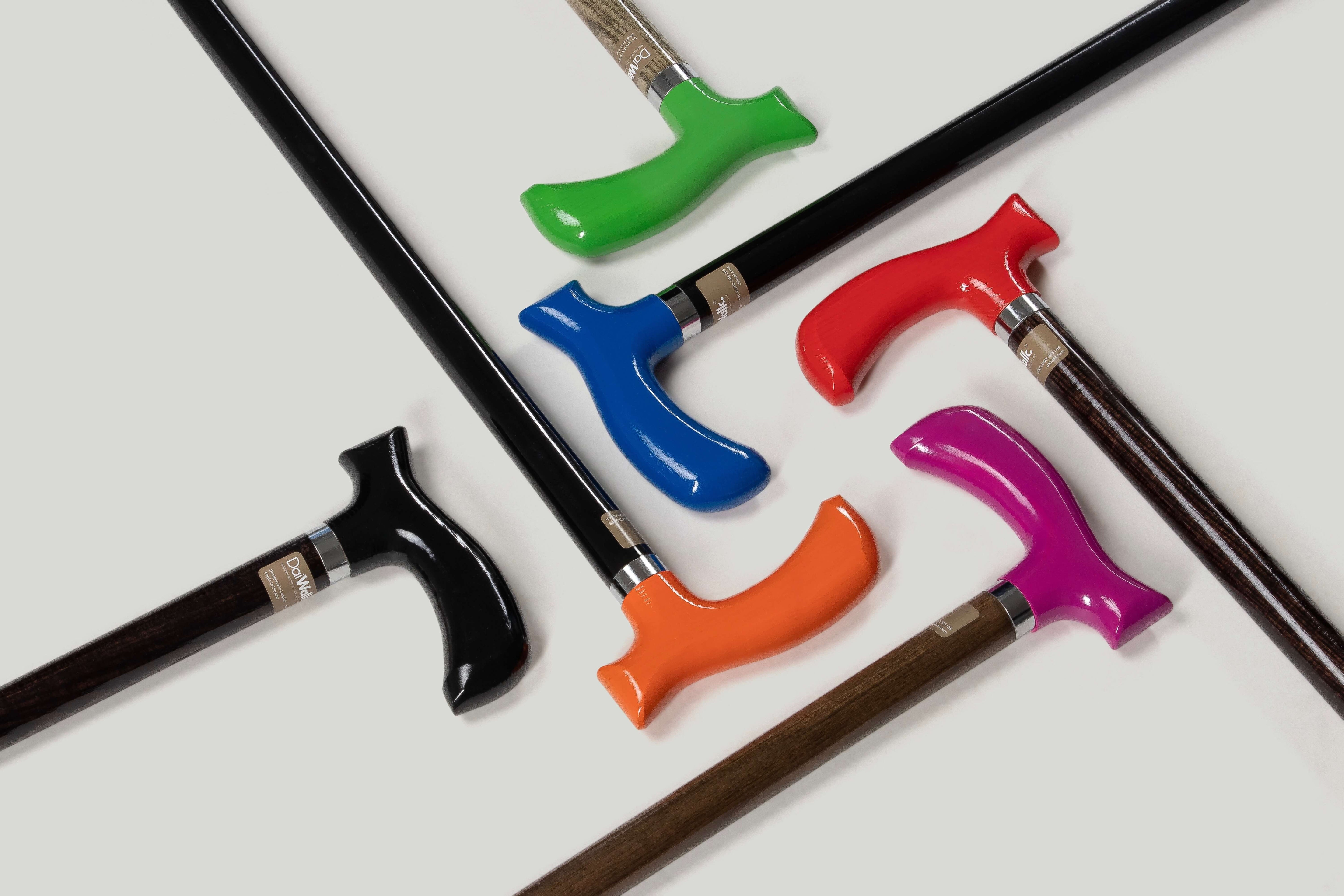
The Steady Cane in seven handle colours and the hand-painted POP™ series exist specifically because of this data point. A cane that looks chosen — that looks like it belongs to the person carrying it — gets used. A cane that looks like hospital equipment gets left by the door.
More on the psychology of cane use and public confidence: Walking Canes and Style: How to Carry Yours With Intention.
The Pre-Purchase Checklist That Prevents All Five
Before placing any walking cane order, confirm:
| Question | What a Good Answer Looks Like |
|---|---|
| Can I get it at my exact wrist-crease height? | Cut to your measurement, or adjustable in genuinely fine increments — not the nearest hole |
| How does the handle distribute load across the palm? | Multiple contact zones, measured peak pressure data |
| Is the included tip right for my primary surface? | Surface-specific tip, not a generic ferrule |
| What is the shaft play under load? | Manufacturer should be able to state this in mm — or have no joint to measure |
| Can I return it if I am wrong? | Know the answer before you order. Custom-cut canes, including ours, generally cannot be returned. |
| Will I actually carry this in public? | Honest answer required — design matters to usage |
Want those answers turned into one specific setup? The free walking cane finder matches handle, colour and tip to how and where you walk, in under a minute — and if you are still deciding whether you need a cane at all, the do I need a walking cane check is an honest place to start.
Our pricing, what is included, shipping times and the return terms are published in full on the pricing page, with nothing held back for checkout. If you are about to buy any walking cane — ours or anyone else's — read the return policy before you read the marketing.
Related Reading
- Fixed vs. Adjustable Walking Cane: Which Is the Better Buy?
- The 7 Questions to Ask Before Buying a Walking Cane
- Walking Cane Buying Guide 2026: What No One Tells You
- What a $20 vs. $75 Walking Cane Actually Feels Like After 6 Months
Return rate data based on DaiWalk customer acquisition interviews (n=112). Shaft play measurements under standardised 15kg lateral load. Tip traction data from internal surface testing on wet polished concrete at 5-degree gradient. Last reviewed August 2026.


